 Save
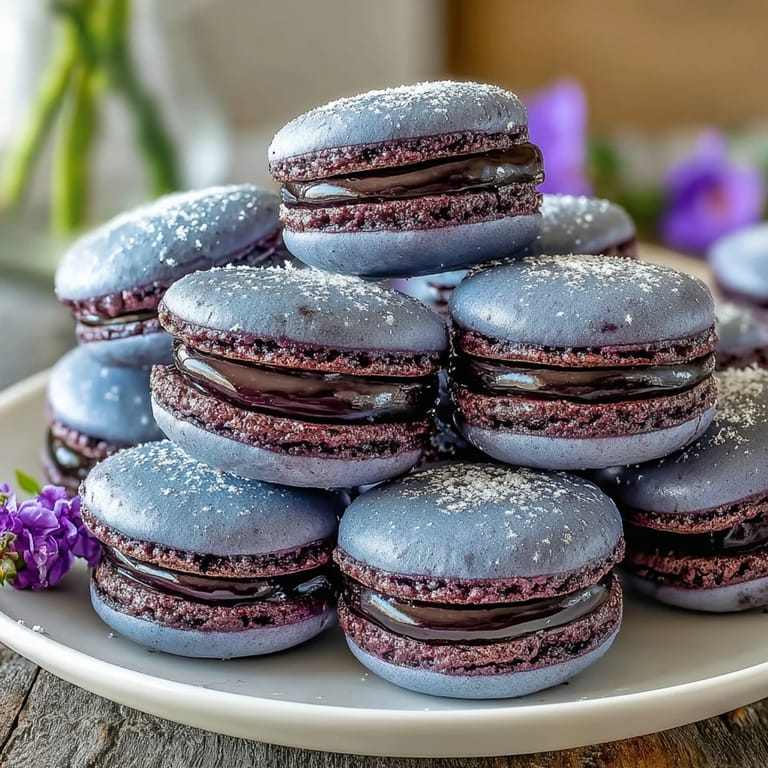
Save My first batch of macarons arrived on a humid Tuesday, and they looked more like puddles than cookies. Years later, after countless failed attempts and one memorable afternoon where my kitchen smelled entirely of burnt almond, I discovered the magic wasn't in speed or fancy equipment—it was in patience and understanding what the batter actually needed. Black currant macarons became my quiet obsession, that intersection where French precision meets bright, tangy fruit that cuts through delicate sweetness.
I made these for my sister's engagement party, and someone actually asked for the recipe before tasting the second one. That night, watching people enjoy something I'd nearly given up on years before felt like a small victory—not just in the kitchen, but in proving to myself that practice and failure are just part of the process.
Ingredients
- Egg whites (120g, aged): Room temperature and separated for 24-48 hours in the fridge stabilizes them, making the meringue less likely to collapse mid-bake.
- Granulated sugar and powdered sugar: The granulated sugar creates structure in the meringue while powdered sugar adds fineness to the shells—don't skip sifting the powdered sugar.
- Almond flour (120g, finely ground): This needs to be superfine; regular almond flour creates sandy, crumbly shells, so invest in quality or pulse it yourself.
- Salt: Just a pinch, but it sharpens the meringue and prevents weeping.
- Food coloring (optional): Gel works best since liquid coloring can throw off your liquid-to-dry ratio.
- Blackcurrant purée (100g): Strain it to remove seeds unless you want texture; homemade works beautifully if you have frozen berries.
- White chocolate (120g), butter (30g), and lemon juice (1 tsp): The lemon brightens the filling while butter creates silkiness; never skip the chocolate quality here.
Tired of Takeout? 🥡
Get 10 meals you can make faster than delivery arrives. Seriously.
One email. No spam. Unsubscribe anytime.
Instructions
- Prep your workspace:
- Line two baking sheets with parchment or macaron mats and set them somewhere you won't forget about them—you'll need them in about twenty minutes.
- Process your dry ingredients:
- Pulse almond flour and powdered sugar together until it looks like superfine flour, then sift it into a bowl to catch any stubborn lumps. This step feels tedious but it's what separates smooth shells from rough ones.
- Build the meringue:
- Beat egg whites with salt until foamy, then add granulated sugar slowly while the mixer runs, aiming for stiff, glossy peaks that stand straight up. The moment you think it's ready, it probably needs another 30 seconds.
- Add color if you're using it:
- Mix the gel coloring into the meringue until it's evenly tinted, then stop—overbeating now breaks down all your careful work.
- Fold with intention:
- Add the almond-powdered sugar mixture in three batches, folding gently with a spatula until each addition disappears into the meringue. The batter should eventually flow in thick ribbons and you should be able to draw a figure-8 without breaking the line; this is your signal to stop folding.
- Pipe the shells:
- Fill a piping bag with a 1cm round tip and pipe circles about 3.5cm across onto your prepared sheets, spacing them slightly apart. It's okay if they're not perfectly round—they'll relax slightly as they rest.
- Release trapped air:
- Tap each tray firmly on the counter a few times to bring air bubbles to the surface, then pop any you can see with a toothpick. This prevents those ugly hollow feet later.
- Rest the shells:
- Leave them at room temperature for 30-45 minutes until they form a thin skin and no longer feel tacky when you lightly touch one. This is non-negotiable; skipping this step leads to ruffled, cracked shells.
- Bake one tray at a time:
- Set your oven to 150°C (300°F) and bake for 13-15 minutes, rotating the tray halfway through. You're looking for shells that have set but still feel slightly soft on top—they'll firm up as they cool.
- Cool completely:
- Let the shells sit on their trays until they're room temperature before attempting to lift them; rushing this breaks them.
- Prepare the ganache:
- Place chopped white chocolate in a heatproof bowl and heat the blackcurrant purée until it just simmers, then pour it over the chocolate and wait a full minute before stirring. This gentle heat melts the chocolate evenly without scorching.
- Finish the filling:
- Once smooth, stir in softened butter and lemon juice, then let it cool until it's thickened but still pipeable—about room temperature consistency. If it gets too thick, you can gently warm it again.
- Match and fill:
- Pair up shells by similar size, pipe a small dot of ganache onto one shell of each pair, then gently press the second shell on top. The sandwich should hold together firmly but not squeeze filling everywhere.
- Mature them overnight:
- Refrigerate assembled macarons in an airtight container for at least 24 hours so the flavors meld and the shells soften slightly. Bring them to room temperature before serving.
 Save
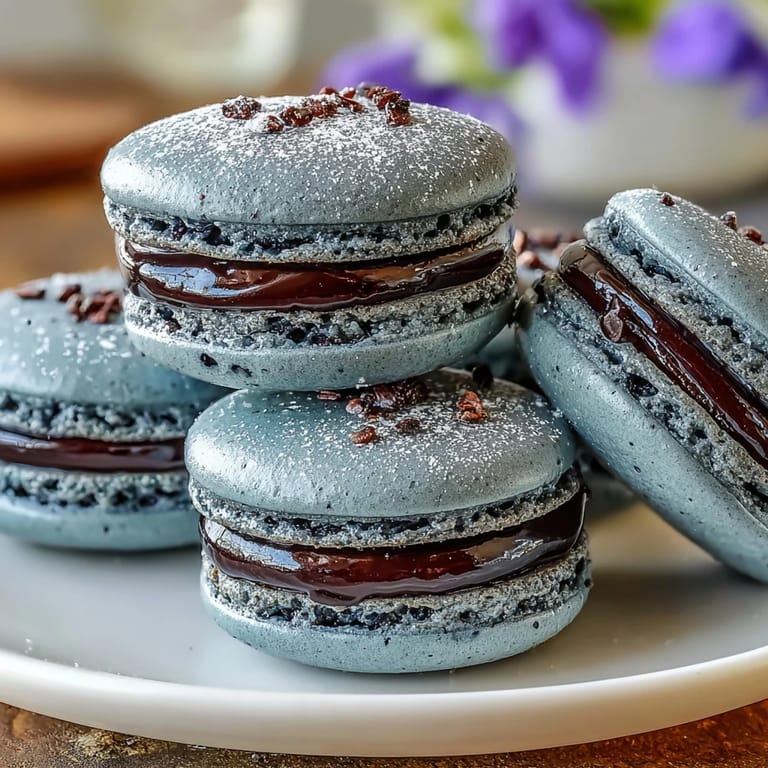
Save The moment I pulled a tray of perfectly ruffled macarons from the oven and saw those little feet, I realized this wasn't just about following instructions—it was about understanding how heat, time, and ingredients communicate. Now these cookies sit at the center of small celebrations in my kitchen.
The Resting Step Changes Everything
I used to skip the 30-45 minute rest, convinced I could speed things up. The results were always a disaster—cracked shells, no feet, lumpy surfaces that looked amateurish. Then one afternoon, I sat with my batter, made tea, and waited, and something clicked: that skin that forms is actually the batter drying just enough to trap air in a controlled way. The shells that emerged that day looked professional. There's a lesson in slowing down hidden in every macaron.
Why Black Currant Is the Perfect Filling
Black currant is tart enough to cut through the sweetness of the shells and white chocolate, but it's not so aggressive that it overwhelms. The flavor feels luxurious without being overly fruity, and it stays fresh-tasting even after the macarons mature. I've tried raspberry, pistachio, and rose, but black currant remains the one I return to when I want people to actually stop and ask what they're tasting.
Temperature and Timing Matter More Than You Think
The oven temperature of 150°C is crucial because macarons need gentle, even heat to set without browning or spreading. If your oven runs hot, they'll brown and crack; if it runs cool, they'll stay soft and won't develop feet. Invest in an oven thermometer and bake one tray at a time so you're not juggling temperatures. These small details are what separate homemade macarons from bakery-quality ones.
- A kitchen scale is non-negotiable here—volumetric measurements won't give you the precision these delicate cookies demand.
- Blackcurrant purée can be made by blending fresh or frozen blackcurrants and straining out the seeds, or substitute with cassis if needed.
- Macarons taste best 1-2 days after assembly, but they'll keep refrigerated for up to a week in an airtight container.
 Save
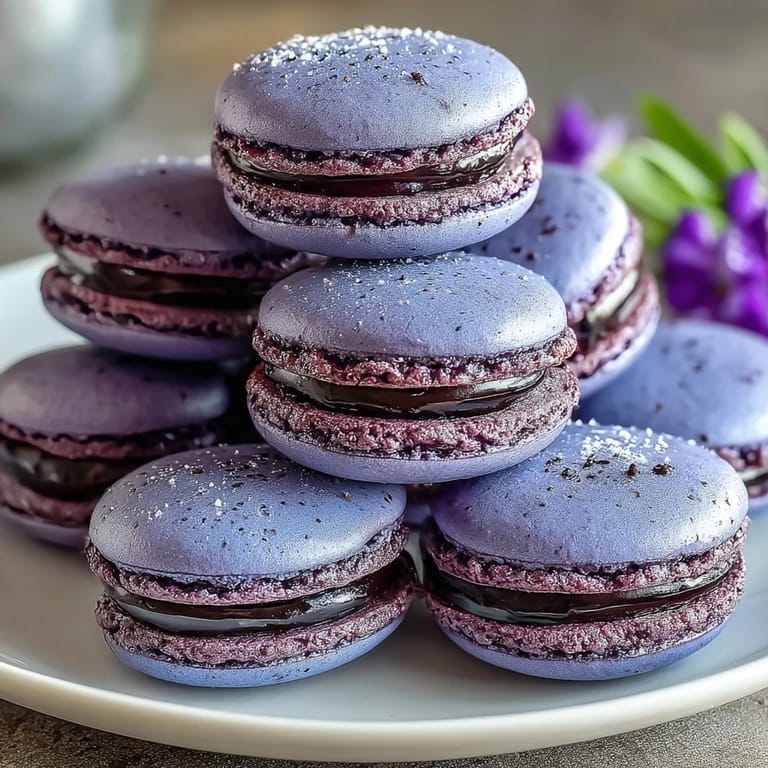
Save These macarons taught me that precision and patience aren't constraints—they're invitations to something beautiful. Serve them chilled and watch people close their eyes at that first bite.
Recipe Guide
- → Why must I age the egg whites before making macarons?
Aging egg whites for 24-48 hours in the refrigerator allows them to lose moisture and become more concentrated. This results in a more stable meringue that holds its shape better during folding and piping, leading to improved texture and fewer cracked shells.
- → How do I know when the macaron batter is properly mixed?
The batter is ready when it flows in thick, continuous ribbons off your spatula and you can draw a figure-8 that holds its shape without breaking. Overmixing will make the batter too runny, while undermixing will result in lumpy, uneven shells.
- → Why do macarons need to rest before baking?
Resting allows a skin to form on the surface of the shells, which helps them rise properly and develop the characteristic "feet" during baking. The shells are ready when they're no longer tacky to the touch, typically after 30-45 minutes at room temperature.
- → Can I use frozen blackcurrants for the ganache?
Absolutely. Frozen blackcurrants work beautifully—simply thaw them, then blend and strain thoroughly to remove seeds before heating. You may need to cook the purée slightly longer to reduce excess moisture from freezing.
- → Why must macarons mature in the refrigerator for 24 hours?
This resting period allows moisture from the ganache to soften the interior of the shells while the exterior stays crisp. The flavors also meld and develop complexity, resulting in the characteristic texture and taste that makes macarons exceptional.
- → What causes hollow shells or cracks during baking?
Hollow shells typically result from overmixed batter or oven temperature that's too high. Cracks often occur when shells haven't formed a proper skin before baking or when there's excess air in the batter. Always tap trays firmly and pop visible bubbles with a toothpick.