 Save
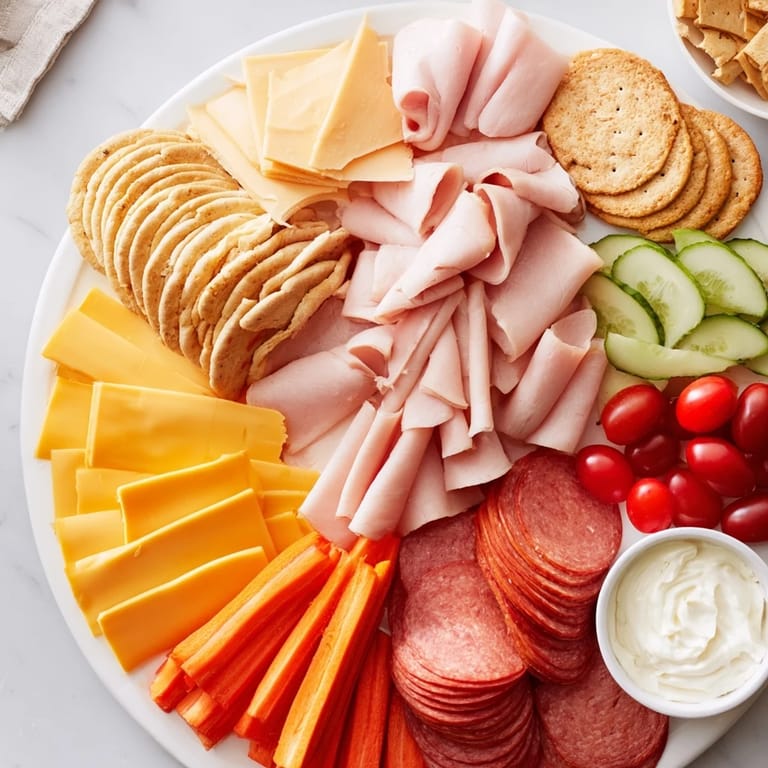
Save I still remember the Saturday afternoon when my cousin pulled me into the kitchen with that knowing smile—the one that meant family was coming over in two hours and we had zero plan. We grabbed whatever we could find in the fridge and pantry, scattered it across our largest platter, and created something so effortlessly beautiful that everyone thought we'd been planning it for days. That's the magic of a good spread: it looks intentional, feels generous, and tastes like you actually care—but it's honestly just smart, simple assembly.
My favorite moment came when my young nephew, who's usually picky about everything, spent twenty minutes carefully constructing his perfect bite—a little ham, some cheddar, a pickle, a cracker—and he looked so proud of himself. That's when I realized this isn't just food; it's an invitation for people to slow down and be intentional about what they're eating, even in the most casual way.
Ingredients
- Sliced cooked ham (200g): The salty backbone of any good spread; buy pre-packaged for budget-friendliness and arrange it fanned out so people can grab single slices without tearing the whole stack
- Sliced turkey breast (200g): Milder than ham and pairs beautifully with cheese; keeps the platter from feeling too heavy
- Sliced salami (150g): The flavor anchor that makes people say this tastes fancier than it is; go for whatever's on sale
- Mild cheddar, sliced (200g): The crowd favorite that works with everything; slice it thick enough that it doesn't bend but thin enough to pick up easily
- Swiss cheese, sliced (150g): Those holes make it feel special, and it melts beautifully into any bite
- Cream cheese (100g): Your secret weapon spread that transforms crackers into something more interesting
- Carrots, sliced into sticks (2 large): The sweet crunch that balances the salt; cut them thick enough to feel substantial but thin enough to snap
- Cucumber, sliced into rounds (1): Cooling and refreshing, especially if someone reaches for this after the salami
- Red bell pepper, sliced (1): The color pop that makes the whole platter look intentional; slightly sweet against the salty meats
- Cherry tomatoes (1 cup): Little flavor bombs that feel more elegant than regular tomatoes for snacking
- Assorted budget-friendly crackers (400g): The volume player; go for variety in texture and shape so there's something for everyone
- Baguette, sliced (1): Toast it lightly if you want it to feel more special, or serve it fresh if your crowd likes softer bread
- Hummus (1 cup): The vegetarian anchor and the thing people come back to between bites
- Green olives (1/2 cup): Briny and interesting; some people skip them, but those who love them love them
- Pickles (1/2 cup): The acid that cuts through richness; this is where leftover pickle juice becomes your secret ingredient
Tired of Takeout? 🥡
Get 10 meals you can make faster than delivery arrives. Seriously.
One email. No spam. Unsubscribe anytime.
Instructions
- Start with the proteins:
- Choose your largest, flattest platter—this is your canvas. Pick a corner or section and create generous piles of each meat. Fan the ham out like you're playing cards; layer the turkey in overlapping strips; roll the salami or fold it into quarters. These piles should look abundant, not timid. Step back and imagine someone reaching from across the table—can they actually grab what they want without toppling the architecture?
- Layer in the cheeses:
- Next to the meats, fan out your cheddar and Swiss like you're showing them off (because you are). These should catch the light a little. Cream cheese goes into one of your small bowls with a small spreading knife beside it—this gets clustered with the crackers later. Think of this as creating pathways: meat to cheese is a natural journey people will want to take.
- Heap the vegetables:
- In the remaining spaces, create generous mounds of each vegetable, grouping similar items together. Your carrots get their own corner. The cucumber rounds can overlap slightly. Bell pepper strips lean against the bread. Cherry tomatoes scatter into any gaps like they're being discovered. The vegetables aren't filler here; they're the refreshing counterpoint that makes people feel good about loading up on cheese.
- Station your dips and extras:
- Fill small bowls with cream cheese, hummus, olives, and pickles. Arrange these bowls throughout the platter, ideally at points where someone might naturally reach. This breaks up the visual monotony and gives people clear destinations. A small fork or spoon in the olive and pickle bowls makes the whole thing feel more thoughtful.
- Create the cracker foundation:
- Stack your crackers and baguette slices high in multiple spots around the platter's edges and any remaining center real estate. These aren't tucked away—they're stacked like you're inviting people to build something. Variety in heights and positions makes it feel more approachable than a single neat pile.
- Final look and serve:
- Step back. Is there any dead space? Fill it with something. Does one section feel heavy while another feels sparse? Rebalance. This platter should look generous and abundant, like there's something for everyone and then some. Serve immediately while everything is fresh and crisp, and watch how people can't resist it.
 Save
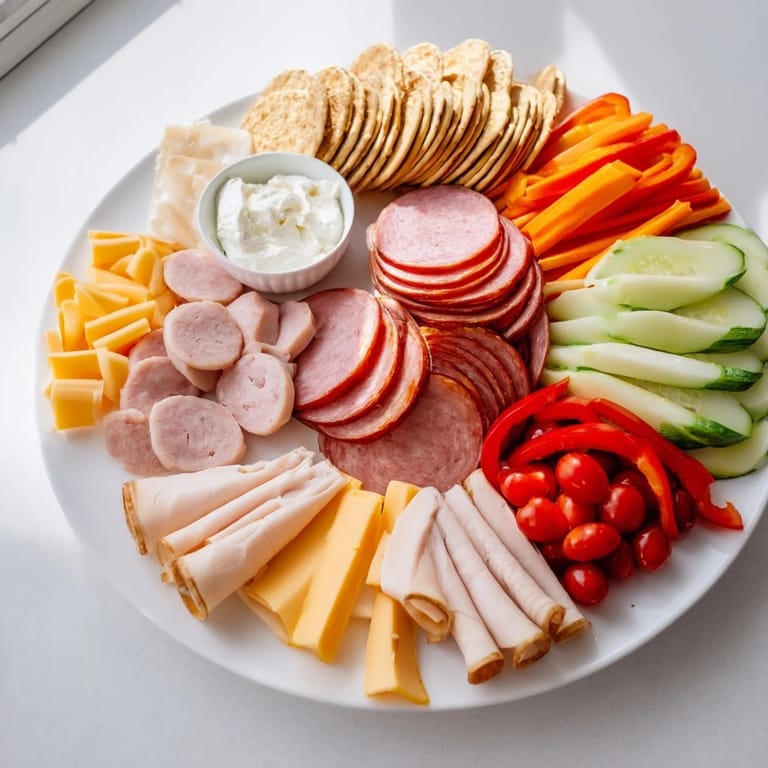
Save What surprised me most was watching people linger around this platter longer than they ever did around a sit-down meal. There's something about choosing your own adventure, building your own bite, that makes eating feel like play rather than obligation. Suddenly everyone's sharing—not just food, but what they discovered tastes good together. That's when a spread becomes a moment.
Building the Perfect Spread
The real secret to a spread that disappears fast is understanding proportion and visibility. Everything should be within arm's reach from at least one angle of the table. Use height variation deliberately—taller items in the center, lower items at the edges—so people can see what's available without leaning. Think of it like a edible landscape where everyone gets a view. The abundance is key; people feel invited when there's plenty, and plenty doesn't always mean expensive.
Making It Vegetarian or Dietary-Friendly
Simply remove the meats and double down on cheese, vegetables, and spreads. Add roasted vegetables if you want something warm and substantial—roasted chickpeas work beautifully for crunch and protein. Plant-based deli slices have come so far that many people won't even notice the swap. The key is making the vegetarian section feel equally abundant and interesting, not like an afterthought. I've found that a really good hummus with extra toppings, some marinated artichoke hearts, or roasted red peppers become the new anchors that draw people in.
Timing and Temperature Tips
The window where everything is at its peak is about ninety minutes, which is perfectly fine for most gatherings. If you're feeding a larger group and need it to last longer, keep the fresh vegetables in the fridge and add them in batches, and cover the meats and cheese loosely with plastic wrap between refills—they dry out if exposed too long. For parties where people are grazing over hours, strategy matters: prepare the platter thirty minutes before guests arrive so it's fresh and ready, then do two refresh rounds rather than one giant rebuild.
- Slice soft vegetables like cucumber right before serving to prevent them from getting slippery
- Keep extra meats and cheese in the fridge in sealed containers, ready to restock without creating a disorganized mess
- If you're adding fruit, apple slices need a squeeze of lemon juice to prevent browning, and grapes are best served cold from the fridge for that little pop of refreshment
 Save
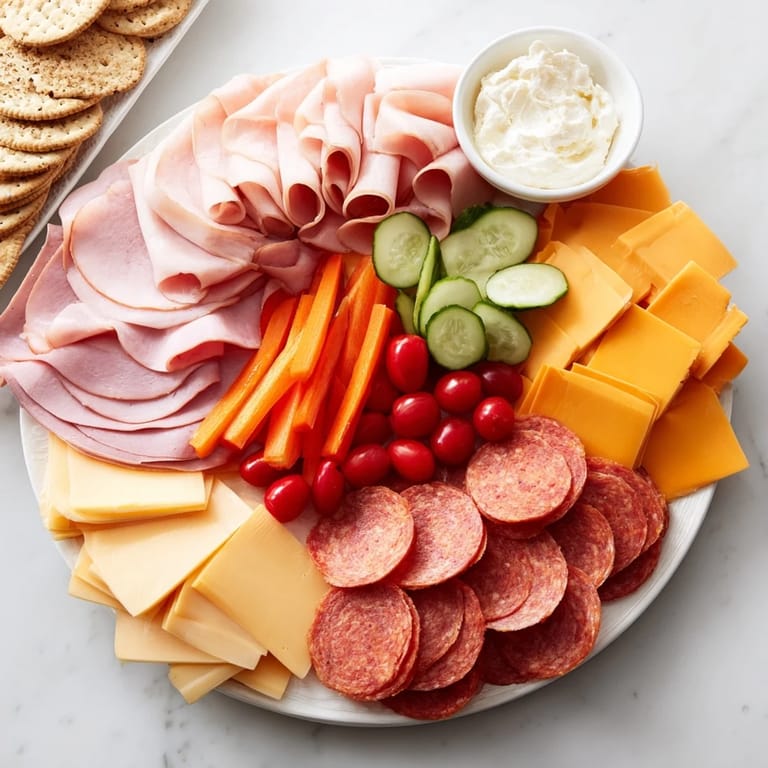
Save A good spread is less about perfection and more about generosity—the kind that says, I want you to feel welcome and cared for, and I trust you to know what you like. That's the whole philosophy right there.
Recipe Guide
- → How can I make this spread vegetarian?
Simply omit the meats and increase the variety of cheeses, roasted vegetables, or add plant-based deli slices for protein and flavor.
- → What are good pairings for this spread?
Light white wines or sparkling water complement the variety of meats, cheeses, and fresh vegetables perfectly.
- → Can I prepare this ahead of time?
Prepare the components separately and assemble just before serving to keep vegetables fresh and crackers crisp.
- → Are there allergen considerations to keep in mind?
This platter contains dairy, gluten, and may contain soy. Always check labels and inform guests with dietary restrictions accordingly.
- → How do I keep crackers crunchy on the platter?
Place crackers in separate bowls or stacks away from moist ingredients to maintain their crisp texture throughout the event.