 Save
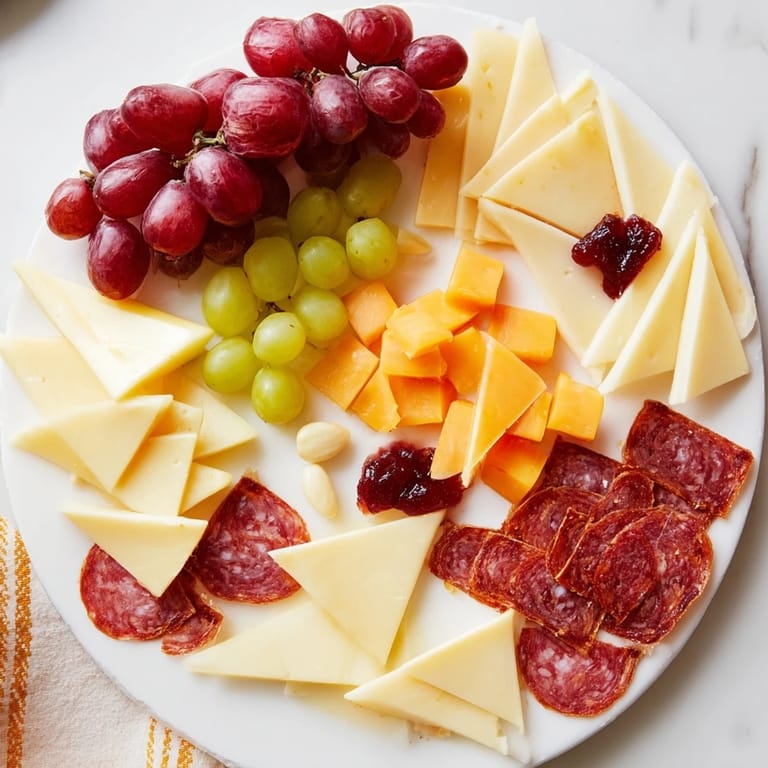
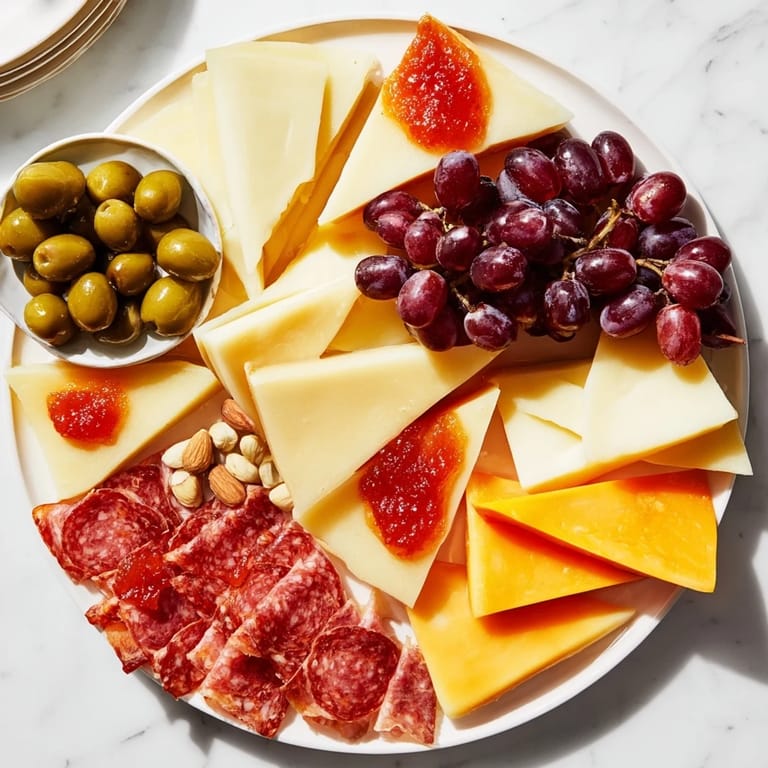
Save I discovered the magic of geometric shapes on a board entirely by accident when my friend spilled a stack of prosciutto across my marble countertop, and suddenly those tilted triangles looked far more intentional than my usual haphazard arrangements ever did. That moment stuck with me—the idea that a charcuterie board didn't need to be chaotic to be generous, that precision could actually feel playful. Now whenever I'm assembling one, I find myself reaching for that sharp knife with the same care a jeweler might use, transforming ordinary cheeses and meats into something that makes guests pause before eating.
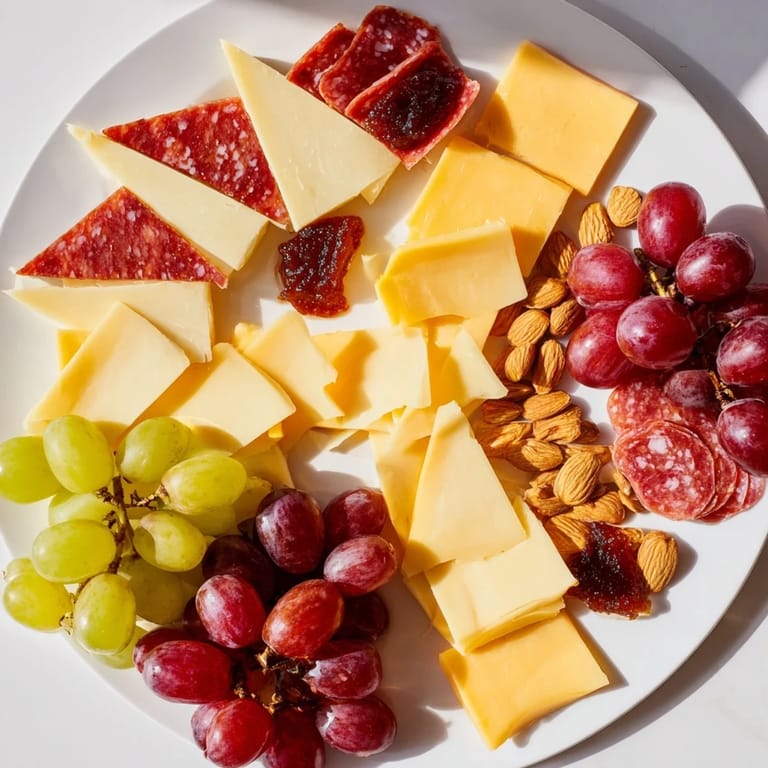
I made this for a dinner party where everyone was supposed to dress in black and white, and I realized halfway through setting up that my board had accidentally become the star of the theme. The alternating shapes, the clean lines of those rhombuses catching the light—it felt like we'd all agreed without saying it that dinner was going to be something special. People spent the first ten minutes just photographing it before anyone reached for food.
Ingredients
- Manchego cheese: Firm and slightly nutty, it holds a triangle shape beautifully and brings a warmth that expensive doesn't always deliver.
- Aged cheddar: Look for something that's been aged at least 18 months—the drier the cheese, the cleaner your cuts will be.
- Brie: Chill it thoroughly or it'll slouch on your board like it's had a long day, which technically defeats the whole geometric premise.
- Gruyère: Its crystalline structure makes it ideal for rhombuses, and those little crunch moments keep people reaching back.
- Prosciutto: The thinner the slice, the more elegantly it folds into a triangle, and your knife should feel sharp enough to glide without dragging.
- Soppressata: This holds its shape better than softer salami, and the darker color creates those visual breaks that make the board feel dynamic.
- Chorizo: The diagonal slice is where this ingredient shines—something about that angle makes it feel more intentional than a straight cut.
- Grapes: They're your color breaks and your palate cleansers, and placing them in small bunches reminds people to breathe between bites.
- Dried apricots: If you trim them into shapes too, you're signaling that every single element matters here.
- Marcona almonds: Buttery and less bitter than regular almonds, they fill the empty spaces without making the board feel cramped.
- Fig jam: A small bowl of this sits like a treasure, something people discover rather than expect.
- Gluten-free seed crackers: Breaking them into triangles transforms them from an afterthought into part of the composition.
- Fresh herbs: Rosemary or thyme sprigs add height and aroma, reminding everyone that this is food meant to engage all senses.
Tired of Takeout? 🥡
Get 10 meals you can make faster than delivery arrives. Seriously.
One email. No spam. Unsubscribe anytime.
Instructions
- Sharpen your knife first:
- A dull blade will tear cheese and smash your meat. A truly sharp knife will slide through both with almost no pressure, which is how you know your shapes will look clean and intentional, not massacred.
- Cut cheeses into precise triangles:
- Manchego and cheddar should be firm enough to hold an edge. Slice them into strips first, then angle your cuts to create neat triangles—imagine you're cutting diamonds and then taking only the top half.
- Shape the Brie carefully:
- Chill it until it's almost stiff, then use a thin-bladed cheese knife to slice it at an angle. The triangle should be delicate but strong enough to handle without falling apart.
- Cut Gruyère into rhombuses:
- This is where the geometry actually happens. Slice the cheese into thin planks, then angle your cuts on both ends to create that diamond shape. It's meditative if you let it be.
- Fold and cut the prosciutto:
- Some pieces can be folded into triangular peaks, others sliced and trimmed. The variation in how each piece sits creates visual rhythm.
- Slice and trim the soppressata and chorizo:
- Cut them on a slight diagonal, then trim the edges so each piece sits as a clean rhombus. This is where your cutting board becomes your canvas.
- Arrange everything on your board with intention:
- Start with your cheeses in clusters, alternating shapes. Then weave in meats, creating pockets and rhythm. Leave breathing room—a crowded board loses its impact.
- Fill the gaps with grapes and almonds:
- Place them in small clusters rather than scattering them. They're the punctuation marks in your composition.
- Add fig jam in a small bowl:
- Or dollop it directly on the board if you're feeling more confident. Either way, it should feel like a discovery, not an obligation.
- Arrange crackers in neat stacks:
- Broken into triangles and fanned slightly, they echo your shape theme and give people something to build with.
- Garnish with fresh herbs as your final touch:
- Sprigs of rosemary or thyme add height, movement, and that moment where everyone realizes they're about to eat something that smells as beautiful as it looks.
 Save
Save There was a moment at that dinner party when someone asked if they could take the board to their holiday dinner next week, and I realized this wasn't really about the ingredients at all—it was about proving that effort and intentionality are things people can actually taste, or maybe just feel in how they approach food. After that night, I started thinking about every board differently.
The Geometry of Generosity
There's something quietly powerful about cutting each ingredient the same way, with the same precision. It says that every person reaching for this board deserves the same attention to detail, whether they're grabbing a piece of expensive aged cheddar or a simple cracker. I've noticed that when food is arranged with this kind of care, people eat more slowly, savor more, and actually talk to each other instead of just scrolling on their phones. The geometric theme isn't pretentious if you're genuine about it—it's an invitation to slow down.
Cheese Selection and Substitution
The cheeses I've listed here work beautifully, but your board can handle your favorites as long as they're firm enough to hold a shape and won't turn to butter at room temperature. I've used Emmental instead of Gruyère when that's what I had, and it was perfect. The real rule is knowing your cheese well enough to understand what it's capable of—soft cheeses need to stay cold and firm, while hard cheeses forgive almost everything. If you find a cheese you love at the market, buy it and build your board around it rather than forcing it to fit a role it wasn't meant for.
Timing and Temperature
I learned the hard way that a beautiful board can lose its integrity if it sits out too long. Assemble everything within 20 minutes of serving if possible, and keep the board in a cool spot until guests arrive. If you're hosting during summer or a warm season, chill your serving board in the freezer for 15 minutes before you begin—that extra touch of cold keeps everything pristine longer.
- Chill cheeses and meats until the moment of cutting to maintain firm edges.
- Assemble your board as close to serving time as your schedule allows.
- A chilled serving board extends the time your shapes stay sharp and intentional.
 Save
Save This board is proof that simplicity and sophistication aren't opposites—they're just different ways of paying attention. You've done something beautiful here.
Recipe Guide
- → What cheeses work best for geometric cuts?
Firm cheeses like Manchego, aged cheddar, Brie (chilled), and Gruyère are ideal as they hold sharp edges when cut into triangles or rhombuses.
- → Can other meats be used in this board?
Yes, alternatives like bresaola or coppa can substitute while maintaining the geometric shape for consistency and visual interest.
- → How can I keep the shapes precise when cutting?
Using a sharp knife and optionally a ruler or guide helps achieve clean, consistent triangles and rhombuses for presentation.
- → What accompaniments enhance this platter?
Seedless grapes, dried apricots, Marcona almonds, and dollops of fig jam bring contrasting sweetness and texture to the savory components.
- → Is this suitable for gluten-free diets?
Yes, by selecting gluten-free seed crackers and verifying other ingredients, this platter accommodates gluten-free needs.