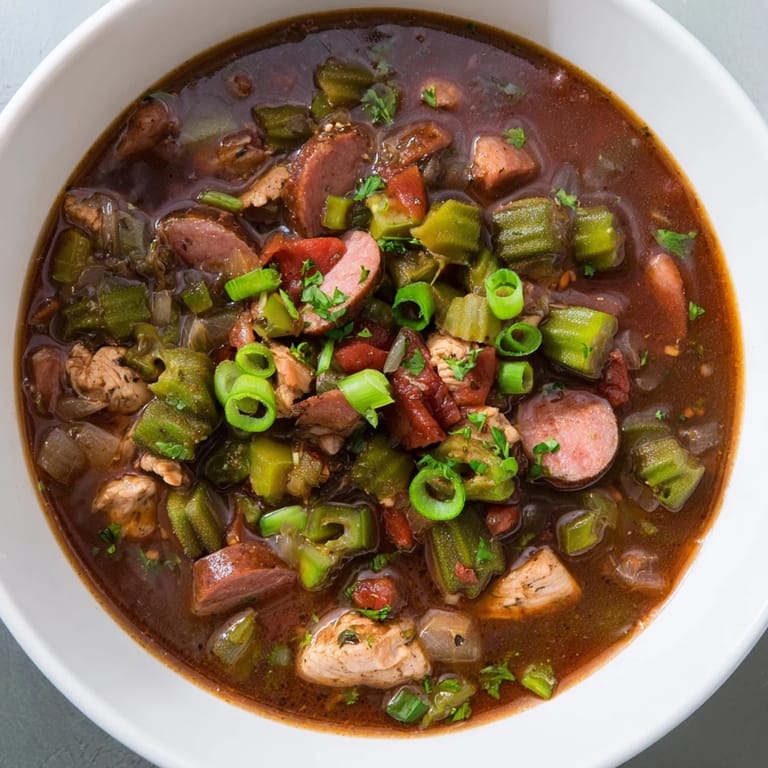
 Save
Save My neighbor swears by her grandmother's gumbo recipe, but the first time I made this version, I wasn't thinking about tradition—I was thinking about survival. It was a cold Saturday afternoon, I had chicken thighs and andouille sausage in my fridge, and somehow I remembered that the secret to great gumbo isn't just the ingredients, it's the patience you invest in that roux. Twenty minutes of stirring feels eternal, but the moment it shifts from caramel to deep chocolate brown, you know you're onto something real.
I brought a big pot of this to a potluck once, nervous because gumbo feels so distinctly Louisiana, so tied to a place I've never lived. But watching people come back for thirds, talking with their mouths full about the smoky sausage and how the okra practically melted into the broth—that's when I realized good food doesn't care about your passport. It just needs love and time.
Ingredients
- Boneless, skinless chicken thighs (350 g): Don't use breasts here; thighs stay tender through the long simmer and give the broth real body.
- Smoked andouille sausage (225 g): This is the soul of the dish—that deep smokiness is non-negotiable, though any quality smoked sausage works in a pinch.
- Fresh or frozen okra (250 g): Okra acts as both vegetable and natural thickener; if you thaw frozen okra, drain it really well or the broth gets gummy.
- Onion, green bell pepper, celery: This is your holy trinity, the foundation—honor it by chopping everything roughly the same size so it cooks evenly.
- Garlic (3 cloves): Mince it fine and add it after the softer vegetables so it doesn't burn and turn bitter.
- Tomatoes (2 fresh or 1 can): Fresh is lovely in season, but canned works year-round and honestly tastes just as good.
- All-purpose flour and vegetable oil (60 g each): This roux is where gumbo lives or dies—equal parts, medium heat, and your full attention for 15–20 minutes.
- Chicken stock (1.5 liters): Good stock matters; it's the canvas for everything else, so use the best you can find or make.
- Bay leaves, thyme, smoked paprika, cayenne: These aren't just flavors—they're whispers of Louisiana soil, depth, and gentle heat that builds with each bite.
Tired of Takeout? 🥡
Get 10 meals you can make faster than delivery arrives. Seriously.
One email. No spam. Unsubscribe anytime.
Instructions
- Build your roux with intention:
- Heat oil over medium heat, add flour, and whisk constantly for 15–20 minutes until it's the color of dark chocolate. This isn't the time to multitask; watch it closely, because the line between perfect and burned is just a couple of minutes.
- Soften your holy trinity:
- Add onion, pepper, and celery to the roux and stir for 3–4 minutes until they release their aromas and start to lose their sharp edges. The kitchen should smell like Louisiana now.
- Brown the proteins:
- Push the vegetables aside, add chicken and sausage, and let them sit long enough to brown slightly. This takes about 5 minutes and adds a layer of savory depth.
- Wake up the okra:
- Stir in the okra and cook for 3–4 minutes; you'll notice it releasing its natural thickening power right away, which is exactly what you want.
- Build the broth and let time do the work:
- Add tomatoes, stock, bay leaves, and all your seasonings, then bring to a boil before reducing to a gentle simmer for 45–50 minutes. Stir occasionally and taste as you go; the flavors will deepen and marry together into something greater than their parts.
- Finish with finesse:
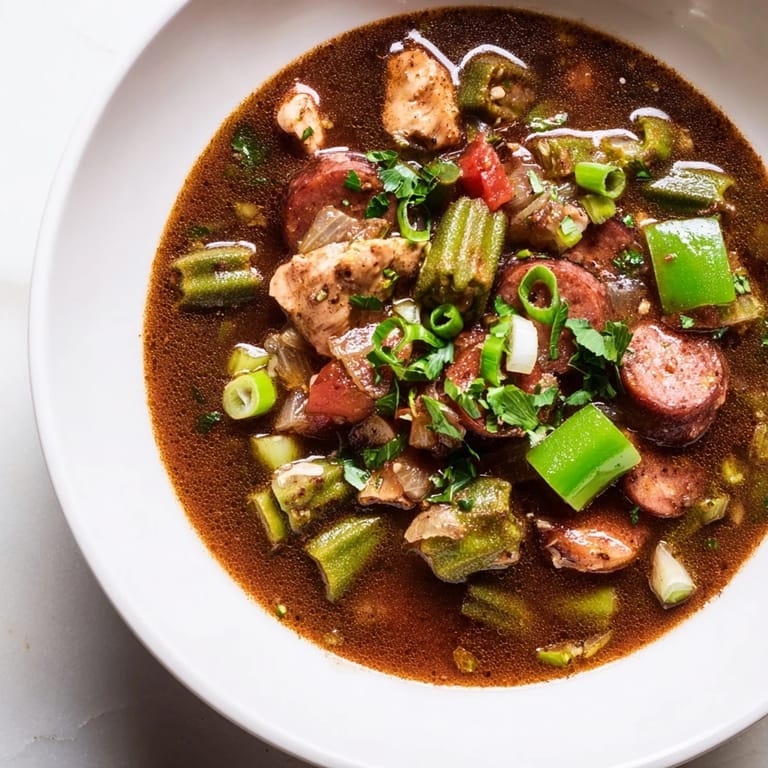
- Remove bay leaves, adjust seasoning, and if you want it thicker, sprinkle in filé powder off the heat. Serve over rice with a scatter of spring onions and parsley.
 Save
Save My mother-in-law called one night while I was making this, heard the simmer in the background, and just said, 'Sounds like you're doing something right.' Sometimes a dish stops being about technique and becomes about the feeling it creates in your home.
The Roux: Your Foundation
Most home cooks rush the roux because it feels tedious, but this is where gumbo's whole personality lives. The darker it is, the deeper the flavor, but there's a real risk of burning it. Medium heat, constant whisking, and genuine attention for those 15–20 minutes is what separates a good gumbo from something forgettable. The color should go from blonde to caramel to milk chocolate to dark chocolate—that last one is your target.
Adapting to What You Have
Andouille sausage is traditional and wonderful, but I've made this with kielbasa, chorizo, and even just regular smoked sausage. The spirit of the dish remains. If you want to go seafood, add shrimp or crab in the last 10 minutes instead of the chicken—it's a completely different experience but equally delicious. Fresh okra is ideal when you can get it, but frozen works fine and sometimes it's the only option in the middle of winter.
Serving and Storage
Serve this over white rice with hot sauce on the side and crusty bread for soaking up every drop. Gumbo actually tastes better the next day, maybe even the day after that, as the flavors deepen and relax into each other. It freezes beautifully for up to three months, which means on a random weeknight months from now, you can have this waiting for you.
- A squeeze of hot sauce at the table lets everyone dial in their own heat level.
- Filé powder (ground sassafras) added at the end is traditional and adds a subtle earthiness if you can find it.
- This makes enough for six generous servings, but it doubles easily if you're feeding a crowd.
 Save
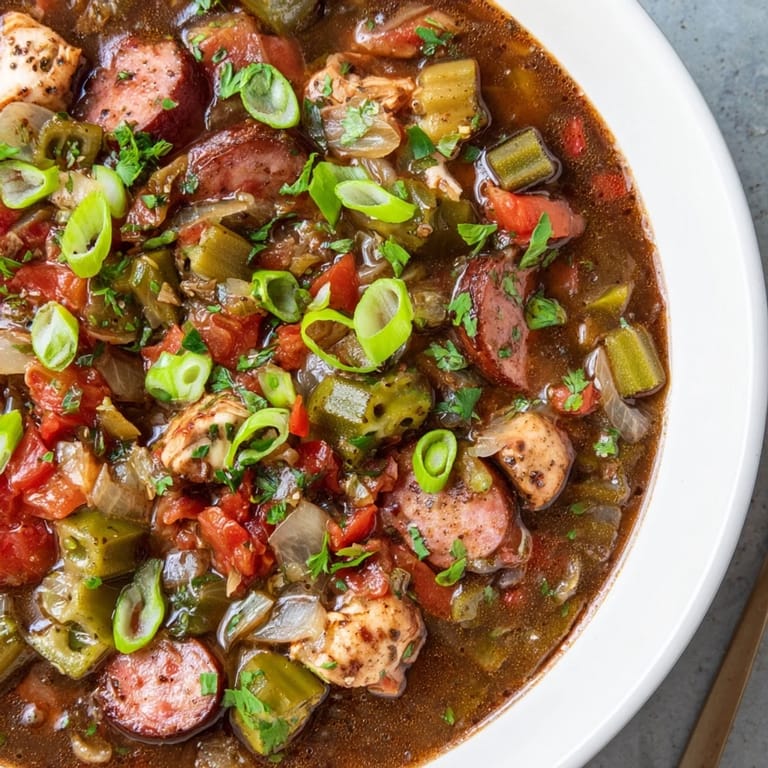
Save Gumbo is forgiving once you understand it, and it rewards attention with comfort. Make it once and it becomes yours.
Recipe Guide
- → What is the base for the gumbo's rich flavor?
The rich flavor comes from a dark roux, made by cooking flour and oil until deep brown, combined with smoked sausage and aromatic vegetables.
- → Can I substitute the sausage in this dish?
Yes, while andouille sausage is traditional, any smoked sausage can be used without compromising the flavor.
- → How is okra prepared before adding?
Fresh or frozen okra should be sliced; if using frozen, it’s best to thaw and drain it before cooking to reduce sliminess.
- → How long should the gumbo simmer?
Simmer the stew uncovered for 45–50 minutes to develop depth and allow flavors to meld.
- → What is the purpose of filé powder in this dish?
Filé powder is added off the heat to thicken and add a unique, earthy flavor characteristic of Cajun cuisine.