 Save
Save There's something about the smell of andouille sausage hitting a hot skillet that transports you straight to New Orleans, even if you're cooking in your own kitchen three states away. I discovered jambalaya not through a cookbook but through a friend who'd spent a summer there and couldn't stop talking about the way rice absorbed all that smoky, spicy goodness. When she finally walked me through making it, I realized you don't need a gumbo pot or hours of tending—just one skillet, some patience, and an appetite for bold flavors.
I made this for my neighbors after they helped us move, and watching their faces light up when they tasted it was worth every chopped vegetable. One of them asked if I'd trained as a chef, which made me laugh—I just followed my friend's advice and didn't overthink it. That meal turned into a standing invitation to cook together whenever anyone could gather on a Saturday evening.
Ingredients
- Andouille sausage (8 oz): This smoked sausage is the backbone of the dish; its spicy, garlicky richness flavors everything else, so don't skip it or swap for regular sausage without expecting a completely different result.
- Large shrimp (8 oz): Buy them peeled and deveined if you can—one less step when you're juggling everything else, and they cook so fast that timing is everything.
- Yellow onion, red and green bell peppers, celery (diced): This trio, called the "holy trinity" in Creole cooking, builds a flavor base that feels almost instinctive once you've made it once or twice.
- Garlic (3 cloves, minced): Add it after the vegetables soften so it doesn't burn and turn bitter in the hot pan.
- Long-grain white rice (1 cup): Don't use arborio or short-grain rice here—you want grains that stay separate and let the broth shine through.
- Low-sodium chicken broth (1 2/3 cups): The liquid ratio matters more than you'd think; too little and the rice stays crunchy, too much and you're eating soup.
- Diced tomatoes (1 can, undrained): Canned tomatoes are actually your friend here because they've already been broken down and their juice adds depth.
- Smoked paprika, dried thyme, oregano, cayenne, black pepper, salt: These spices aren't just flavor—they're the soul of the dish, so measure them and don't guess.
- Olive oil (2 tbsp total): Split between browning the sausage and sautéing the vegetables so both get proper color and flavor.
- Fresh parsley (2 tbsp, chopped): Stir some in at the end for brightness, or save it all for garnish—either way, it cuts through the richness beautifully.
Tired of Takeout? 🥡
Get 10 meals you can make faster than delivery arrives. Seriously.
One email. No spam. Unsubscribe anytime.
Instructions
- Brown the sausage first:
- Heat a tablespoon of olive oil in your skillet over medium-high heat and add the sausage slices. Let them sit for a minute or two so they get a golden crust instead of steaming, which takes about 3–4 minutes total. Remove them to a plate and don't worry if they're not cooked all the way through—they'll finish cooking in the jambalaya.
- Build the flavor base with vegetables:
- Add the remaining oil to the same skillet and let it warm. Add onion, peppers, and celery all at once, stirring occasionally until they're soft and the onion turns translucent, roughly 4–5 minutes. Listen for the gentle sizzle—that's how you know the heat is right.
- Toast the spices with rice:
- Pour in all your spices and the rice, stirring constantly for about a minute. You'll notice the rice turns slightly opaque and everything smells incredible; that's the spices coating each grain and waking up flavors you didn't know were dormant.
- Combine everything and simmer:
- Return the sausage to the skillet, then add the tomatoes with their juice and the broth. Stir until everything is mixed, bring it to a simmer, then cover and reduce heat to low. Let it cook undisturbed for 20 minutes—resist the urge to peek too often.
- Nestle in the shrimp to finish:
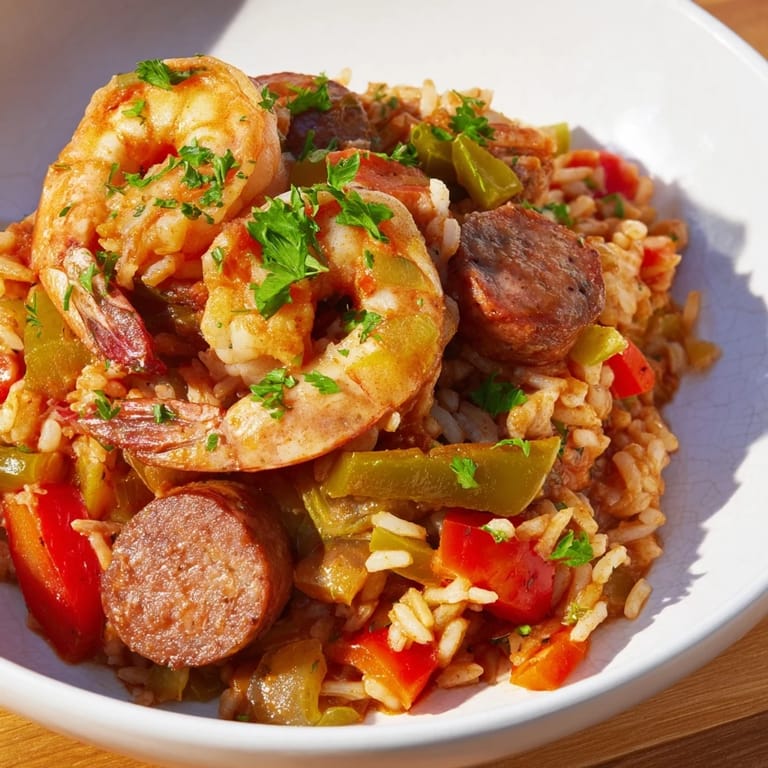
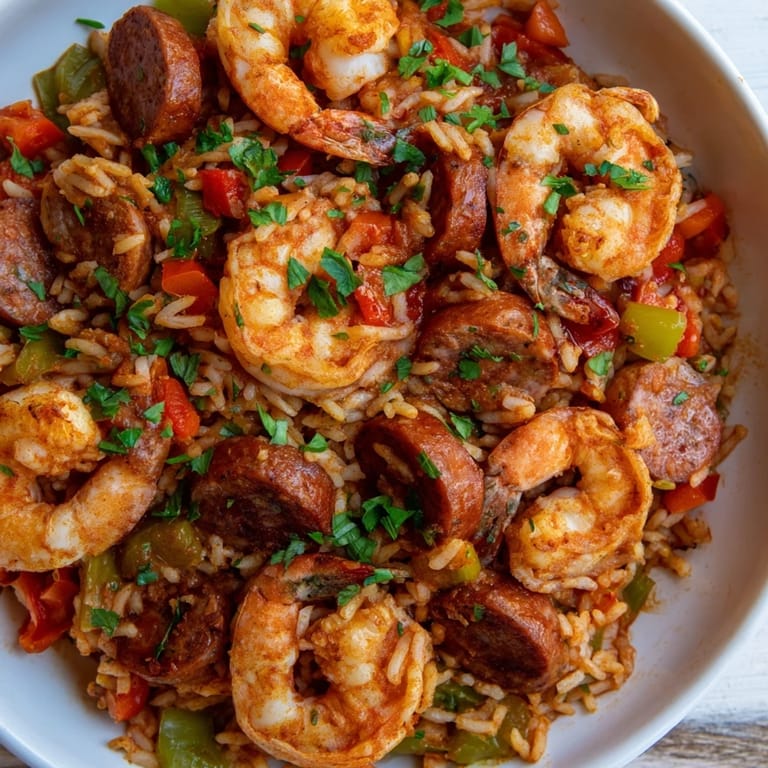
- After 20 minutes, arrange the shrimp on top of the rice mixture, cover again, and cook for 5–7 minutes. You'll see them turn from gray to bright pink, which is your signal they're done. Overcooking shrimp is how they get rubbery, so watch the clock.
- Fluff and serve:
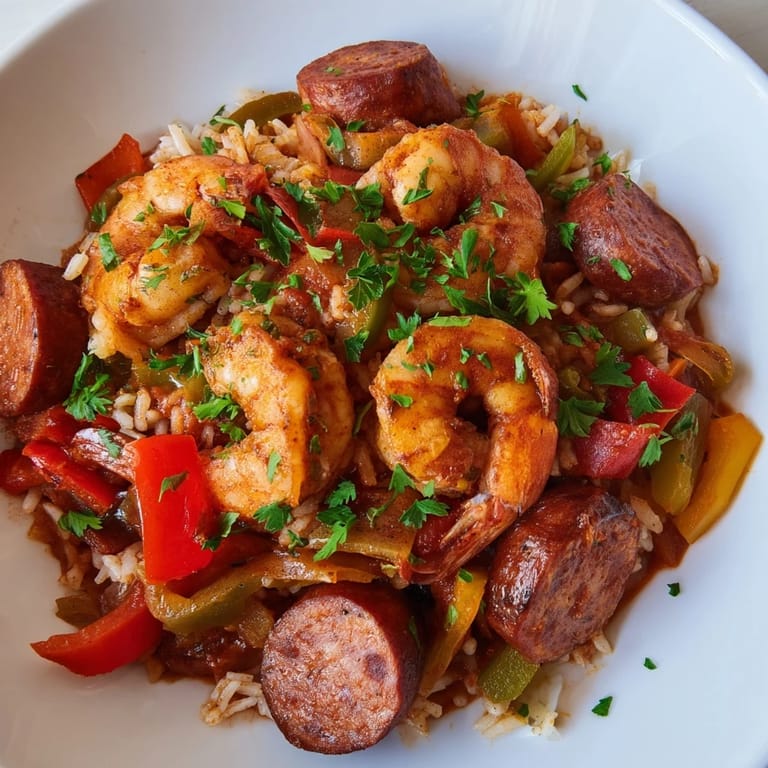
- Give the rice a gentle fluff with a fork, scatter parsley over the top, and serve straight from the skillet if you want to feel like a real cook.
 Save
Save The first time I made this, my teenage son actually came into the kitchen unprompted and asked what smelled so good. We ended up cooking together, and he learned that Creole isn't some foreign cuisine—it's just good food that comes from mixing what you have with bold flavors and not being afraid to let them shine.
Variations and Swaps That Work
You can absolutely make this your own without losing the soul of the dish. Chicken thighs work beautifully instead of shrimp—cube them and add them with the rice so they have time to cook through. If you want to go vegetarian, skip the sausage and add extra vegetables like okra or zucchini; the spices are strong enough to carry the dish on their own. Some people use diced ham or bacon, and while it changes the flavor profile, it still tastes like jambalaya.
Serving and Pairing Ideas
Serve this straight from the skillet with crusty bread on the side for soaking up the saucy bits at the bottom. A crisp white wine like Sauvignon Blanc cuts through the richness, or if you're in the mood, a cold beer works just as well. I've also served it with a simple green salad when people wanted something lighter alongside, and the acidity from the dressing brightens everything up.
Why This Dish Became a Favorite
Jambalaya isn't fussy or pretentious, which is partly why I keep making it. It's the kind of food that tastes better when shared, that fills your kitchen with a warmth you can actually feel, and that reminds you cooking doesn't have to be complicated to be memorable. Every time I make it, someone asks for the recipe, and I always give them the same advice my friend gave me: follow it the first time, then make it your own.
- If your kitchen tends to run cool, give the rice an extra 2–3 minutes of cooking time—altitude and climate do affect how rice cooks.
- Leftovers keep beautifully in the fridge for 3 days and actually taste even better as flavors meld together.
- If you accidentally add too much cayenne, stir in a touch of honey or a squeeze of lime juice to balance the heat.
 Save
Save This recipe has carried me through lazy weeknights and impromptu dinner parties alike. Once you make it, you'll understand why it's become such a beloved standard in my kitchen.
Recipe Guide
- → Can I substitute chicken for the shrimp?
Yes, chicken can be used instead of shrimp, or both can be combined for added protein variety.
- → What kind of sausage works best for this dish?
Andouille or smoked sausage provide the smoky flavor essential to the dish, but other smoked sausages work well too.
- → How can I add extra heat to the skillet?
A pinch of cayenne pepper or serving with hot sauce enhances the spiciness without overpowering the other flavors.
- → Is it important to cook the rice directly in the skillet?
Yes, cooking the rice in the skillet with the broth and tomatoes allows it to absorb all the spices and juices, enhancing the flavor and texture.
- → What sides pair well with this skillet dish?
Crusty bread and a crisp white wine like Sauvignon Blanc complement the rich, smoky flavors perfectly.