 Save
Save The first time I made baghrir, I was standing in a cramped kitchen in Marrakech, watching my friend's grandmother work with the batter like it was second nature. She didn't measure anything, just poured and whispered instructions I could barely follow. What struck me most wasn't the technique—it was how the pan suddenly erupted with tiny holes, like the crepe was breathing. Years later, I recreated that magic in my own kitchen, and now whenever I smell that butter and honey warming together, I'm transported back to that moment of pure kitchen wonder.
I served these to friends on a Sunday morning when I finally nailed the recipe, and the way their faces lit up when they bit into that tender, spongy texture made me realize why baghrir has been passed down through generations. One guest actually closed her eyes mid-bite, and that's when I knew I'd gotten it right.
Ingredients
- Fine semolina: This is the secret to that signature honeycomb texture—it creates tiny air pockets as the yeast works.
- All-purpose flour: Balances the semolina so the crepe stays tender and doesn't become dense or gritty.
- Warm water: Must be warm enough to activate the yeast but not so hot it kills it—think bathwater temperature, around 110°F.
- Active dry yeast: Just a teaspoon is enough; the batter doesn't need to rise dramatically, just get slightly bubbly.
- Baking powder: Works alongside the yeast to create those characteristic holes and add a whisper of lift.
- Granulated sugar: Feeds the yeast and adds the tiniest hint of sweetness that makes the honey shine.
- Salt: Brings everything into focus—don't skip it.
- Unsalted butter and honey: The finish that makes this simple crepe transcendent; together they create a sauce that pools into every honeycomb hole.
Tired of Takeout? 🥡
Get 10 meals you can make faster than delivery arrives. Seriously.
One email. No spam. Unsubscribe anytime.
Instructions
- Mix Your Dry Ingredients:
- Combine the semolina, flour, sugar, yeast, baking powder, and salt in a large bowl. I like to whisk them together for a few seconds to make sure the yeast is evenly distributed and won't clump when the water hits it.
- Whisk in the Water Slowly:
- Pour the warm water in gradually while whisking constantly, creating a smooth batter without lumps. It should feel pourable but not watery—more like a thick pancake batter.
- Let It Bubble and Rest:
- Cover the bowl with a kitchen towel and let it sit at room temperature for 30 minutes. You'll see small bubbles forming on the surface—that's the yeast and baking powder doing their work.
- Heat Your Pan Without Oil:
- Place a nonstick skillet or crepe pan over medium heat, and don't grease it. The drying effect actually helps create those signature holes.
- Pour and Swirl Gently:
- Ladle about ¼ cup of batter into the center of the hot pan and swirl it gently to spread evenly. It should be thin but not paper-thin.
- Watch for the Holes:
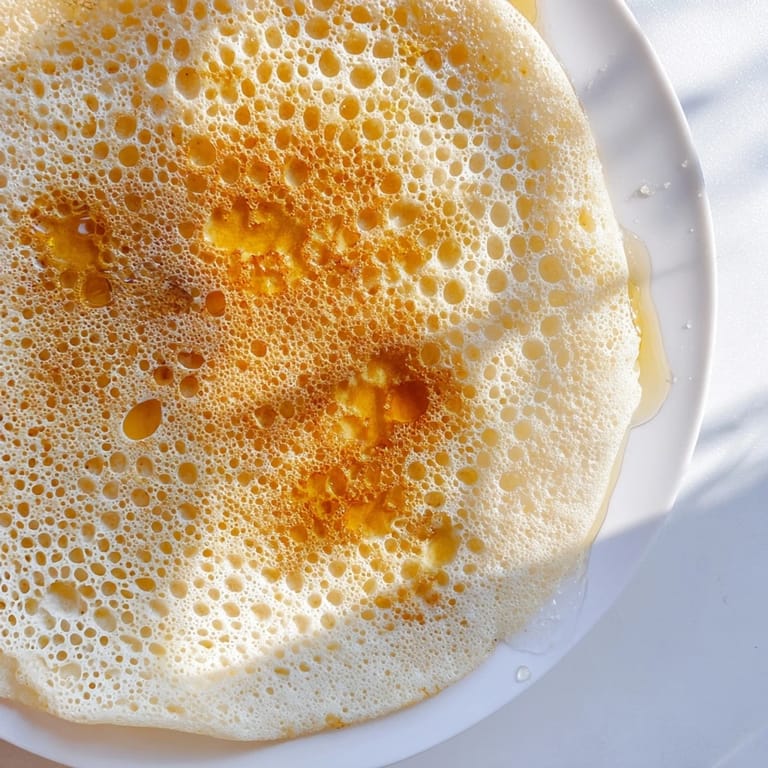
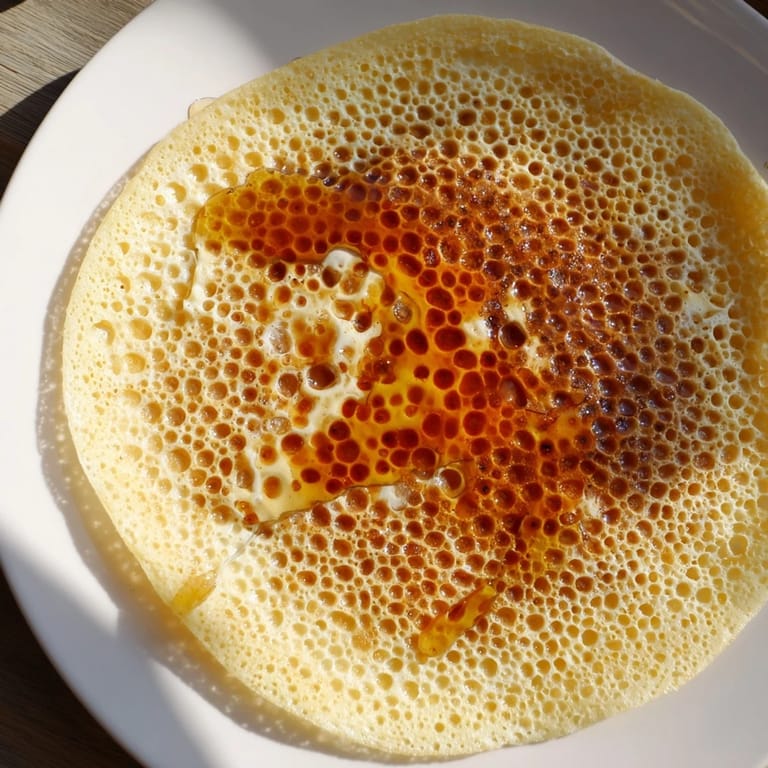
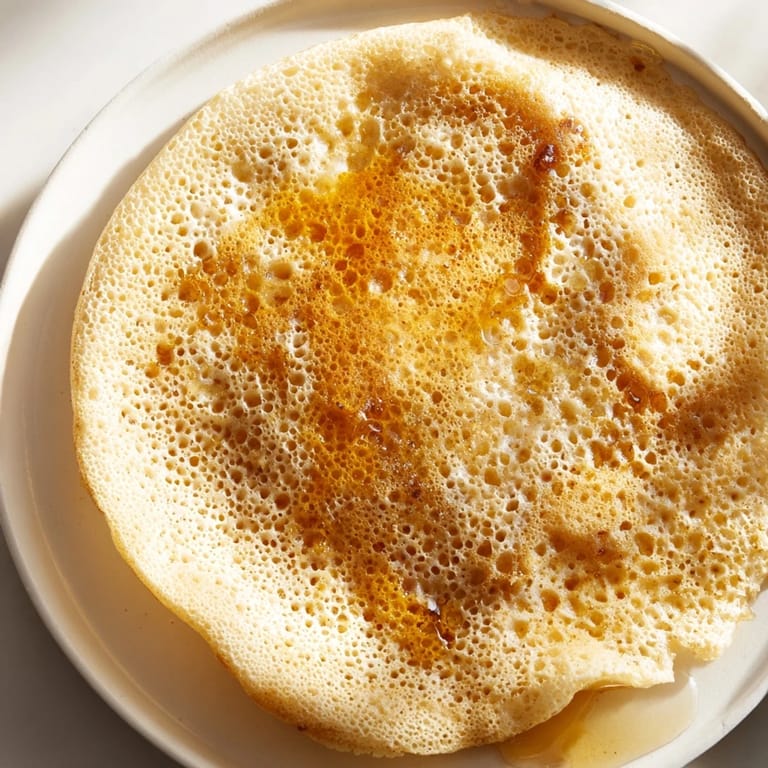
- Cook for 2 to 3 minutes without flipping. You'll see the surface gradually cover with tiny holes as the moisture evaporates and the batter sets—this is the magic moment.
- Transfer and Repeat:
- Once the top looks dry and the holes are visible, slide the baghrir onto a plate and repeat with the remaining batter. Stir the batter occasionally as you go since the solids can settle.
- Warm the Honey Butter:
- In a small saucepan, melt the butter over low heat and stir in the honey until they're completely combined and warm.
- Serve Immediately:
- Drizzle the warm honey-butter generously over each baghrir while it's still warm so it soaks into all those honeycomb pockets.
 Save
Save There's something almost meditative about making baghrir once you understand the process. Each crepe is a small act of patience, and watching that spongy surface appear feels like a tiny victory every single time.
Timing and Temperature
The resting period is non-negotiable—30 minutes gives the yeast and baking powder enough time to create those gas bubbles that become the holes. Rushing this step means you'll get a flat, dense crepe instead of the airy texture you're after. As for the pan, medium heat is your sweet spot; too high and the bottom burns before the top is set, too low and you won't get any browning at all.
The Art of the Honey Drizzle
Melting the butter and honey together is more than just convenience—it creates a unified sauce that soaks into every hole instead of sitting on top. I learned this the hard way, trying to drizzle cold honey once, and it just pooled awkwardly. Warm butter and honey together are liquid gold, literally and figuratively.
Making It Your Own
While baghrir is traditionally simple, I've played with additions over the years. Orange blossom water stirred into the honey is stunning, and a sprinkle of crushed pistachios adds a textural contrast that feels luxurious. You can also serve these with thick yogurt on the side or a drizzle of argan oil instead of butter—each version tells its own story.
- Toast chopped almonds or walnuts and scatter them over the warm crepes for crunch and nuttiness.
- Steep a cinnamon stick and a few threads of saffron in the honey-butter mixture for a more complex flavor.
- Serve with crème fraîche on the side if you want to soften the sweetness with something tangy.
 Save
Save Baghrir has taught me that some of the most beautiful foods are built on simplicity and patience. Serve these warm, watch someone's face light up, and you'll understand why this humble North African crepe deserves a permanent place in your breakfast rotation.
Recipe Guide
- → What gives Baghrir its honeycomb texture?
The bubbly texture forms when the batter rests, allowing yeast to create gas bubbles, and cooking on one side lets holes appear on the surface.
- → Can I use regular flour instead of semolina?
Semolina is key for the distinctive texture, but combining it with all-purpose flour helps balance the batter. Using only regular flour alters the texture.
- → Why is the crepe cooked on only one side?
Cooking on one side allows bubbles to form on top without flipping, preserving the signature porous surface.
- → How should the batter consistency be for Baghrir?
The batter should be smooth and pourable but not too thin; resting helps it thicken slightly and become bubbly.
- → What is the traditional way to serve Baghrir?
Warm Baghrir is typically served drizzled with melted butter and honey, enhancing its soft, slightly sweet flavor.