 Save
Save There's something about the aroma of a tagine simmering on the stove that pulls everyone into the kitchen without invitation. Years ago, I watched my neighbor stir a massive pot of lamb tagine, the steam carrying cinnamon and honey through her kitchen, and I realized then that this wasn't just dinner—it was an entire afternoon of warmth condensed into one dish. I went home and attempted it that very night, burning the spices slightly but somehow getting closer to magic than I expected. Now when I make it, that same fragrance fills my kitchen, and I'm transported back to standing in her doorway, hungry and curious.
I made this for a dinner party once when I was still learning my way around Moroccan cooking, and my friend Sarah kept asking what that incredible smell was while we were still in the appetizer course. By the time we sat down to eat, the whole apartment had transformed into something that smelled like a souk during golden hour. Watching people close their eyes with that first spoonful—that's when I knew this recipe had become something I'd make again and again.
Ingredients
- Lamb shoulder, cut into 2-inch cubes (1.5 kg): The shoulder is forgiving and becomes butter-soft after braising; avoid leaner cuts that dry out.
- Olive oil (2 tbsp): Use good oil for browning, not your finest—save that for finishing.
- Onions (2 large, finely chopped) and garlic (4 cloves, minced): These are your flavor foundation; don't skip mincing the garlic fine.
- Fresh ginger (1-inch piece, grated): This brings a subtle heat that balances the sweetness beautifully.
- Ground cinnamon (1 ½ tsp), cumin (1 tsp), coriander (1 tsp), turmeric (1 tsp), black pepper (½ tsp), allspice (½ tsp), ground ginger (½ tsp), and saffron (1 pinch, optional): Toast these spices briefly in the pot to unlock their full personality; saffron is a luxury but transforms the depth.
- Beef or lamb broth (400 ml) and canned tomatoes (400 g): Use good broth—it's the backbone of the sauce.
- Honey (2 tbsp): This doesn't sweeten so much as round out the spices and balance the acidity.
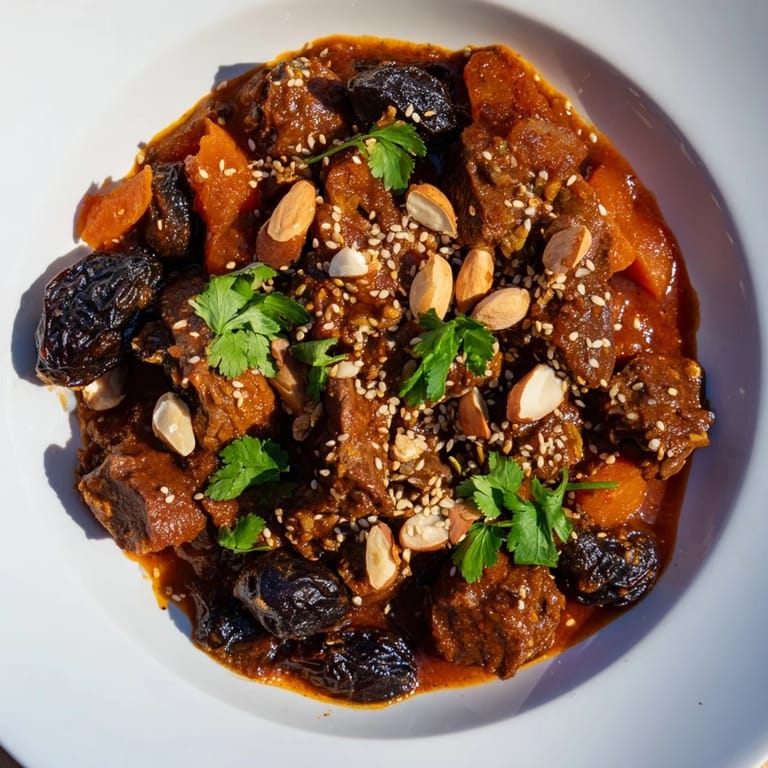
- Prunes (200 g, pitted) and blanched almonds (80 g, whole): Toast the almonds yourself just before adding for a nutty snap that canned ones never achieve.
- Sesame seeds (2 tbsp, toasted) and fresh cilantro or parsley: These wake up the finished dish after hours of slow cooking.
- Salt: Taste as you go; you'll likely need more than you think.
Tired of Takeout? 🥡
Get 10 meals you can make faster than delivery arrives. Seriously.
One email. No spam. Unsubscribe anytime.
Instructions
- Set Your Stage:
- Preheat your oven to 160°C (325°F). If you have a traditional tagine, all the better, but a heavy Dutch oven works beautifully too; the low, even heat is what matters.
- Brown the Lamb Properly:
- Heat 1 tbsp olive oil over medium-high heat until it shimmers, then brown the lamb in batches—don't crowd the pan or the meat steams instead of sears. This takes patience, but those caramelized edges are where the flavor lives.
- Build Your Aromatics Base:
- Add the remaining oil, onions, garlic, and ginger to the pot and cook for 5 minutes until the onions turn translucent and soft. You want this stage to smell sweet and gentle, not harsh.
- Bloom the Spices:
- Sprinkle in every spice and the saffron if you're using it, stirring constantly for just 1 minute. You'll feel the moment they wake up—the kitchen fills with warmth and fragrance, and you'll know it's right.
- Bring It Together:
- Return the lamb to the pot and add the tomatoes, broth, and honey. Stir well, bring to a gentle simmer, then cover and transfer to the oven (or reduce heat to low on the stovetop if you prefer).
- The Long Braise:
- Cook covered for 1 hour 30 minutes, stirring occasionally. The meat will soften, the sauce will deepen, and the spices will marry into something more complex than their individual parts.
- Toast and Add the Nuts:
- While that's happening, toast your almonds in a dry skillet over medium heat for 2–3 minutes until they turn golden and smell nutty. This step is worth doing fresh—it makes all the difference.
- The Final Phase:
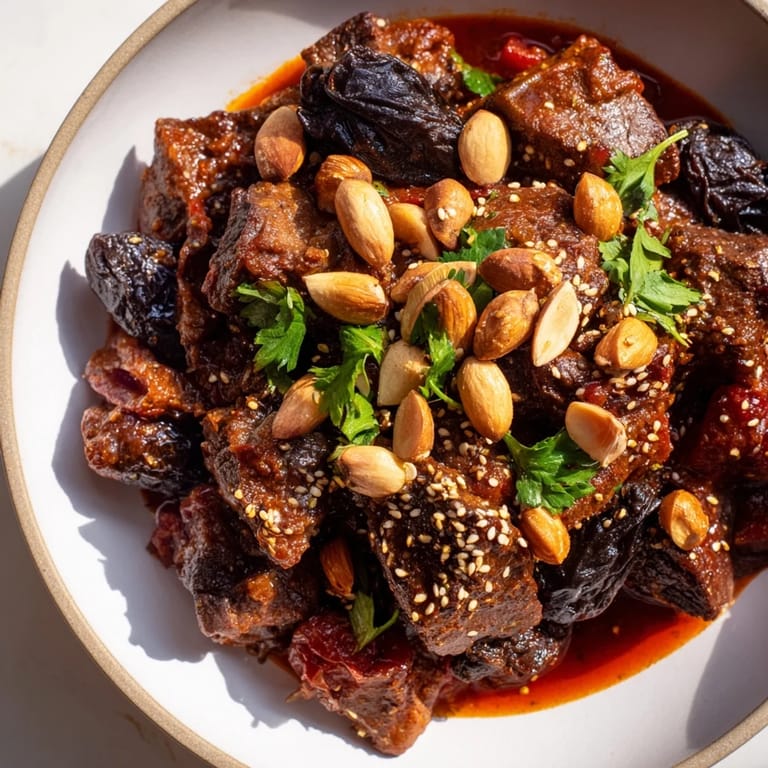
- After 1 hour 30 minutes, stir in the prunes and toasted almonds, then cook covered for another 30–45 minutes. The lamb should shred easily with a fork, and the sauce should coat the back of a spoon.
- Taste and Finish:
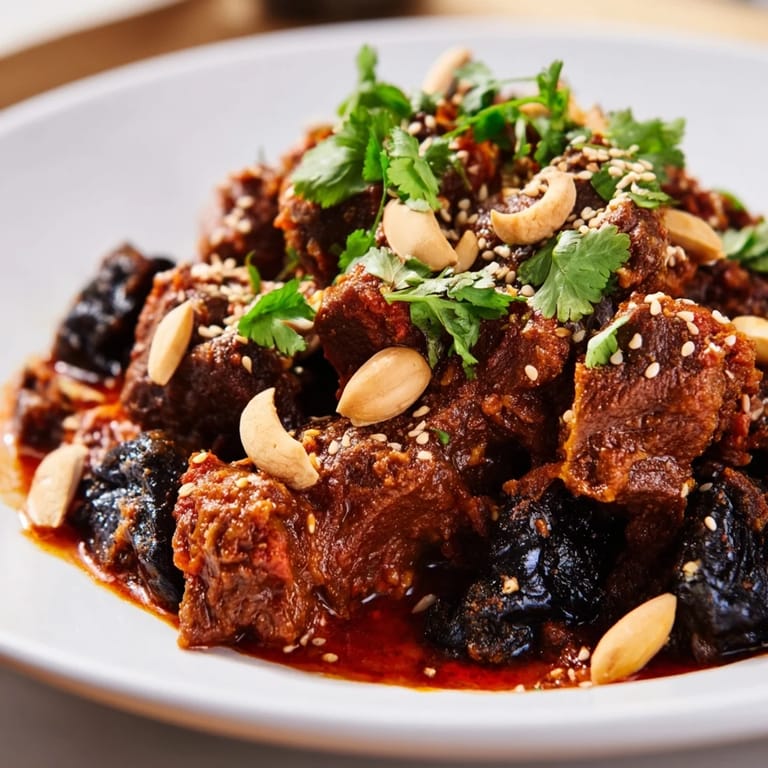
- Adjust salt to taste—you'll almost certainly need more than you think. Serve hot, scattered with sesame seeds and fresh cilantro or parsley.
 Save
Save There was one evening when everything aligned—the tagine was perfect, the couscous was fluffy, and a friend brought wine that paired so naturally with the spices that we all just stopped and smiled at each other. That's the moment I realized this dish does something beyond nourishment; it creates space for people to slow down together.
Serving Suggestions
Serve this over steamed couscous, saffron rice, or with crusty bread to soak up the sauce. Each carrier brings something different—couscous is traditional and absorbs the flavors gently, rice adds its own perfume, and bread is pure comfort. I've done all three depending on my mood, and there's no wrong answer.
Make-Ahead and Storage
This tagine tastes even better the next day after the flavors settle and deepen overnight. Make it a day ahead, refrigerate it, then gently reheat on the stovetop over low heat—it reheats beautifully without drying out. You can also freeze it for up to three months; thaw overnight in the fridge and reheat as you would leftovers.
Variations to Explore
Once you've made this once, you'll feel confident enough to adjust. Apricots can replace the prunes for a brighter note, or you could add a handful of dried cherries for a subtle tartness. Some people marinate the lamb overnight in the spices and a bit of oil before browning—it deepens everything even further.
- Marinating the lamb overnight makes the spice flavors more assertive and rich.
- Dried apricots offer a lighter, brighter alternative to the sweetness of prunes.
- A pinch of ground cloves or nutmeg can add complexity if you're feeling adventurous.
 Save
Save This is the kind of dish that justifies a slow afternoon and worthy company. Make it when you have time to let it simmer and people who'll appreciate both the food and the care.
Recipe Guide
- → What cut of lamb works best for this dish?
Lamb shoulder cut into cubes is ideal due to its marbling, which becomes tender and flavorful during slow cooking.
- → Can I prepare this on the stovetop instead of the oven?
Yes, using a heavy-bottomed pot or tagine, cook over low heat covered, stirring occasionally until the lamb is tender.
- → How do prunes and almonds contribute to the dish?
Prunes add a natural sweetness while toasted almonds provide a crunchy texture and nutty flavor, balancing the spices.
- → What are good side dishes to serve with this?
Steamed couscous, saffron rice, or crusty bread complement the rich and aromatic lamb beautifully.
- → Can I substitute any ingredients for dietary preferences?
Apricots can replace prunes for variation; ensure broth and canned tomatoes suit dietary needs, especially for gluten sensitivity.