 Save
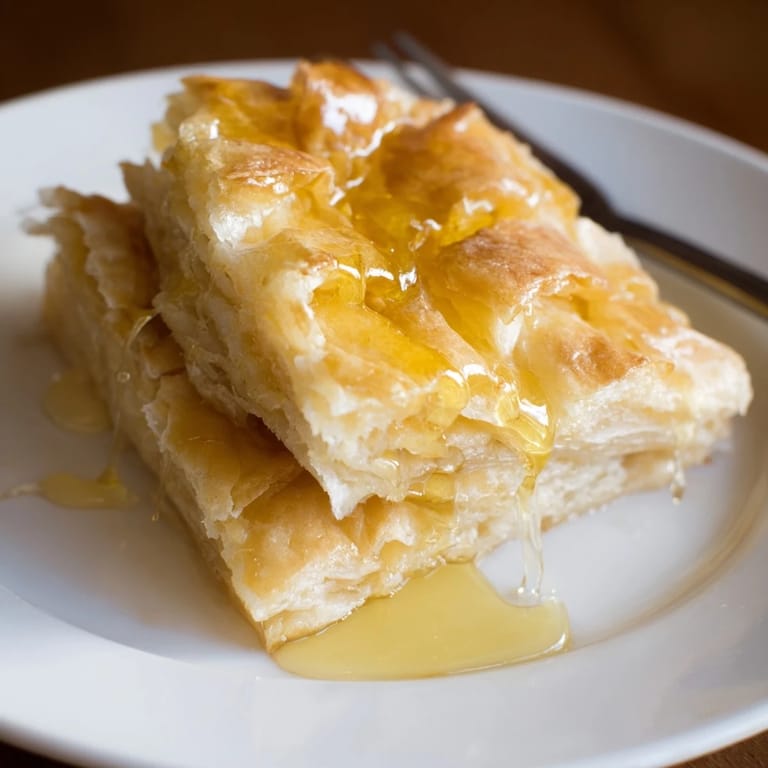
Save The first time I tasted Msemen, I was sitting in a cramped kitchen in Marrakech, steam rising from a cast-iron skillet as my host pulled golden squares from the heat. She'd made them since before dawn, and the smell—buttery, nutty from the semolina, impossibly crisp—made me understand why this pastry is woven into Moroccan mornings. I've been chasing that moment ever since, learning that the magic isn't just in the ingredients but in the patient folding and the way the dough transforms under your hands.
I made Msemen for a group of friends who'd never had it before, and watching their faces light up as they bit into the warm pastry dipped in honey—that's when I realized this wasn't just breakfast, it was a small edible gift. One friend actually closed her eyes, and I caught myself smiling because I remembered doing exactly the same thing years ago.
Ingredients
- All-purpose flour (2 cups / 250 g): The foundation of your dough, and using the weight rather than volume gives you consistency every single time.
- Fine semolina (1 cup / 120 g): This is what gives Msemen its signature nutty flavor and that sandy, slightly grainy texture that makes it feel special.
- Sugar (1 tsp) and Salt (1 tsp): A tiny amount of each awakens the other flavors without making the pastry sweet.
- Warm water (1 1/4 cups / 300 ml): The temperature matters more than you'd think—too hot kills the yeast, too cold and your dough won't come together smoothly.
- Instant yeast (1 tsp, optional): If you add this, your Msemen will be slightly lighter and more tender, almost brioche-like in its crumb.
- Vegetable oil (1/2 cup / 120 ml plus extra): You'll use this for greasing and frying, and having extra on hand prevents any sticky moments.
- Unsalted butter, melted (1/4 cup / 60 g): This brushed between folds creates those gorgeous visible layers and adds a richness that transforms the whole pastry.
- Fine semolina for dusting (1/4 cup / 30 g): Sprinkled as you fold, this prevents sticking and adds textural contrast.
- Honey, warmed: The final flourish that makes everything feel indulgent—drizzle it generously without apology.
Tired of Takeout? 🥡
Get 10 meals you can make faster than delivery arrives. Seriously.
One email. No spam. Unsubscribe anytime.
Instructions
- Build your dough foundation:
- Combine the flour, semolina, sugar, salt, and yeast if you're using it in a bowl, then slowly add the warm water while mixing. Knead for about 10 minutes until the dough feels silky and elastic, then cover and let it rest for 15 minutes while it relaxes and gets easier to work with.
- Divide and oil everything:
- Portion your dough into 8 equal balls and coat your hands and work surface generously with oil—this is your best friend against sticking.
- Stretch and build layers:
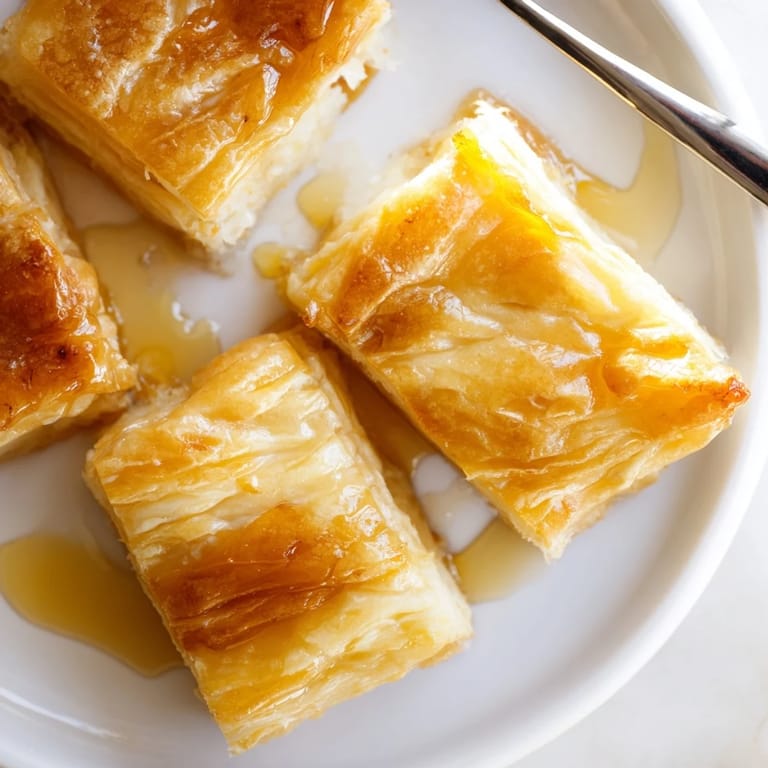
- Take one dough ball and, using your oiled hands, gently stretch it thinner and thinner until it's almost translucent, then brush it with melted butter and sprinkle with semolina. Fold the edges in toward the center to form a square, brushing and dusting with semolina as you go, creating those precious layered folds.
- Let them rest:
- Set your folded squares aside for 5 minutes, which gives the gluten a moment to relax before frying.
- Prepare for frying:
- Heat your non-stick skillet over medium heat, brush it lightly with oil, then gently flatten each Msemen square to about 1/4-inch thick using your fingertips.
- Fry until golden:
- Fry each square for 2 to 3 minutes per side until it's golden brown and deeply flaky, adding more oil to the pan as needed so it fries rather than bakes.
- Finish with honey:
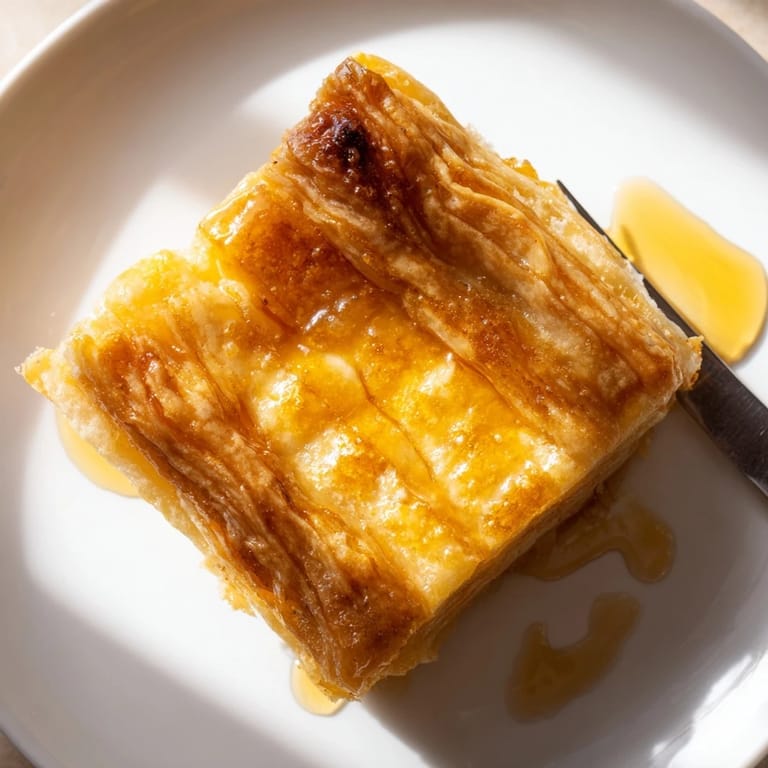
- Serve the warm Msemen immediately, drizzled with warmed honey that pools into all the crispy crevices.
 Save
Save There's a moment when you first pull a Msemen from the skillet and the steam hits your face, and the pastry is still so hot it's almost impossible to eat, but you try anyway because waiting feels impossible. That's when it's perfect—when it's just cool enough to hold but still so warm the honey pools and soaks into every layer.
The Folding Technique That Changes Everything
The most common mistake I see is not stretching the dough thin enough before folding. You want it almost see-through, which feels terrifying at first because you think it's going to tear, but the dough is more forgiving than you expect. If you do get a small hole, just pinch it closed and keep going—nobody will know but you, and honestly, it won't affect the final result.
Why the Honey Matters
Don't skimp on the honey, and please warm it first so it flows into the crevices rather than sitting on top like an afterthought. I've learned that the honey isn't just a topping—it's the thing that transforms a flaky pastry into something that feels ceremonial and special. The warmth of the pastry mixing with the warm honey creates a texture that's almost molten, and that contrast with the crisp exterior is honestly what makes people remember this dish.
Serving and Sharing
Msemen is best enjoyed within minutes of frying, ideally with someone else so you're not eating alone in your kitchen trying to be dignified about the honey dripping everywhere. If you have amlou (that almond-honey paste from Morocco), serve it alongside—it adds another layer of richness that's absolutely worth seeking out. If you want to add personality, a pinch of cinnamon or a few drops of orange blossom water mixed into the dough gives it a fragrant twist that feels like you've been cooking Moroccan food your whole life.
- Leftover Msemen can be gently reheated in a skillet for a few minutes to restore some of that crispness.
- You can prepare the dough the night before and keep the folded squares in the fridge, covered with a damp cloth, then fry them fresh when you're ready.
- This recipe doubles beautifully if you're feeding a crowd or just want to make sure there are leftovers.
 Save
Save Msemen feels like a secret handed down, and now that you know how to make it, you get to pass that secret forward. There's something deeply satisfying about creating something so elemental and so delicious from just flour, water, and a little patience.
Recipe Guide
- → What gives msemen its flaky texture?
The flaky texture comes from layering thinly stretched dough with melted butter and semolina, then folding it multiple times before pan-frying.
- → Can msemen be made without yeast?
Yes, the yeast is optional and mainly used to achieve a lighter texture; without it, msemen will be denser but still delicious.
- → What type of pan is best for cooking msemen?
A non-stick skillet or griddle heated over medium heat helps cook msemen evenly and develop a crisp, golden crust without sticking.
- → How should msemen be served for best flavor?
They are traditionally served warm, drizzled with honey, but can also be enjoyed with almond-honey spreads or fresh jam for variation.
- → Can msemen dough be flavored differently?
Yes, adding a pinch of cinnamon or orange blossom water to the dough introduces fragrant notes that complement the pastry well.