 Save
Save The first time I really understood paella wasn't from a cookbook—it was watching my neighbor Maria stand over a massive pan at a backyard gathering, the whole neighborhood drawn in by that intoxicating smell of saffron and seafood hitting hot oil. She worked with such casual confidence, never consulting a single note, and I realized then that paella isn't fussy or intimidating. It's actually the opposite: it's a forgiving, one-pan celebration that gets better the more people you cook it for.
I made this for my sister's birthday last spring, and what I remember most isn't the recipe itself but the moment everyone went quiet. Not awkward quiet—that satisfied, hungry quiet where you can hear the gentle sizzle of the pan and people breathing between bites. My brother-in-law, who claims to hate seafood, ate three platefuls. Sometimes a dish becomes less about the ingredients and more about what it creates around the table.
Ingredients
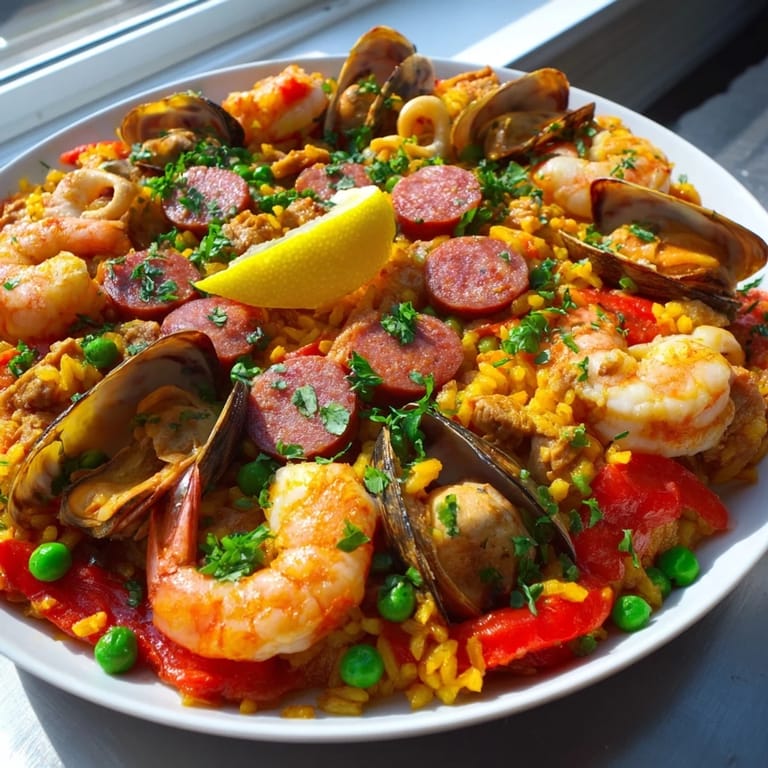
- Chorizo sausage, 200 g (7 oz), sliced: The smoke and spice from chorizo is the backbone of the whole dish—don't skip it or substitute with regular sausage, as that deep, peppery flavor is what makes people ask for the recipe.
- Boneless, skinless chicken thighs, 250 g (9 oz), cut into bite-sized pieces: Thighs stay juicy and forgiving, unlike chicken breasts which can dry out if you're not watching the clock.
- Large shrimp, 250 g (9 oz), peeled and deveined: Buy them already prepped if it saves you time—this is where a shortcut feels completely earned.
- Mussels, 250 g (9 oz), cleaned and debearded: Fresh mussels are the test of whether you're ready—if any refuse to open during cooking, they're telling you something was wrong before they hit the pan.
- Calamari rings, 200 g (7 oz), optional: A nice-to-have that adds texture, but skip it without guilt if your budget or market doesn't have good ones.
- Short-grain paella or Arborio rice, 400 g (2 cups): This starch is crucial—it absorbs the broth without turning mushy and creates those prized crispy bits on the bottom called socarrat.
- Chicken or seafood stock, 1 L (4 cups), heated: Keep it warm in a separate pot, because cold stock dropped into hot rice will shock the cooking process.
- Saffron threads, 1/2 tsp: Expensive but essential—it's what gives paella its signature golden color and floral, slightly earthy depth that nothing else can replicate.
- Olive oil, 2 tbsp: Use a decent quality oil since it's doing real work here, not just background duty.
- Onion, 1 medium, finely chopped: The aromatic foundation that builds sweetness as it softens.
- Red and yellow bell peppers, 1 each, sliced: They add color, sweetness, and body without overpowering the more delicate flavors.
- Tomatoes, 2 medium, diced: Fresh tomatoes add brightness, but canned works in a pinch if yours aren't in season.
- Frozen peas, 150 g (1 cup): These go in near the end so they stay bright and slightly snappy—not a mushy afterthought.
- Garlic, 3 cloves, minced: Add it after the softer vegetables so it doesn't burn and turn bitter.
- Smoked paprika, 1 tsp: The smoky Spanish kind, not the sweet Hungarian version—this distinction actually matters here.
- Salt and black pepper, to taste: Season in layers as you go, tasting as you build flavor.
- Bay leaf, 1: Adds a subtle herbal note that rounds out all the bolder flavors without announcing itself.
- Fresh parsley, chopped, and lemon wedges, for garnish: Parsley brightens the finish, and lemon cuts through the richness in each bite.
Tired of Takeout? 🥡
Get 10 meals you can make faster than delivery arrives. Seriously.
One email. No spam. Unsubscribe anytime.
Instructions
- Bloom the saffron first:
- Pour 3 tablespoons of hot stock over the saffron threads and let them steep while you prep everything else—this draws out their color and flavor so they're ready to work when you need them.
- Brown the proteins:
- Heat your olive oil in the paella pan until you can feel the heat rising, then add chorizo and chicken pieces. Listen for that confident sizzle, and don't move them around too much—let them develop brown edges for about 5 to 7 minutes. This creates flavor depth before anything else goes in.
- Build the vegetable base:
- Toss in onion and bell peppers and let them soften for 4 to 5 minutes, stirring occasionally so they release their sweetness. Add garlic and tomatoes next, cooking just until the tomatoes start to break down—you want them integrated, not disintegrated.
- Toast the rice:
- Stir the rice into the pan with the smoked paprika, making sure every grain gets coated in the oil and vegetable mixture. You'll smell this shift—the rice takes on a subtle toasted quality that's the foundation of the whole dish.
- Return the cooked meat and add the liquid:
- Put the browned chorizo and chicken back into the pan, then pour in your saffron-infused stock and the remaining stock along with the bay leaf, salt, and pepper. Stir gently to combine, then don't touch it anymore.
- Let it simmer undisturbed:
- Bring everything to a boil, then reduce the heat to low and let it cook uncovered for 15 minutes without stirring—this is where the magic happens. The rice absorbs liquid evenly, and the bottom layer gets a chance to crisp slightly.
- Nestle in the seafood:
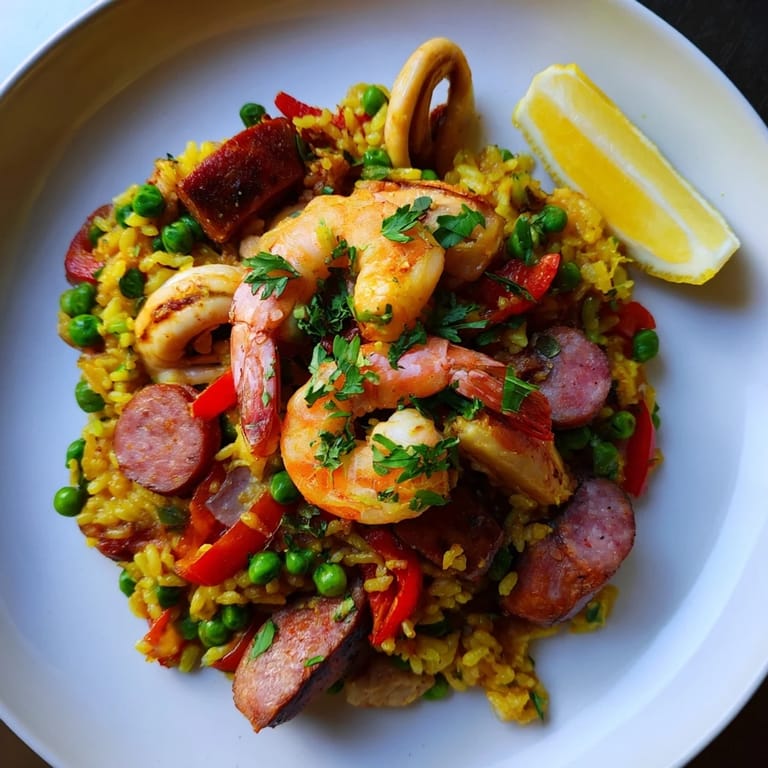
- After 15 minutes, use your fingers to gently press the shrimp, mussels, and calamari into the rice, scatter the peas on top, and cover loosely with foil. Cook for another 10 to 12 minutes until the shrimp are opaque and the mussels have opened.
- Rest and finish:
- Remove from heat, keep it covered, and let it sit for 5 minutes—this allows the rice to relax and any remaining liquid to distribute. Discard any mussels that stubbornly refused to open, then garnish with fresh parsley and lemon wedges.
 Save
Save My uncle told me once that paella is why Spanish families stayed so close—because you can't rush it, and you can't eat it alone. That stuck with me more than any technique ever could. This dish demands your presence and your patience, and in return, it gives you something people genuinely remember.
The Secret of Saffron
Saffron is expensive because it's harvested by hand from tiny threads inside crocus flowers, and honestly, it's the reason paella tastes like paella and not just seasoned rice with seafood. When you steep those threads in hot stock, you're extracting not just color but a floral, slightly mineral complexity that transforms the whole dish. Don't buy saffron from the clearance bin or someplace sketchy—it's often fake, and there's no sadder moment than realizing mid-cook that you've invested in dried grass instead of the real thing. A little goes a long way, and good saffron will make you a believer.
Seafood Selection and Timing
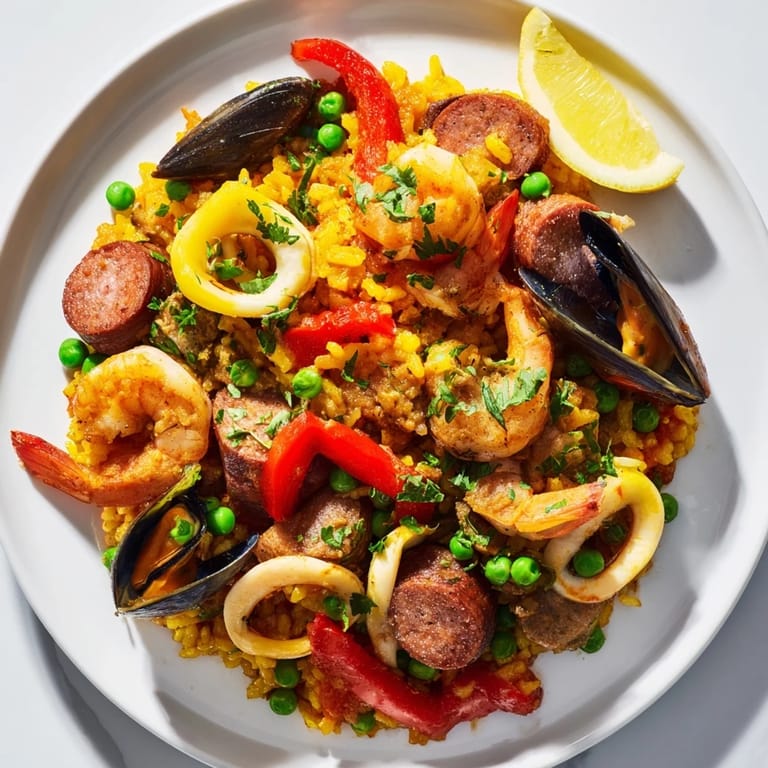
The different seafood proteins all cook at different speeds, which is why timing matters so much here. Shrimp need about 2 to 3 minutes in gentle heat to turn from translucent to opaque, mussels need just enough time to open their shells and release their brininess into the rice, and calamari can actually get tough if you overdo it. That's why they all go in together near the end, creating this beautiful window where everything finishes almost at once. The pan stops being just a cooking vessel and becomes something closer to a precise instrument.
Make It Your Own
Paella is Spanish, but it's not sacred—it's actually a dish that evolved from whatever was available in the region and what people felt like eating that day. You can swap the seafood for clams or scallops, add artichokes or green beans instead of some of the other vegetables, or dial back the spice if your family prefers milder food. The structure stays the same: toast the rice, build the base, add liquid, let it breathe. Everything else is conversation, not commandment.
- If you love heat, add red pepper flakes or a pinch of cayenne along with the paprika.
- For a vegetarian version, skip the meat entirely and amp up the vegetables, adding chickpeas or white beans for protein and substance.
- Keep a ladle of extra warm stock nearby in case the rice seems to be drying out too quickly—every stovetop and pan behaves slightly differently.
 Save
Save Paella is the kind of dish that makes you feel like a more confident cook, not because it's complicated, but because it rewards patience and presence. Make it once, and you'll understand why people keep coming back to the same table.
Recipe Guide
- → What type of rice is best for this dish?
Short-grain paella rice or Arborio rice works best as they absorb flavors well without becoming mushy.
- → Can I substitute the seafood ingredients?
Yes, clams or scallops make excellent alternatives if preferred or to vary flavors.
- → How does saffron affect the dish?
Saffron adds a unique aroma and golden color, enhancing the overall flavor profile.
- → Is it important not to stir during cooking?
Yes, avoiding stirring helps form the desirable crust on the bottom, called socarrat, which adds texture and flavor.
- → What wine pairs well with this dish?
A crisp Spanish white wine like Albariño or Verdejo complements the smoky and seafood flavors perfectly.