 Save
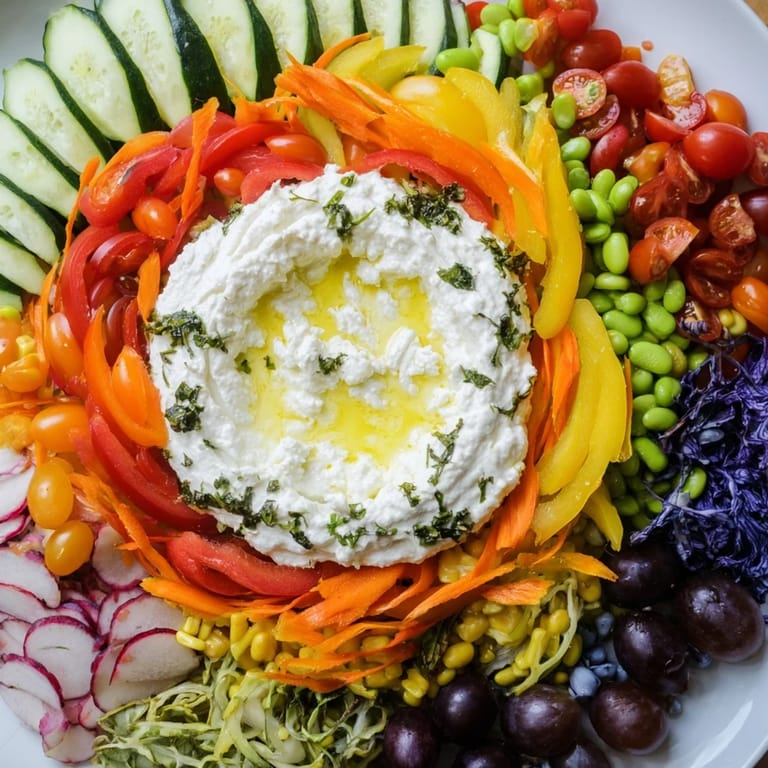
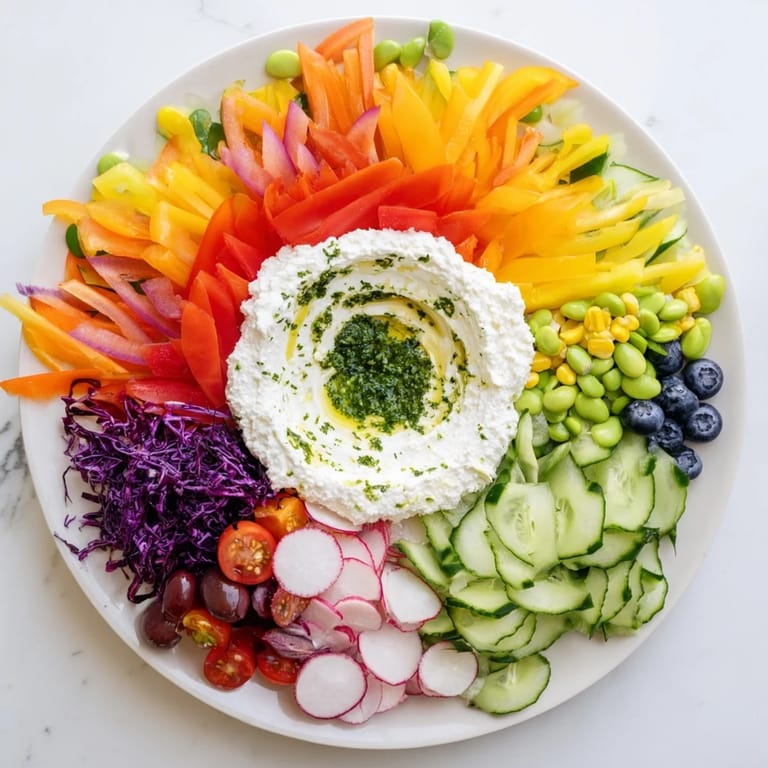
Save I discovered this salad by accident, honestly. I was arranging leftover vegetables on a plate for lunch and suddenly noticed how the colors naturally ordered themselves—red, orange, yellow, green, blue, violet. It looked like someone had painted a rainbow across the platter, and I realized I was holding something visually beautiful enough to actually serve guests. That afternoon changed how I think about salads entirely, turning them from side dishes into edible art.
My sister came over asking for something healthy that wouldn't bore us, and I remembered this prism idea. Watching her face when I set the plate down was worth every minute of slicing—she actually paused before eating just to photograph it. That's when I knew this wasn't just a salad; it was a moment.
Ingredients
- Ricotta cheese: The creamy white center that anchors everything, though Greek yogurt works beautifully if you want lighter or tangier vibes.
- Extra-virgin olive oil: Good oil matters here because you taste it, especially in that quiet dollop of cheese at the start.
- Lemon zest: Just a teaspoon wakes up the entire salad, so don't skip it even though it seems tiny.
- Cherry tomatoes: Halved so they nestle into the arrangement and release their sweetness into every bite.
- Red and orange bell peppers: The thinner you slice them, the more delicate the whole thing feels.
- Shredded carrots: Raw and bright, they add a subtle sweetness that balances the savory cheese.
- Yellow bell pepper and corn: These together read as pure summer, even in the middle of winter.
- Cucumber, edamame, and fresh herbs: The green layer is where texture comes alive, stay crisp and snappy.
- Blueberries and purple cabbage: The blue stripe happens because of this unexpected pairing, which is honestly the fun part of making it.
- Red grapes and radishes: These finish the spectrum with that violet note that makes people ask if you're showing off.
- Simple dressing: Olive oil, lemon juice, and a touch of honey, whisked together because it needs to be light enough not to wilt anything.
Tired of Takeout? 🥡
Get 10 meals you can make faster than delivery arrives. Seriously.
One email. No spam. Unsubscribe anytime.
Instructions
- Build your white base:
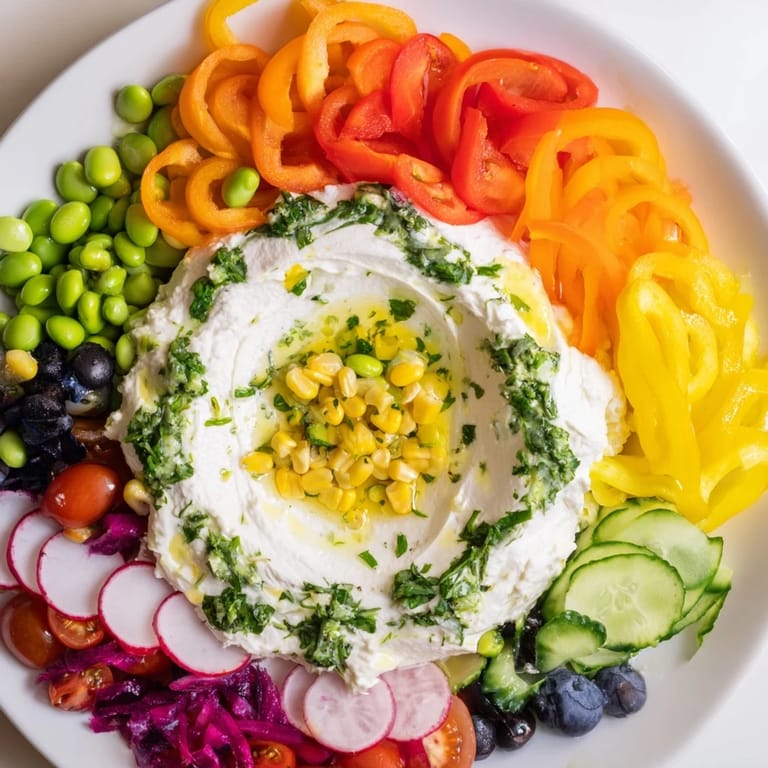
- Mix ricotta with olive oil, lemon zest, salt, and pepper until smooth and slightly loose. Spoon it into the center of your platter and spread it gently into a small circle—this is your focal point, so take a breath and make it intentional.
- Prep your colors separately:
- Put each colored ingredient group into its own small bowl so you can see what you're working with and adjust amounts as you go. This is your moment to eyeball it and make it your own.
- Fan out the prism:
- Starting right at the edge of that white center, arrange red ingredients in a curved stripe outward, then orange, yellow, green, blue, and finally violet, each one radiating like you're drawing a rainbow with vegetables. Keep the colors distinct so they actually pop.
- Make the dressing:
- Whisk olive oil, lemon juice, honey, salt, and pepper together in a small bowl until it's smooth and tastes bright. This should feel effortless, just a few vigorous whisks.
- Finish and serve:
- Drizzle the dressing lightly over everything just before people eat, or set it on the side so they can control it. Finish with a scatter of fresh herbs and a final crack of black pepper if you're feeling it.
 Save
Save There's something about arranging food this way that makes you slow down and actually pay attention to what you're eating. The first time someone told me they saved a photo of this salad just to remind themselves colors exist, I understood why I keep coming back to it.
Texture and Temperature Timing
The best version of this salad happens when everything is cold or at least cool, so the crispness actually registers on your tongue. I keep ingredients in the fridge until the last moment, and I even chill the platter beforehand if I'm not in a rush. The contrast between the cool vegetables and that creamy, slightly cool ricotta in the center is part of the whole experience.
Color Swaps and Seasonal Thinking
You don't need to be strict about this—if your market only has orange tomatoes or you can't find blueberries, swap them in without guilt. I've made this in winter using roasted beets instead of radishes and stored grapes instead of fresh berries, and it still felt like summer. The principle matters more than the exact ingredients, so build from what makes you happy.
Making It Special
This is the kind of dish that makes ordinary moments feel a little more intentional, which is honestly why people come back to it.
- Toast some pumpkin seeds or pine nuts and scatter them across before serving for crunch that lasts through the whole meal.
- Microgreens or edible flowers pressed gently into the arrangement turn it into something you'd see in a restaurant kitchen.
- A chilled glass of Sauvignon Blanc next to this is the move—crisp wine, crisp salad, the whole thing just sings.
 Save
Save This salad is a reminder that food doesn't have to choose between being beautiful and being delicious. Set it down, watch people notice, and know you've given them both.
Recipe Guide
- → What is the base of the salad?
The salad’s base is a creamy mixture of ricotta cheese or Greek yogurt combined with olive oil, lemon zest, salt, and pepper, spread in the center to anchor the colorful layers.
- → How are the colorful layers arranged?
The vegetables and fruits are neatly fanned out from the white base in red, orange, yellow, green, blue, and violet stripes, creating a prism-inspired visual effect.
- → Can this salad be adapted for vegan diets?
Yes, ricotta can be substituted with vegan cream cheese or plant-based yogurt to keep the creamy texture while making it suitable for vegans.
- → What dressing complements this salad?
A light dressing made of olive oil, lemon juice, honey or agave syrup, salt, and pepper enhances the fresh flavors without overpowering the ingredients.
- → Are there suggestions for extra texture or garnish?
You can add toasted seeds or nuts like pumpkin or pine nuts, and garnish with fresh herbs or edible flowers for additional crunch and color.