 Save
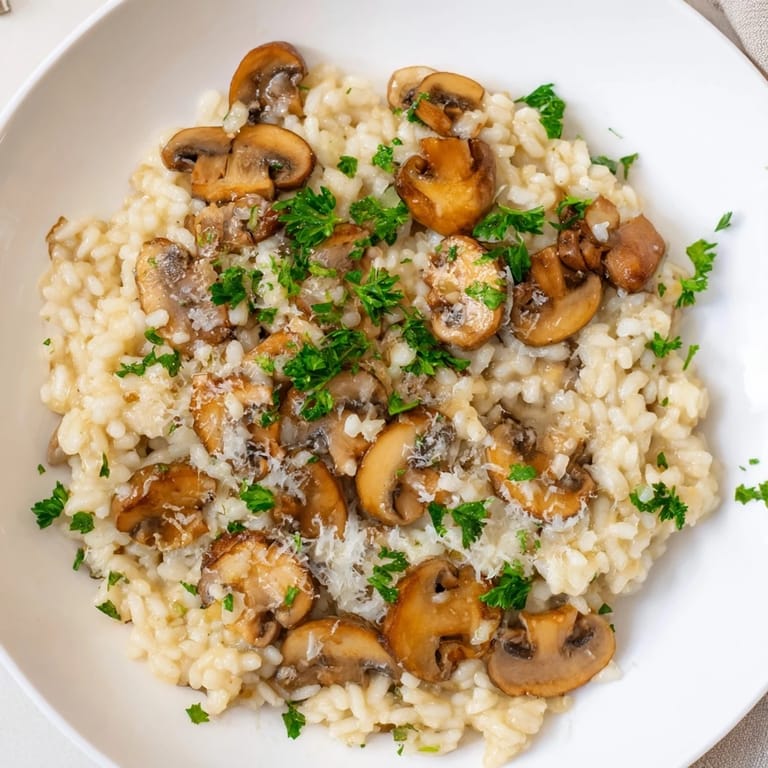
Save The first time I truly understood risotto was at my aunt's kitchen table in Milan, watching her stir a pot with the kind of patience I'd never seen before. She moved the wooden spoon in steady, deliberate circles, explaining that risotto isn't about rushing—it's about listening to the rice whisper when it's ready for the next splash of broth. That afternoon, something clicked. Years later, on a quiet Thursday night when I needed comfort food, I recreated that moment in my own kitchen, this time with earthy mushrooms that filled the whole house with their deep, savory aroma. This creamy, luxurious dish has since become my go-to when I want to feel like I'm cooking with intention.
I made this for my partner on a rainy Sunday, and halfway through stirring, they wandered into the kitchen and just sat at the counter, mesmerized by the smell and the sound of the spoon hitting the bottom of the pan. By the time the risotto was done, they said nothing—just ate and asked for seconds. That's when I knew this recipe was keeper-worthy.
Ingredients
- Arborio rice: Don't skip this variety—its high starch content is what creates that signature creamy texture without needing cream.
- Cremini or button mushrooms: Brown mushrooms have more earthiness than white ones, but honestly, use whatever you find and sauté them until they release their moisture and turn golden.
- Olive oil and butter: The combination gives the mushrooms a head start on flavor before they finish cooking in the risotto itself.
- Yellow onion and garlic: These are your flavor foundation—don't rush chopping them fine, because their sweetness balances the umami from the mushrooms.
- Vegetable broth: Keep it warm in another pot beside you; cold broth shocks the rice and disrupts the creamy consistency.
- Dry white wine: The acidity brightens everything and helps break down the rice grains just enough.
- Parmesan cheese: Grated fresh is worth the extra thirty seconds—pre-grated cheese has anti-caking agents that can make the risotto grainy.
- Fresh parsley: Optional, but a handful scattered on top adds a fresh note that cuts through the richness beautifully.
Tired of Takeout? 🥡
Get 10 meals you can make faster than delivery arrives. Seriously.
One email. No spam. Unsubscribe anytime.
Instructions
- Get your mushrooms golden and set them aside:
- Heat olive oil and butter together in your pan over medium heat, then add sliced mushrooms. Let them sit undisturbed for a minute or two before stirring, so they develop a golden crust instead of steaming. This takes about 6 to 8 minutes total—you'll know they're ready when any liquid they released has mostly evaporated and they smell deeply savory.
- Build your aromatic base:
- In the same unwashed pan, add chopped onion and cook gently until it turns soft and translucent, about 3 minutes. Add minced garlic next and stir for just 1 minute—garlic burns quickly and turns bitter if you're not watching.
- Toast the rice grains:
- Stir in the Arborio rice and keep stirring for about 2 minutes until you see the edges of the grains become translucent and slightly opaque in the center. This toasting step coats each grain with oil and helps it release starch gradually during cooking.
- Deglaze with wine:
- Pour in the white wine, which will immediately sizzle and smell wonderful. Stir constantly until the wine is mostly absorbed by the rice, maybe 1 to 2 minutes—there should be no free liquid left in the pan.
- Add broth gradually, stirring like you mean it:
- Using a ladle, add one ladleful of warm broth to the rice, stirring frequently. Wait until most of the liquid is absorbed before adding the next ladle—this usually takes 2 to 3 minutes per ladleful. Keep going for about 18 to 20 minutes total, tasting the rice near the end to make sure it's creamy and tender but still has a slight bite in the center.
- Finish and serve immediately:
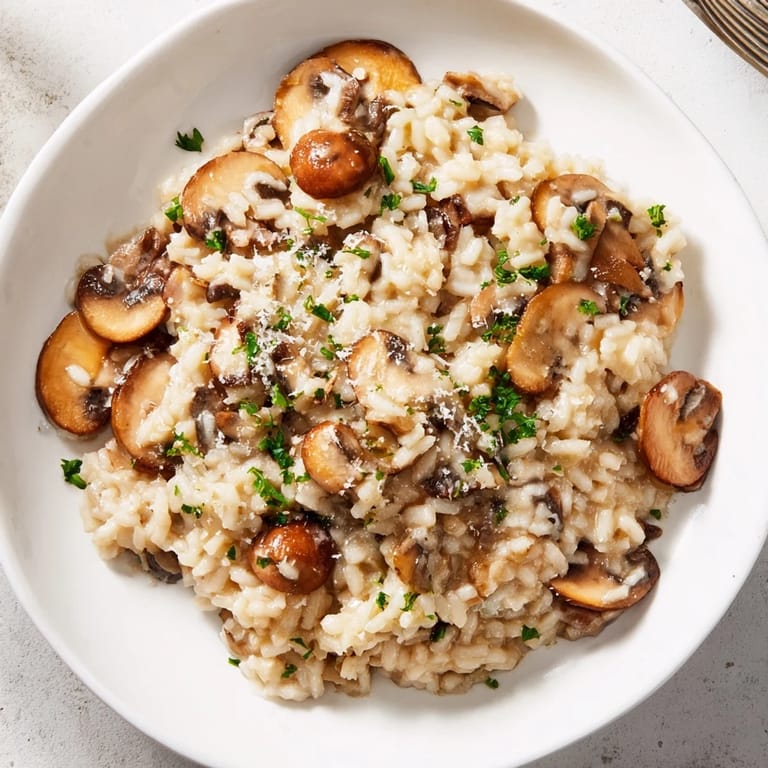
- Stir in the cooked mushrooms, butter, and Parmesan cheese. Taste and adjust salt and pepper, then immediately spoon the risotto into bowls because it continues to absorb liquid and will thicken as it sits.
 Save
Save There's a moment, usually around minute 15 of stirring, when my mind stops racing and I'm just present with the kitchen—the warmth from the pan, the sound of the wooden spoon, the smell of butter and mushrooms mingling together. It's meditation disguised as cooking, and somehow that's when risotto tastes best.
Why Mushrooms Are the Heart of This Dish
Mushrooms aren't just an ingredient here—they're the whole story. Their umami-rich depth plays beautifully against the creamy, slightly sweet rice, creating a balance that feels comforting and elegant at the same time. When you sauté them first and brown their surfaces, you're concentrating their flavor before they ever touch the risotto pot. I've tried this with just onion and garlic as the only vegetables, and it's fine, but adding mushrooms transforms it from nice to something people remember.
The Rhythm of Adding Broth
This is where risotto feels more like technique than luck. The constant addition of warm liquid, one ladle at a time, isn't about feeding the rice—it's about coaxing. Each addition should be mostly absorbed before you add the next one. You'll feel the rhythm after the third or fourth ladle, and from there it's almost meditative. Some cooks hate this part; I've learned to love it because there's no hiding, no multi-tasking possible. It demands you stay present, and somehow that's exactly what the dish rewards.
Variations and When to Make Them
Once you understand the basic structure, risotto becomes a canvas. On nights when I want something wilder, I use a mix of cremini, shiitake, and oyster mushrooms—each one brings a different texture and depth. I've also added fresh thyme or a squeeze of lemon zest at the end, both of which brighten everything. If you're cooking for someone who eats meat, swapping vegetable broth for a good chicken or mushroom stock deepens the savory notes without changing the technique at all.
- Try a mix of three different mushroom varieties if your market has them—each brings its own earthiness to the pot.
- A small splash of truffle oil stirred in at the very end is unnecessary but delightful if you're feeling celebratory.
- Leftovers can be turned into risotto cakes the next day by pressing the cooled risotto into patties and pan-frying them until golden.
 Save
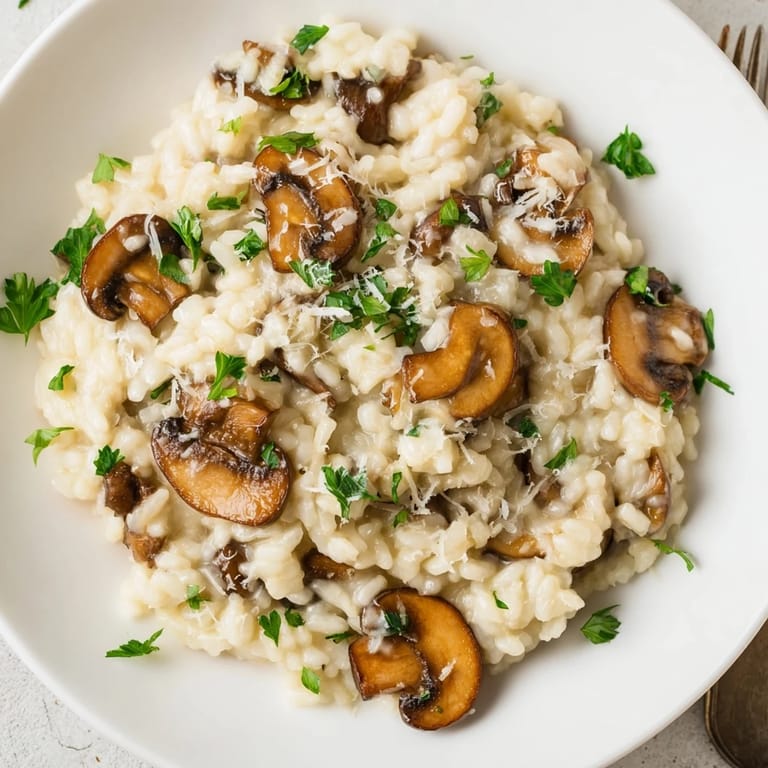
Save This risotto tastes like care tastes—like someone took time to stir and tend and listen. Serve it the moment it's ready, in warm bowls, with extra cheese on the side and someone you like sitting across from you.
Recipe Guide
- → What type of rice is best for this dish?
Arborio rice is ideal because it releases starch slowly, creating a creamy texture without losing firmness.
- → Can I use different mushrooms?
Yes, wild mushroom blends work beautifully to enhance the earthiness and add complexity to the flavor.
- → How should I stir during cooking?
Frequent stirring helps release the starch from the rice, promoting creaminess and preventing sticking.
- → Is dry white wine necessary?
It adds acidity and depth, but you can omit it or replace with extra broth if preferred.
- → How to know when the risotto is done?
The rice should be tender yet slightly firm to the bite, with a luscious creamy texture coating each grain.