 Save
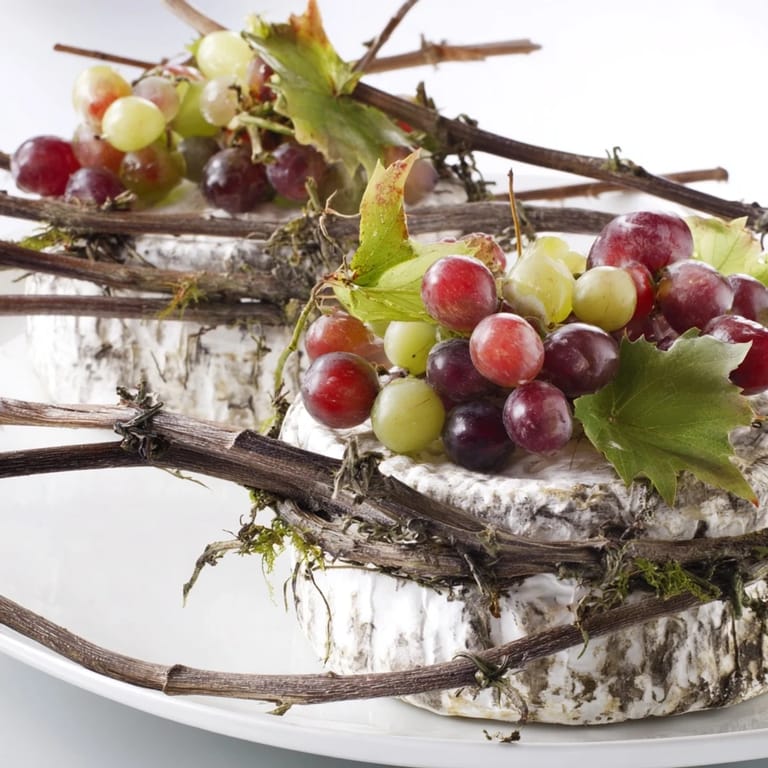
Save There's something about arranging food on a board that makes you feel like you've stepped into someone else's kitchen—the kind with stone walls and endless vineyards. I discovered this dish not through a recipe book, but by watching a neighbor in the countryside unwrap a wedge of young cheese wrapped in vine leaves, and it struck me how the simplest presentations often capture the most memory. That afternoon, surrounded by the smell of fresh grapes and the texture of untreated vines, I realized you don't need much to create something people gather around.
I remember setting this up for a small gathering on a warm evening, watching people's faces light up as they approached the board—it was less about hunger and more about curiosity. Someone asked if the vines were edible, and when I explained they were just for drama, everyone laughed and reached for the cheese anyway. That's when I understood: this dish works because it tells a story before anyone takes a bite.
Ingredients
- Young, rustic cheese wheels (tomme, young pecorino, or farmhouse): Look for wheels with that slightly rough, unfinished edge—they photograph beautifully and have a fresher, more delicate flavor than aged varieties.
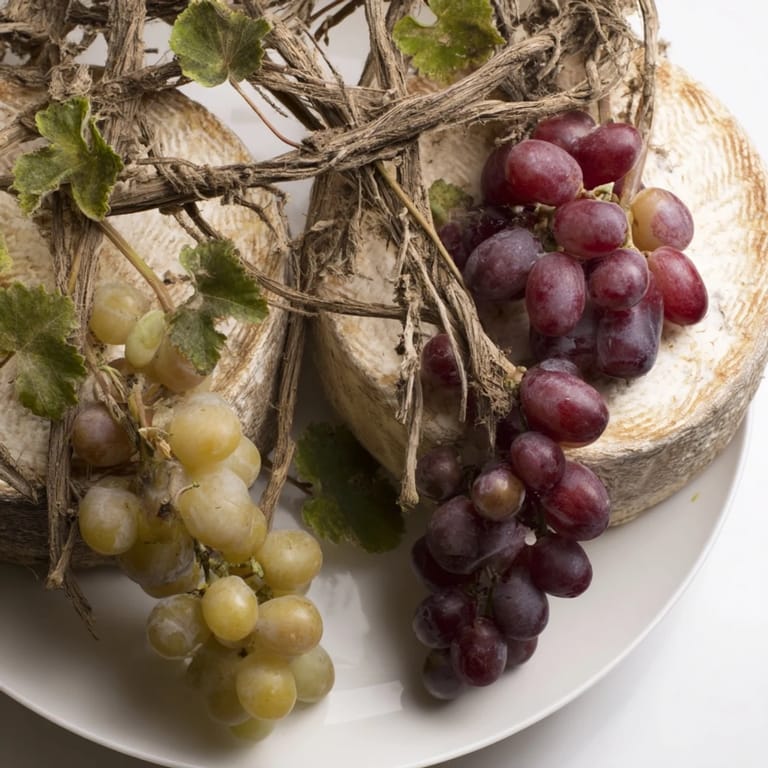
- Untreated grapevine branches: This is where the magic lives, so don't skip finding the real thing; the leaves have a subtle tang and the stems add authentic texture that grape leaves alone can't replicate.
- Fresh grapes on the stem: Keep them clustered when possible—they're easier to nestle between the vines and create natural pockets of color and sweetness.
- Rustic bread: A crusty baguette or country loaf gives something hearty to anchor the delicate cheese and cuts through the richness beautifully.
- Nuts and dried fruits: These are optional but they transform the board from a cheese plate into a full experience, adding texture contrasts and little flavor surprises.
Tired of Takeout? 🥡
Get 10 meals you can make faster than delivery arrives. Seriously.
One email. No spam. Unsubscribe anytime.
Instructions
- Prepare your stage:
- Choose a large wooden board or rustic platter that feels substantial—the cheese wheels are heavy and you want them to feel grounded. If your board is light wood, the vines and grapes will pop even more dramatically against it.
- Drape the vines with intention:
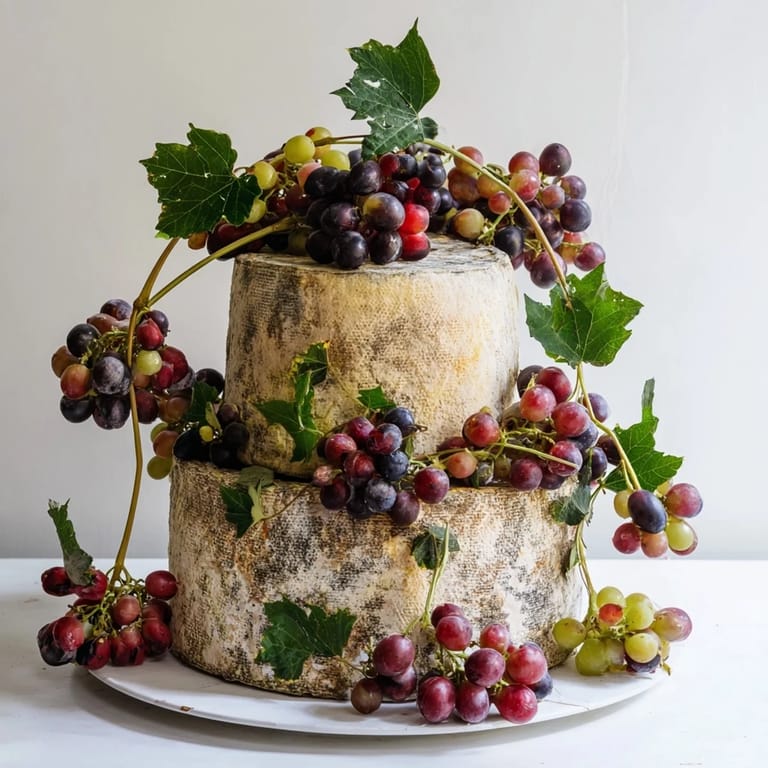
- Lay the grapevine branches loosely over and around the cheese wheels, letting them curve naturally as if they're still growing; think of it like tucking a blanket rather than arranging a pattern. The goal is lush and organic-looking, not symmetrical.
- Nestle the grapes:
- Tuck clusters of fresh grapes into the spaces where the vines overlap the cheese, and let some cascade down the sides; they'll catch light and add visual movement to the whole arrangement.
- Build the supporting cast:
- Arrange your bread slices, nuts, and dried fruits in small, loose piles around the board, leaving some breathing room so the cheese and vines stay the focus. Nothing should look crowded or over-thought.
- Bring it to the table:
- Serve everything at room temperature—cold cheese loses its nuance, and that's when people discover how the flavors actually dance together. Set out a sharp cheese knife so people can cut their own wedges.
 Save
Save The first time I made this for people I wanted to impress, I realized halfway through that food doesn't have to be complicated to feel special. What mattered was that everyone slowed down, actually looked at what was in front of them, and took time to talk between bites.
Finding the Right Cheese
Not all cheese works for this dish—you want wheels that are young enough to still have that delicate creaminess but rustic enough to have character. I spent a whole afternoon at a local market asking cheese makers questions, and discovered that the cheeses with those beautiful unfinished rinds are often the ones that pair best with the earthiness of the vines. Aged, hard cheeses feel too formal for this kind of gathering, while overly soft ones tend to collapse under the weight of the vines.
Timing and Seasonality
This dish hits differently depending on the season—in late summer and early fall when fresh grapes are at their sweetest and vines are most vibrant, it feels inevitable. I've tried making it in winter with stored grapes and imported vines, and something gets lost in translation. The magic of this presentation is that it celebrates a specific moment in time, so lean into what's fresh and available near you rather than forcing it year-round.
Making It Your Own
Once you understand the principle—that beautiful ingredients arranged with intention become a conversation piece—you can adapt this endlessly. I've made versions with different breads, swapped in local cheeses I've discovered, and once even added thin slices of cured meat tucked between the vines because a guest mentioned how much they loved the pairing. The structure is flexible; what matters is that you're thinking about how each element catches the eye and the palate.
- Drizzle the cheese lightly with local honey or really good olive oil just before serving for a subtle richness.
- If you're near wine country or know a local producer, pair this with whatever wine they recommend—trust their instinct over mine.
- Build this board no more than an hour before serving so the vines stay fresh-looking and the cheese hasn't warmed too much.
 Save
Save This dish taught me that sometimes the most memorable meals are the ones where you're not trying to impress anyone but somehow end up doing exactly that. Serve it with confidence and let the beauty of the ingredients speak for itself.
Recipe Guide
- → What type of cheese works best for this display?
Young, rustic cheeses like tomme, pecorino, or farmhouse cheese with a semi-firm texture are ideal for creating this centerpiece.
- → Can I use grape leaves instead of grapevines?
Yes, if fresh grapevine branches are unavailable, grape leaves can substitute while maintaining the vineyard aesthetic.
- → How should I prepare the grapevine branches?
Use untreated, washed, and dried grapevine branches to safely decorate the cheese wheels.
- → What accompaniments complement this cheese and grape setup?
Rustic bread, assorted nuts, and dried fruits add texture and flavor contrasts, enhancing the tasting experience.
- → How should this dish be served for best results?
Serve at room temperature to allow the flavors of the cheese and fresh grapes to shine through naturally.