 Save
Save I was standing in my kitchen on a gray afternoon, staring at a handful of jewel-toned vegetables, when it hit me—why arrange food the conventional way when you could play with light and shadow instead? That evening, layering golden beets against crimson ones with strategic pockets of blackness felt less like cooking and more like painting on a plate. The moment guests saw it, their expressions shifted from casual hunger to genuine curiosity. It became one of those dishes I kept returning to, not because it was complicated, but because it proved that sometimes the most elegant meals come from asking a simple question: what if we made it dramatic?
I remember making this for a dinner party where someone brought a date for the first time, and I watched their face when the plate arrived—they locked eyes with the food before they even said hello to anyone. That's when I realized this dish does something unusual: it slows people down, makes them actually notice what they're eating instead of just moving through the motions. The conversation that night felt different, more intentional, like the food had somehow given everyone permission to be present.
Ingredients
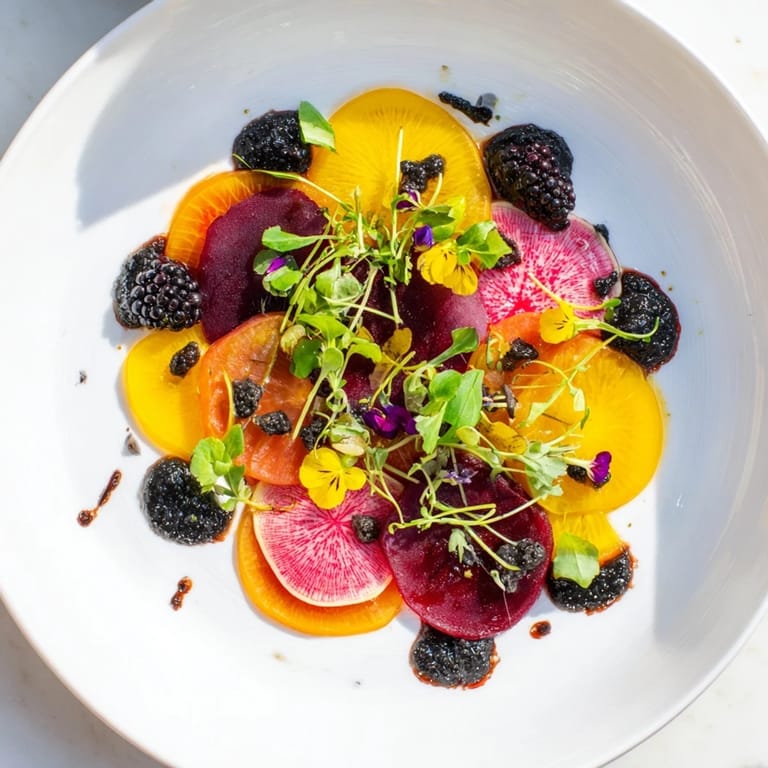
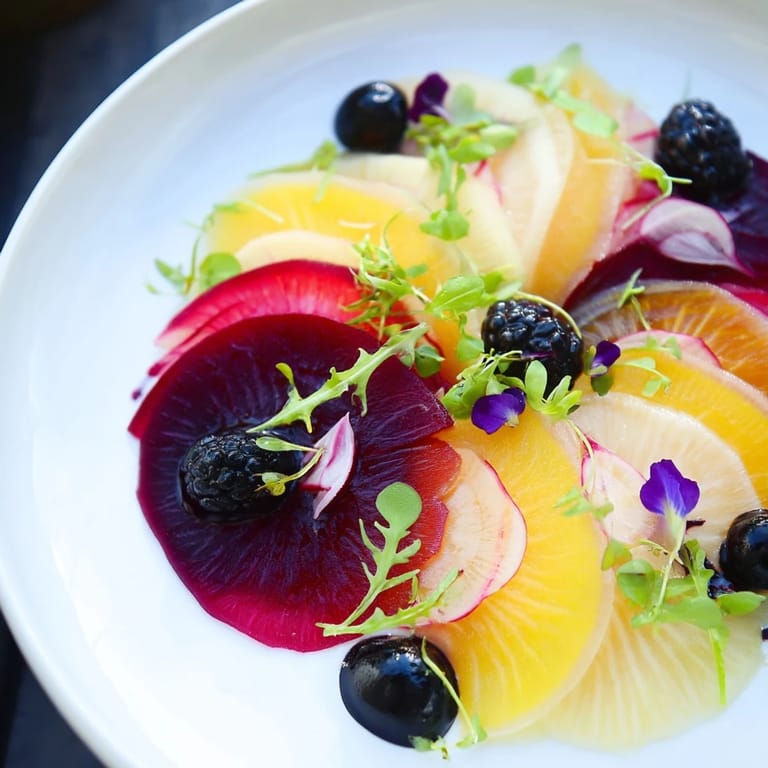
- Golden and red beets: These are your foundation, and thinness matters more than you'd think—use a mandoline if you have one, because getting them paper-thin lets light pass through the layers and creates that almost stained-glass effect.
- Watermelon radish: The secret weapon that bridges the gap between dark and bright; those concentric rings of pink and white feel almost shocking against the black olives.
- Baby arugula: A whisper of peppery green that keeps the dish from feeling too heavy or precious, and it wilts slightly from the warm beets in the most gentle way.
- Blackberries and black olives: These create the actual shadow play—position them so they peek out from under other ingredients, almost hidden until you look closer.
- Black tahini: If you can't find it, regular tahini mixed with squid ink works beautifully, but don't skip it; those dark smears are what elevate this from a salad to a statement.
- Lemon, honey, and olive oil: A dressing so simple it almost feels like cheating, but the honey rounds out the acidity and makes everything taste like it belongs on the same plate.
- Microgreens and edible flowers: These are the final flourish—they catch light and add a layer of delicacy that whispers rather than shouts.
Tired of Takeout? 🥡
Get 10 meals you can make faster than delivery arrives. Seriously.
One email. No spam. Unsubscribe anytime.
Instructions
- Slice your beets paper-thin:
- A mandoline is your friend here; if using a knife, take your time and angle the blade shallow so each slice is almost translucent. The thinner they are, the more they'll catch the light.
- Build the base in overlapping layers:
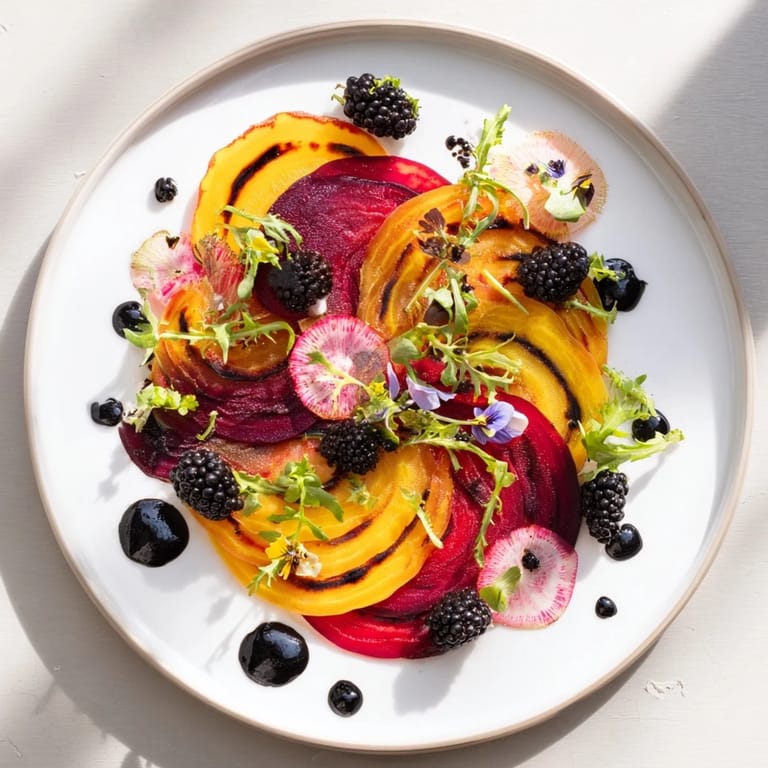
- Think of it like shingles on a roof—golden and red beets alternating, each one slightly covering the last. Let them overlap so you see all the colors at once.
- Add the bright colors deliberately:
- Fan your watermelon radish so its rings show, scatter the arugula with a loose hand—this is where you start creating visual rhythm.
- Position the dark elements strategically:
- Tuck blackberries and olives partially underneath other ingredients so they surprise you when you look closer. Don't place them randomly; think about how shadows fall.
- Make your dressing and taste it:
- Whisk the olive oil, lemon juice, honey, salt, and pepper together, then taste before you pour. Adjust the seasoning because this simple dressing is the only seasoning the vegetables will get.
- Drizzle and smear the black tahini:
- Use the back of a spoon to create thin, organic streaks across the plate. These aren't meant to look perfect; they're meant to look like actual shadows.
- Finish with microgreens and flowers:
- Scatter these at the very end so they stay bright and crisp. They're the last thing your eye catches and the first thing your palate notices.
- Serve right away:
- This dish is best when the beets still hold some warmth and nothing has begun to wilt or blur together.
 Save
Save One night, my grandmother watched me make this and said, 'So you're doing art now, not cooking?' It made me laugh, but she was right in a way I hadn't quite articulated—this dish lives in that space between the two, where technique matters but so does how it feels to look at something before you eat it. That's when I realized why I keep coming back to it: it reminds me that food can be more than one thing at once.
On Choosing Your Vegetables
Not all beets taste the same, and this is one of those dishes where you'll actually notice the difference. Golden beets lean sweeter and earthier, while red beets have an almost mineral quality. If you can find them at a farmers market in late fall or winter, grab them—they're fresher and taste sharper than the vacuum-sealed ones from the grocery store. The watermelon radish is worth seeking out specifically; it's become more available at decent supermarkets, but if you can't find it, thinly sliced breakfast radishes will work in a pinch, though you'll lose that stunning pink-and-white interior.
The Art of Arrangement
There's a moment when you stop thinking about what the dish 'should' look like and start trusting your instincts about where things belong. I used to follow plating guides religiously, but with this dish I learned that the 'rules' matter less than contrast and balance—if you have too much darkness in one corner, your eye needs a bright spot to rest on. It's more intuitive than it sounds, and honestly, the more you make it, the more natural the arrangement becomes. Think of it less like a recipe and more like a suggestion, a starting point for what your plate wants to tell.
Wine Pairing and Serving Thoughts
I learned the hard way that this dish deserves a thoughtful pairing—heavy wines overshadow the delicate flavors, but something crisp and mineral cuts through the richness of the olive oil and plays beautifully with the earthiness of the beets. A Sauvignon Blanc feels almost obvious, but a light Pinot Noir with some acidity brings out unexpected notes in the vegetables. This also works as a palate cleanser before a richer course or as the opening act of a longer meal, setting a tone of intention and care.
- Serve on room-temperature or slightly cool plates so the beets don't wilt too quickly.
- If you're making this ahead, slice and store components separately, then assemble just before guests arrive.
- Don't be afraid to use odd numbers and asymmetry in your plating—it feels more alive than perfect symmetry.
 Save
Save This is the kind of dish that reminds you why you love cooking—not because it's hard, but because it proves that paying attention and being intentional with ingredients can create something that matters. Serve it when you want people to slow down and notice.
Recipe Guide
- → What techniques create the shadow effect?
Layering dark ingredients like blackberries, olives, and black tahini beneath bright vegetables forms dramatic silhouettes and depth.
- → Can the honey in the dressing be substituted?
Yes, honey can be replaced with agave syrup for a vegan-friendly option.
- → What vegetables provide the bright contrast?
Golden and red beets, watermelon radish, and baby arugula supply vibrant color and texture contrast.
- → What garnishes enhance the dish’s presentation?
Microgreens like purple radish or basil and edible flowers add freshness and delicate color highlights.
- → Are there allergen considerations?
Yes, sesame in tahini and possible olive pits warrant caution for sensitive individuals.