 Save
Save I remember the first time I assembled a platter like this was for my friend Marcus's birthday dinner. He'd always been the one to challenge me with "make it spicy," and I wanted to create something that let everyone at the table build their own heat level. Watching people's eyes light up as they discovered they could control the fire themselves, mixing that fiery chili core with whatever they grabbed—that's when I realized this wasn't just an appetizer, it was an invitation to play with flavor.
I made this for a small dinner party last summer, and what stuck with me wasn't just how quickly the platter disappeared—it was how my usually cautious aunt actually tried the pepper jack cheese with fresh chili and came back for more. She admitted later that having control over how much heat she added made all the difference. That's the magic of this platter: everyone finds something that speaks to them.
Ingredients
- Chili flakes (2 tbsp, mild or hot): This is your heat foundation—the daring heart of everything. I've learned to taste before committing to heat level; some chili flakes are surprisingly hot, others more fruity. This creates the bold statement everyone builds around.
- Fresh red chili peppers (2, thinly sliced): These beauties do double duty: they're gorgeous to look at and they bring real pepper flavor, not just heat. Leaving seeds in intensifies the fire; removing them keeps people brave.
- Fresh jalapeño (1, sliced, optional): If your guests skew less adventurous, this adds color variation and a gentler entry point to the heat journey.
- Sharp cheddar cheese (100 g, cubed): The anchor cheese—its sharpness plays beautifully against the heat and offers something familiar and comforting.
- Pepper jack cheese (100 g, cubed): This one was a game-changer for me; the built-in peppers mean even someone grabbing just cheese gets a subtle spice whisper.
- Feta cheese (100 g, crumbled): The creamy counterpoint that softens and mellows any combination, especially when paired with heat.
- Spicy chorizo (80 g, sliced, optional): If you're including meat, this brings its own smokiness and spice that complements without competing with your central core.
- Soppressata (80 g, sliced, optional): A more subtle cured meat option that lets the peppers stay the star.
- Cherry tomatoes (1 cup, halved): Fresh, bright, and they add sweetness that's essential for balancing heat—I learned never to skip these.
- Red bell pepper (1, sliced into strips): Pure color and crisp sweetness; it's the peacemaker on the platter.
- Cucumber (1, sliced): Cooling and refreshing, cucumber is your guest's best friend when the heat builds up.
- Radishes (1/2 cup, sliced): Peppery and crisp, they add sophistication and another layer of flavor interest.
- Spicy hummus (1/2 cup): A dip that doesn't shy away from heat; it's thick enough to grab onto crackers and vegetables.
- Roasted red pepper spread (1/2 cup): Sweet, smooth, and it creates beautiful color contrast while offering another flavor dimension.
- Pita chips (1 cup): Sturdy enough to scoop and carry, with enough heft to hold up toppings without breaking.
- Multigrain crackers (1 cup): For the ones who want something more neutral to let the toppings shine.
- Vegetable sticks—carrots and celery (1 cup): The fresh, crunchy, cooling option that feels intentional, not like an afterthought.
Tired of Takeout? 🥡
Get 10 meals you can make faster than delivery arrives. Seriously.
One email. No spam. Unsubscribe anytime.
Instructions
- Gather and prep everything:
- Slice your peppers and vegetables, cube your cheeses, and lay out all your components. I do this first because a platter that comes together smoothly feels effortless, which is the whole point. Use a sharp knife for the peppers especially—you want clean, thin slices that catch the light.
- Create your fiery core:
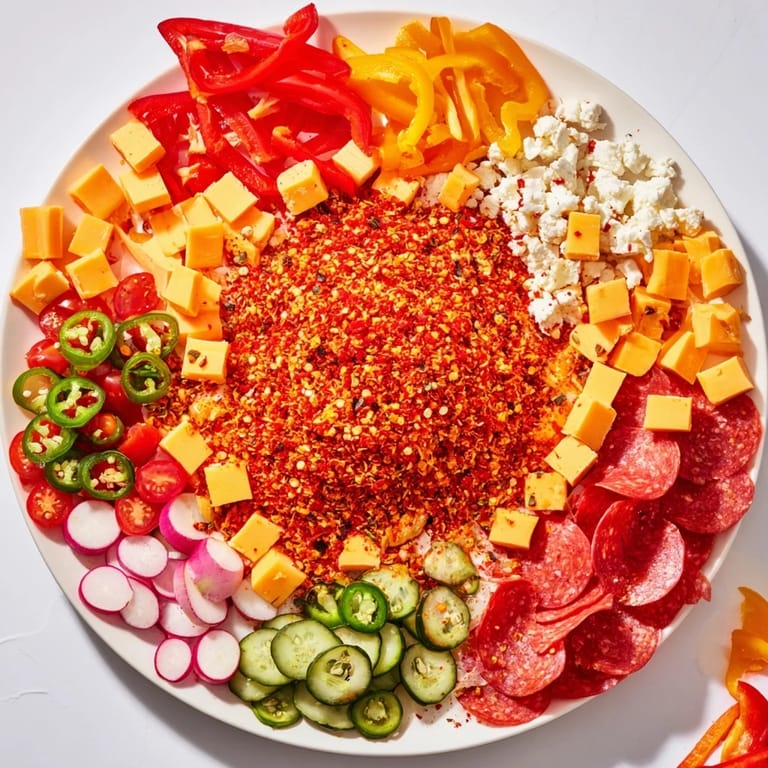
- In a small bowl or directly on your platter, combine the chili flakes and fresh chili pepper slices. This is the visual anchor and flavor statement—don't hide it. Let it sit proudly. If you're nervous about heat, taste a tiny bit of the chili flakes first so you know what you're working with.
- Build your radiating design:
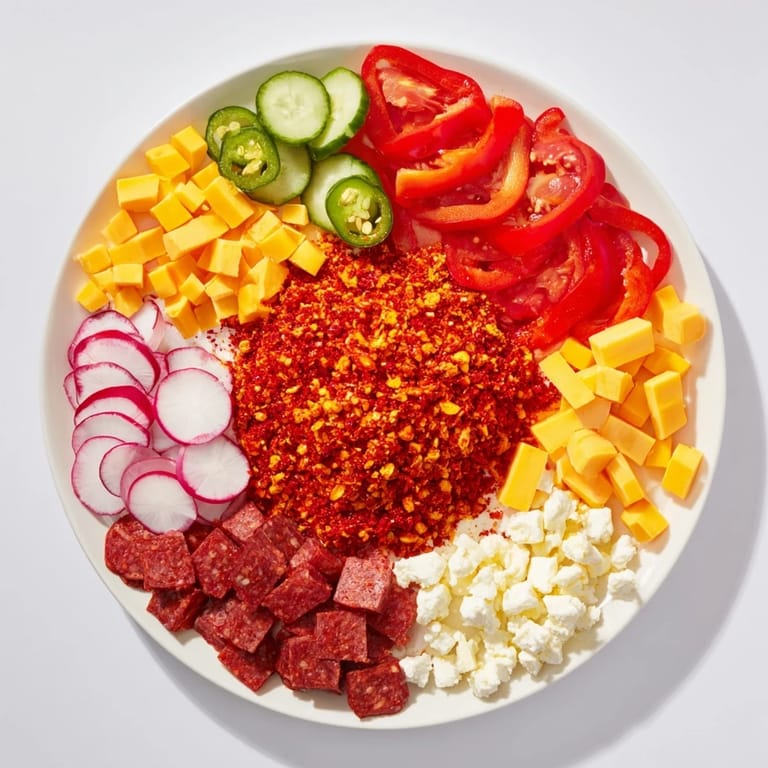
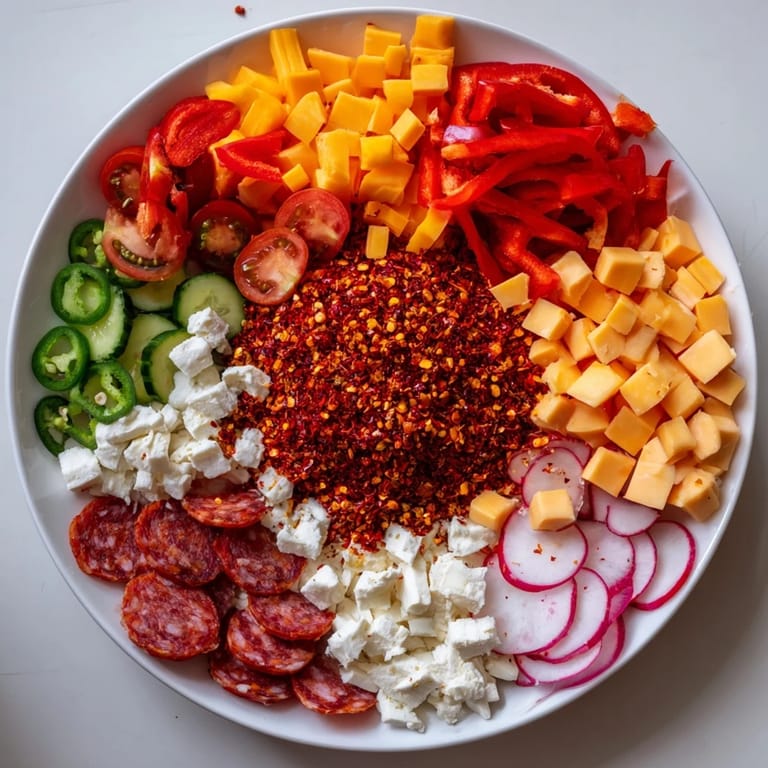
- Around that central core, start arranging everything in sections, like you're painting with food. I typically go: cheeses first (they create structure), then cured meats in one wedge, fresh vegetables in another, then dips in small bowls, and crackers and chips in their own sections. There's no one right way—trust what looks beautiful to you. The arrangement should feel intentional but relaxed, like you spent time thinking about it but weren't stressed.
- Step back and adjust:
- Before you're done, look at the whole thing. Are there empty spots? Too much red in one section? Move things around. The platter is part of the experience—it should make people want to dig in immediately.
- Serve and let guests explore:
- Set it out and watch the magic happen. People will ask questions, experiment with combinations, and create their own perfect bites. That's the whole point. You've given them permission to play.
 Save
Save What surprised me most was realizing this platter became less about the food itself and more about creating a moment where everyone felt welcome to engage on their own terms. My heat-loving friend could load up on peppers and chorizo, while my milder-preference cousin could stick to cheese and vegetables and feel just as included. That's when food stops being just sustenance and becomes something social and beautiful.
The Art of the Spice Gradient
Once I started thinking about this platter as a spice journey rather than just "spicy appetizer," everything clicked. The chili core is the deep end of the pool—bold and challenging. But the surrounding elements are your shallow end: the cooling cucumber, the sweet tomatoes, the creamy cheeses. Let guests choose their depth. Some will dive deep into heat, others will nibble around the edges, and both are having the right experience. The best platters don't demand anything of people; they offer options and celebrate whatever choice gets made.
Building Heat Without Overwhelming
Here's something I discovered after making this several times: the freshness of your ingredients matters more than the quantity of heat. A platter with truly fresh, crisp vegetables and quality cheese will feel sophisticated even with significant spice. It's the vegetables losing their snap or the cheese sitting too long that makes a platter feel sad or one-dimensional. Invest in ingredients you're excited about, taste everything before assembly, and you've already won half the battle. The other half is in the arrangement—make it so beautiful that people want to try things they'd normally skip.
Make It Your Own
This is truly a framework rather than a rigid recipe. Want to add spicy olives? Absolutely. Roasted nuts? Perfect. Pickled jalapeños? Yes. Make it reflect what excites you and what you know your guests love. I've made versions with smoked paprika sprinkled around the chili core, versions with fresh mint tucked between sections, versions that lean into Mediterranean flavors or Mexican-inspired elements. The only real rule is that it should feel intentional and represent the care you put into entertaining.
- If you're short on time, buy pre-sliced vegetables from the grocery store—your reputation depends on how it tastes and looks, not on whether you cut the peppers yourself
- Set out small plates and cocktail forks or toothpicks; people will use them more confidently if they're available
- Pair this with something cool and crisp to drink—white wine, light beer, or even sparkling water with lime all work beautifully to balance the heat
 Save
Save This platter is really about giving people permission to find their own edge, culinary adventure, and comfort all in the same moment. That's when entertaining feels effortless.
Recipe Guide
- → How do I adjust the heat level?
Choose milder or hotter chili flakes and fresh peppers. Removing seeds reduces heat, while adding pickled jalapeños or spicy olives can boost flavor variety.
- → Can this platter be made vegan?
Yes, replace cheeses and cured meats with plant-based alternatives to maintain the bold flavors without animal products.
- → What dips work best with this platter?
Spicy hummus and roasted red pepper spread complement the spicy core and add creamy, tangy notes that balance the platter.
- → What should I serve this platter with?
Crisp white wines or light beers pair well, enhancing the vibrant, spicy flavors without overpowering them.
- → How should I arrange the ingredients?
Place chili flakes and sliced peppers centrally, then arrange cheeses, meats, vegetables, dips, and crunchy sides in radiating sections for a visually striking display.