 Save
Save Last summer, I hosted a dinner party on my patio just as the sun was beginning its golden descent, and I realized I'd forgotten to prepare an appetizer. Rather than panic, I gathered every beautiful vegetable in my fridge, some creamy cheeses, and arranged them on a wooden board with the kind of care I usually reserved for plated dinners. My guests arrived to find this sun-drenched spread waiting, and something magical happened—people lingered around that board for nearly an hour, talking and laughing, picking at olives and dipping cucumber into tzatziki. That's when I understood: sometimes the simplest arrangements are the most inviting.
I remember my friend Elena's birthday party, when she mentioned she loved Mediterranean food but wanted something light because the weather was too warm for heavy courses. I built this platter with her in mind, and she spent the whole evening rearranging it slightly, moving the olives here, the radishes there, as if it were a living artwork she was allowed to collaborate on. That's when I realized a mezze board isn't just food—it's an invitation to play with your meal.
Ingredients
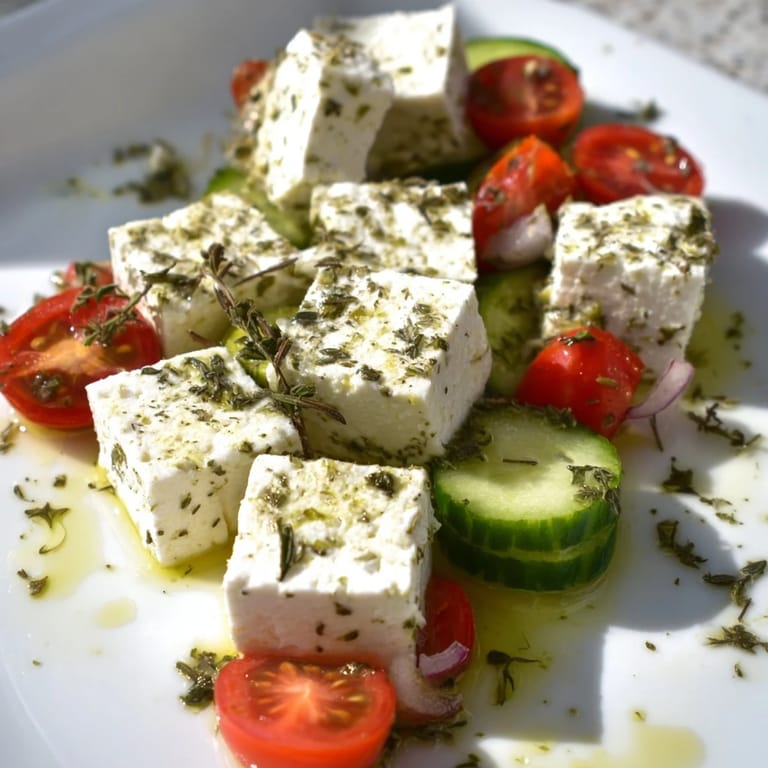
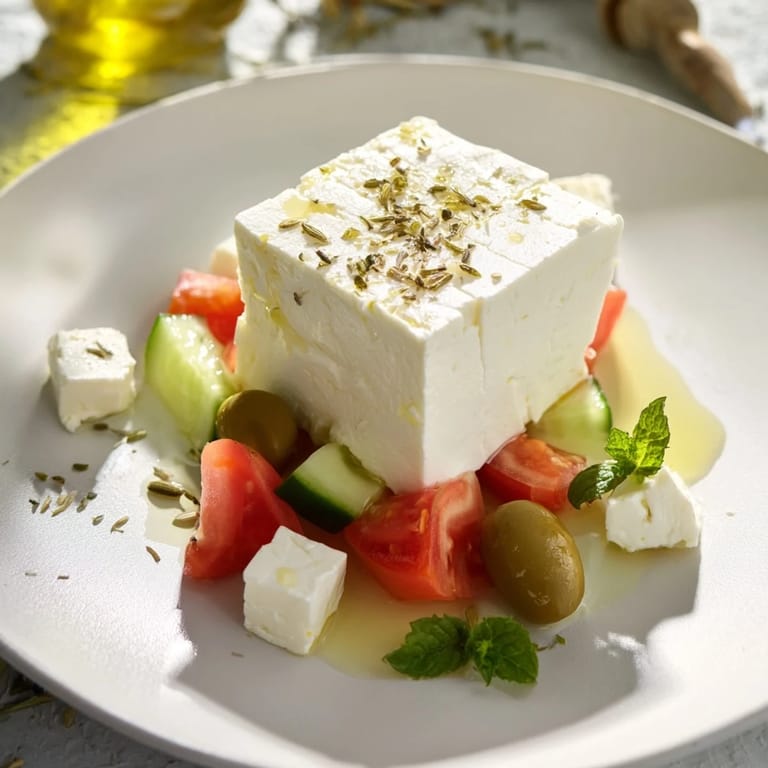
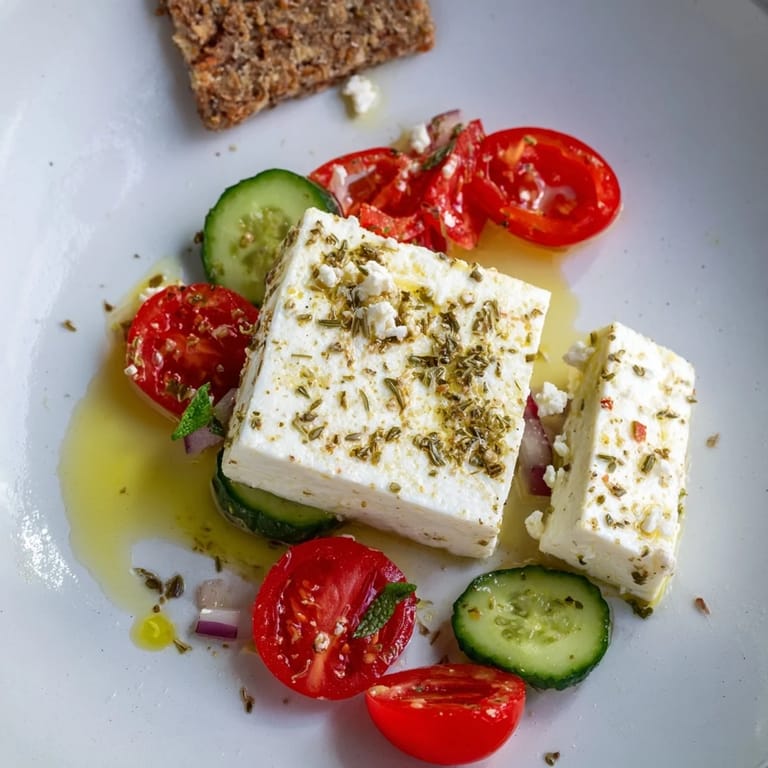
- Feta cheese: Buy it in blocks if you can and cut it yourself—the cubes stay intact better this way, and somehow they taste fresher.
- Fresh mozzarella balls: Drain them well in a colander for a few minutes before plating, or they'll weep liquid onto everything around them.
- Cucumber: Slice it just before serving so it doesn't release all its water and turn limp.
- Cherry tomatoes: Halve them right before you arrange the board; the exposed interior is where the bright color and sweetness shine.
- Bell peppers and radishes: These add crunch and color, and they can sit on the board longer without losing texture if you slice them ahead.
- Red onion: A thin slice scattered throughout adds a gentle bite that wakes up the palate between bites of cheese.
- Kalamata olives: Keep them in their own small bowl so their briny juice doesn't pool across the board and dye everything purple.
- Hummus and tzatziki: Make your own if you have time, but store-bought versions work beautifully here—this board is about ease.
- Extra virgin olive oil: Don't skip this; it's the finishing touch that ties everything together with warmth and richness.
- Fresh herbs: Mint and dill should be added as the very last step, just before guests arrive, so they stay vibrant and fragrant.
Tired of Takeout? 🥡
Get 10 meals you can make faster than delivery arrives. Seriously.
One email. No spam. Unsubscribe anytime.
Instructions
- Set your stage:
- Choose a large wooden board or platter and wipe it clean so it becomes a blank canvas. The surface itself is part of the presentation, so a beautiful board elevates everything.
- Place the cheeses first:
- Arrange feta cubes and mozzarella balls in separate sections, leaving generous white space between them. This breathing room is what makes the board feel abundant rather than cluttered.
- Add vegetables in clusters:
- Fan out cucumber slices in one area, group cherry tomato halves nearby, stand bell pepper strips upright, scatter radish slices, and pile the onion slivers in their own spot. Think of each vegetable as having its own neighborhood on the board.
- Nestle the olives:
- Pour them into a small bowl or leave them in a loose pile, whichever feels right to you in the moment. The olives are forgiving and can sit anywhere without losing character.
- Set out the dips:
- Spoon hummus and tzatziki into small bowls and position them where they're easy to reach without knocking into anything else. These are anchors that help organize the eye.
- Drizzle and season:
- Lightly coat the cheese and vegetables with olive oil using your fingers or a small spoon, then dust everything with sea salt and cracked black pepper. The key word is light—you're seasoning, not drowning.
- Crown with herbs:
- Just before serving, scatter fresh mint and dill across the board as if you're painting with color. This last-minute flourish keeps the herbs bright and aromatic.
- Serve with bread:
- Arrange crispbreads or pita wedges on the side, or tuck them into any remaining gaps on the board if you want everything contained in one beautiful centerpiece.
 Save
Save I'll never forget when my neighbor brought her aging mother over one afternoon, and she sat at my patio table moving slowly through every item on the board, telling stories about markets in Greece where she'd bought similar cheeses decades ago. Food became memory, and memory became connection, and I understood that afternoon that a mezze board is really just an excuse to linger together.
The Art of White Space
The first time I tried to pack every inch of my board with food, it looked sad and busy. A mentor once told me that empty space on a platter is like silence in a conversation—it's where the beauty lives. Once I started leaving those generous gaps between ingredient clusters, suddenly the whole thing felt intentional and generous at the same time. It's counterintuitive, but less can truly feel like more when you arrange it with intention.
Timing and Temperature
Mediterranean mezze is forgiving in many ways, but temperature matters more than most people realize. Cheese tastes better when it's been sitting at room temperature for 15 minutes—that's when the flavors open up and the texture becomes creamy rather than hard. Vegetables should be cool but not ice-cold, so pulling everything out of the fridge 10 minutes before guests arrive makes a noticeable difference. I learned this the hard way by serving a board straight from cold storage and watching people pick at it politely while waiting for it to warm up.
Variations and Customizations
The beauty of a mezze board is that it bends to what you have and who you're feeding. I've made this platter with goat cheese instead of feta for guests who found feta too salty, and once I added grilled vegetables because I was cooking and had them on hand. Roasted chickpeas scattered across the board add protein and texture, dried apricots bring sweetness, and different breads change the whole feeling—crispy pita is casual, while crunchy lavash feels more elegant. This is not a rigid recipe; it's a framework for creating something beautiful with what makes you and your guests happy.
- Substitute goat cheese for feta if you prefer a creamier, tangier option.
- Add roasted chickpeas, nuts, or dried fruits like apricots for extra texture and flavor dimensions.
- Use whatever fresh herbs you have—parsley and basil work beautifully alongside mint and dill.
 Save
Save Every time I build a mezze board now, I think of that first summer evening and how something unplanned became one of my favorite ways to feed people. There's real joy in simplicity when it's done with care.
Recipe Guide
- → What cheeses complement this platter best?
Feta and fresh mozzarella provide a creamy and tangy contrast that pairs beautifully with crisp vegetables and olives.
- → Can I substitute any cheeses for dietary preferences?
Yes, goat cheese can replace feta, and plant-based cheeses work well for vegan adaptations.
- → How should I arrange the ingredients for best presentation?
Place cheeses separately with generous space between clusters of sliced vegetables and olives for a balanced, airy look.
- → Which dips are recommended and how to serve them?
Hummus and tzatziki are ideal for this plate, served in small bowls nestled among the other ingredients.
- → What herbs enhance the flavors and appearance?
Fresh mint and dill sprigs add vibrant color and brighten the flavor profile.
- → Is this platter suitable for gluten-free diets?
Yes, by selecting gluten-free crispbreads or pita wedges as accompaniments, it accommodates gluten-sensitive needs.