 Save
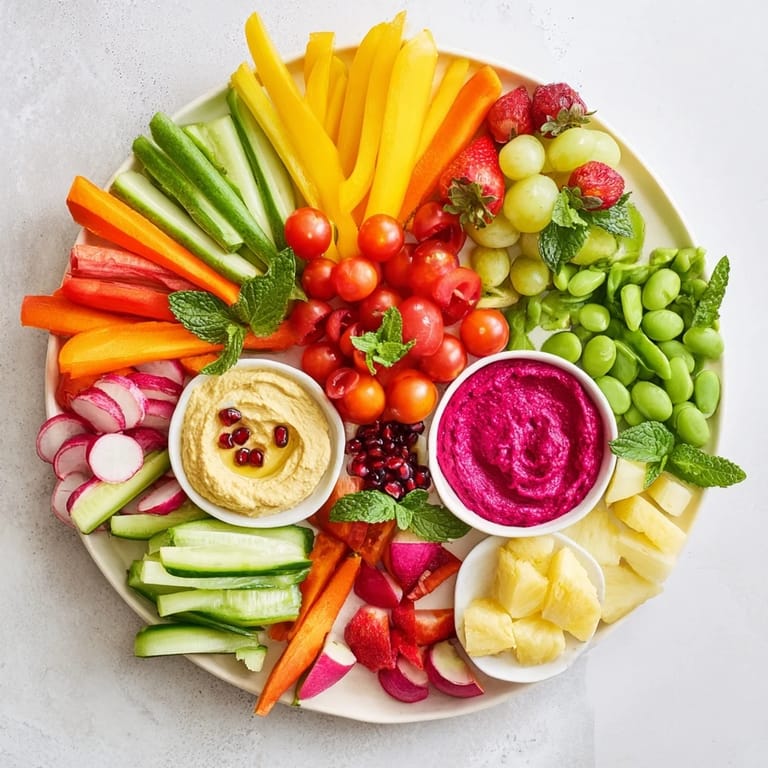
Save I'll never forget the summer afternoon when my friend Maya brought over a platter just like this one—a riot of colors that made my kitchen feel like a celebration before a single bite was taken. She'd spent years traveling through different countries, collecting dip recipes and learning how to arrange vegetables in ways that made people actually excited to eat their greens. Watching her work that day, I realized that a beautiful platter isn't just about nourishment; it's about creating a moment where everyone gathers around something that feels generous and intentional. Now, whenever I need to feed a crowd or just want to feel that same magic, I build this Global Gardener Platter.
I remember the first time I made this for my partner's work gathering—I was nervous about it being 'too simple,' but by the end of the evening, it was completely cleared while the fancy hot appetizers sat untouched. People kept coming back not because they were hungry, but because reaching for another slice of rainbow carrot or a handful of grapes felt like a permission to stay a little longer, to keep talking. That's when I understood: sometimes the simplest dishes hold the most power.
Ingredients
- Rainbow carrots, 1 cup sliced: The sweeter varieties bring natural color to your platter, and slicing them slightly thicker keeps them snappy and satisfying to bite through
- Baby cucumbers, 1 cup sliced or quartered: Their smaller size means they're naturally tender, and they stay crisp longer than full-size cucumbers if you keep them slightly cool
- Cherry tomatoes, 1 cup assorted colors: Choose different varieties—some will be sweeter, some more acidic—and that complexity makes every bite interesting
- Radishes, 1 cup thinly sliced: A secret ingredient for texture; they stay perfectly crisp and bring a subtle peppery note that makes people reach for more without knowing why
- Baby bell peppers, 1 cup sliced: Unlike full-size peppers, these are naturally sweeter and more delicate; they practically disappear into the platter like little jewels
- Snap peas, 1 cup: Leave them whole or halve them lengthwise; they're the vegetable that even skeptics will eat straight
- Seedless grapes, 1 cup mixed colors: Red and green grapes create natural color blocking, and their coolness is a surprising contrast to savory dips
- Strawberries, 1 cup halved: Their slight sweetness bridges the gap between the vegetables and the more indulgent dips
- Pineapple chunks, 1 cup: Fresh, not canned, if you can manage it; the tropical brightness feels celebratory and brings an unexpected sweetness
- Kiwi, 1 cup peeled and sliced: Its jewel-like color and tartness add sophistication without effort
- Classic hummus, 1 cup: The anchor of your dip selection; earthy and comforting
- Beetroot hummus, 1 cup: It bleeds a little color into the platter and tastes like earth and sweetness together
- Guacamole, 1 cup: Keep it simple with avocado, lime, and salt; fussy guacamole gets lost among all this color
- Cashew tzatziki, 1 cup: A creamy, cooling contrast that feels luxurious and plant-based all at once
- Pomegranate seeds, 1/4 cup: These are the jewelry of your platter—they catch the light and taste like tiny bursts of tart sweetness
- Fresh herbs, 1/4 cup mint, basil, or parsley: Scatter these after arranging; they add life and fragrance that makes people want to dig in immediately
- Edible flowers, optional: If you can find them, they're worth it; nasturtiums and pansies taste peppery and look like you've put real thought into this
- Gluten-free crackers or pita chips, 1 cup: Offer options; some people want the crunch, some want the ritual of dipping
Tired of Takeout? 🥡
Get 10 meals you can make faster than delivery arrives. Seriously.
One email. No spam. Unsubscribe anytime.
Instructions
- Start with clean, dry produce:
- Wash everything and pat it completely dry—moisture is the enemy of a beautiful platter because it makes colors muddier and vegetables lose their crispness. I use paper towels and sometimes even a salad spinner for the leafy vegetables. Take your time here; this is half the visual magic.
- Slice with intention:
- As you slice, think about the size and shape—you want vegetables that are easy to pick up with one hand but look elegant on the board. Radishes should be paper-thin so they curl slightly; carrots should be cut on a slight angle so they feel less utilitarian. This small detail changes everything about how the platter looks.
- Choose your canvas:
- Select a large platter or wooden board that's at least 18 inches across; you want room to breathe and move things around. A marble board photographs beautifully; a wooden board feels warm and rustic. The surface matters because it's the backdrop for all this color.
- Position your dips strategically:
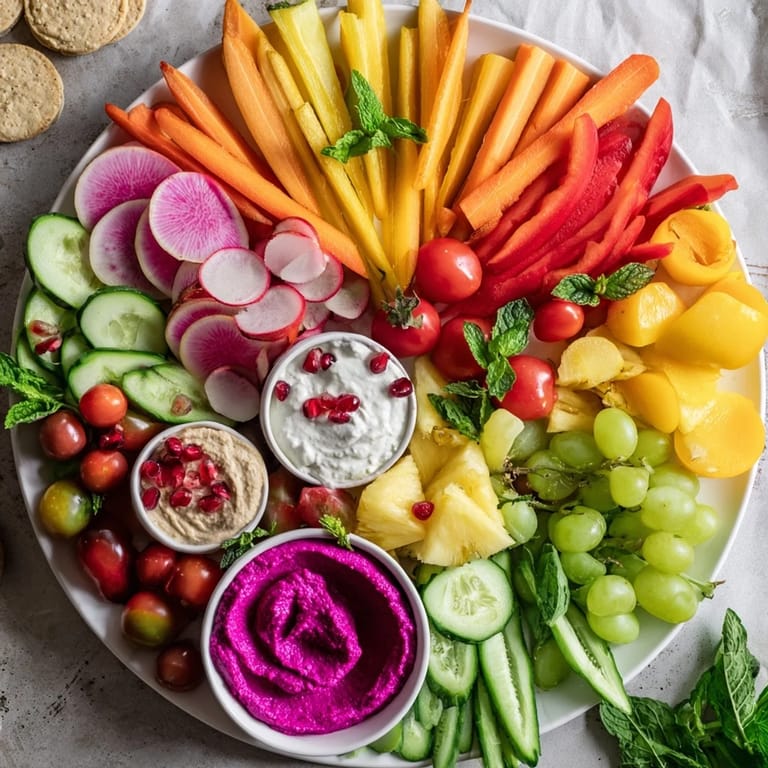
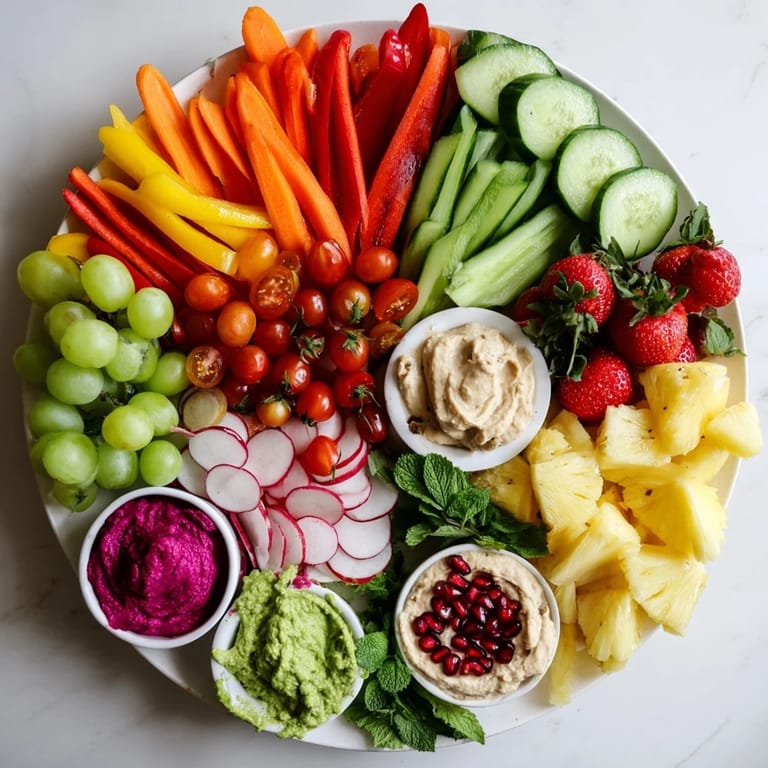
- Place four small bowls of dips at different points around the platter—imagine them at 12, 3, 6, and 9 o'clock. This gives people natural gathering points and prevents the platter from feeling lopsided. I like to use small ceramic bowls in neutral colors so the dips don't compete with the vegetables.
- Build in color blocks:
- Arrange vegetables and fruits in groups by type, not by color—all the carrots together, all the cucumbers together. This might sound counterintuitive, but then the colors naturally create a rainbow because each vegetable has its own hue. It looks intentional rather than chaotic, and it's also practical because people know where to find what they want.
- Create height and texture:
- Don't lay everything flat. Stand some radish slices up, lean carrot sticks against each other, let strawberries tumble in a casual pile. This three-dimensional quality is what makes the platter feel abundant rather than just organized.
- Fill the gaps with joy:
- Once you've arranged the main vegetables and fruits, scatter pomegranate seeds, fresh herbs, and edible flowers into the empty spaces. This is where the platter goes from nice to 'wow'—these little touches feel generous and unexpected.
- Serve fresh or refrigerate:
- If you're serving immediately, the vegetables will be at their crispest. If you need to prepare ahead, cover the platter loosely with plastic wrap and refrigerate for up to 4 hours; any longer and the vegetables start to lose their snap. When you uncover it, refresh the herbs and give the dips a little stir.
 Save
Save There was this moment during a pandemic dinner party—everyone was still nervous about gatherings, and I wasn't sure if anyone would come. But when they walked in and saw this platter laid out, I watched shoulders drop. It became the thing we all reached for while we caught up, the gentle rhythm of snacking replacing the anxiety of being together again. Food, I learned that day, is sometimes just an excuse to let people feel like it's safe to relax.
Building Your Perfect Rainbow
The key to making this platter feel both abundant and elegant is understanding that color is your primary ingredient. Don't think of this as vegetables on a board; think of it as creating a small landscape. The reds (tomatoes, strawberries, radishes) should be distributed across the platter so your eye moves around rather than getting stuck in one corner. The greens should do the same—snap peas in one area, cucumbers in another, kiwi and grapes as accents. When you step back and look at what you've created, there should be no large blank spaces and no area that feels monotone. This is arranging, not just placing, and that distinction matters.
Making It Your Own
This recipe is a template, not a rule book, and it's strongest when you adapt it to what's available and what you love. In summer, add corn cobs, juicy peaches, and fresh berries. In fall, roast some chickpeas with paprika and add them for crunch, or scatter candied pecans for warmth. I've made this platter with roasted vegetables in winter, with marinated olives, with roasted seeds, with everything from my garden. The structure stays the same—dips in the center, vegetables and fruits arranged in groups—but the details become your signature.
The Dips Are Where the Magic Lives
I spent years thinking dips were secondary, but this platter taught me they're the point. Each dip should taste noticeably different, should pair with different vegetables, and should invite people to explore. The classic hummus is comfort; the beetroot hummus is earthy and surprising; the guacamole is richness; the cashew tzatziki is cool and creamy. Together, they create a tasting experience where someone can eat their way around the platter and have four completely different meals. Make sure each dip is seasoned well—add a little extra salt, a squeeze of lemon, a whisper of garlic. Taste as you go, and remember that dips on a platter need to be slightly more seasoned than dips eaten with crackers because the fresh vegetables will help balance them.
- The tzatziki will thicken as it sits, so thin it slightly with plant-based milk or water just before serving if needed
- Keep your dips cold; chill the bowls before filling them, or nest them in ice if it's a warm day
- Make a double batch of whichever dip runs out first; at my last gathering, the beetroot hummus disappeared entirely, and I had to apologize for not making more
 Save
Save Every time I make this platter, I'm reminded that some of the best meals are the ones where everyone feeds themselves, where there's no formal serving, just gentle abundance. It's a recipe for connection as much as it is for eating.
Recipe Guide
- → What are the main components of the platter?
The platter features fresh vegetables, assorted fruits, and a variety of plant-based dips like hummus, beetroot hummus, guacamole, and cashew tzatziki.
- → Can the fruits and vegetables be substituted?
Yes, seasonal vegetables and fruits can be swapped in to customize the platter to your preferences or availability.
- → How should the platter be arranged for best presentation?
Arrange dips in small bowls at different points, then group colorful vegetable and fruit sections around them, alternating colors and textures for visual contrast.
- → Are there allergy considerations to keep in mind?
This platter contains nuts in the cashew tzatziki and sesame in hummus; these ingredients can be omitted or replaced if allergies are a concern.
- → What are suggested accompaniments for this platter?
Gluten-free crackers or pita chips serve well, along with garnishes like pomegranate seeds, fresh herbs, and edible flowers for extra flavor and color.
- → Is this platter suitable for special diets?
Yes, it is vegan, gluten-free, and dairy-free, accommodating various dietary needs.