 Save
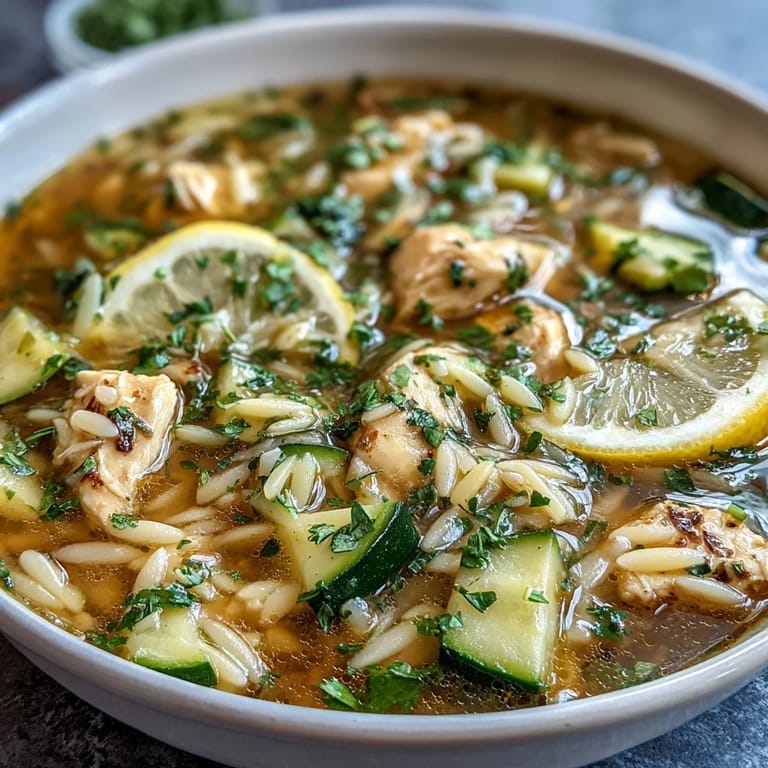
Save There's something about lemon that hits different when you're feeling a bit worn down—maybe it's the brightness, or maybe it's just that my grandmother always reached for citrus when someone needed lifting up. This soup landed on my stove on one of those gray afternoons when I had chicken and zucchini and nothing else that felt inspiring, so I threw in some orzo and lemon juice, and suddenly it tasted like sunshine in a bowl. It's become the soup I make when I want something that tastes both simple and sophisticated, the kind of dish that makes people ask for seconds without realizing how easy it was.
I made this for a friend who'd just moved into a new apartment with nothing but a stove and hope, and watching her face when she tasted it—that moment when her shoulders dropped and she actually smiled—that's when I knew this recipe was going to stick around in my rotation. She still texts me for it when life gets hectic.
Ingredients
- Boneless, skinless chicken breasts (2, about 400 g), diced: Cut them into bite-sized pieces so they cook evenly and don't overshadow the other flavors.
- Medium zucchini, diced: Leave the skin on for color and nutrients, and dice it the same size as your chicken so everything feels balanced.
- Medium carrot, peeled and diced: The sweetness grounds the lemon and adds natural body to the broth.
- Small yellow onion, finely chopped: This becomes almost invisible as it softens, creating a flavor foundation the whole soup sits on.
- Garlic cloves (2), minced: Add it after the softer vegetables or it'll turn bitter and sharp.
- Celery stalks (2), diced: People often skip this, but it's the quiet hero that makes everything taste more intentional.
- Lemon juice and zest from 1 large lemon: Don't use bottled juice here—the difference between fresh and preserved is everything, and the zest adds a textural brightness.
- Fresh parsley (2 tablespoons, plus extra for garnish), chopped: It tastes fresher if you chop it right before using it, and a handful at the end makes it feel like someone cared.
- Orzo pasta (3/4 cup or 120 g): This tiny pasta absorbs the broth like nothing else can, so you're never eating a dry bowl.
- Low-sodium chicken broth (6 cups or 1.5 L): Low-sodium lets you control the salt and taste the actual chicken and vegetables instead of just salt.
- Olive oil (2 tablespoons): A good quality one matters here since you're not cooking it down into oblivion.
- Dried oregano (1 teaspoon): Mediterranean herbs tie the whole thing together without overwhelming it.
- Dried thyme (1/2 teaspoon): Use less than oregano or it'll taste like you're making something medicinal instead of delicious.
- Salt and freshly ground black pepper, to taste: Taste as you go and adjust at the end—salt needs a moment to dissolve and do its work.
Tired of Takeout? 🥡
Get 10 meals you can make faster than delivery arrives. Seriously.
One email. No spam. Unsubscribe anytime.
Instructions
- Start your flavor base:
- Heat the olive oil over medium heat and let it warm until it shimmers slightly, then add the onion, carrot, and celery. Let them soften for 4 to 5 minutes, stirring every minute or so—you want them tender and starting to turn golden at the edges, not mushy or pale.
- Wake up the garlic:
- Stir in the minced garlic and let it sit for about a minute until your kitchen smells like a Mediterranean restaurant. This brief cooking mellows the garlic's bite without burning it.
- Cook the chicken:
- Add your diced chicken and season it immediately with salt, pepper, oregano, and thyme. Stir it around for 3 to 4 minutes until it loses that raw, translucent look and turns mostly opaque—you're not trying to cook it through yet, just enough to seal the outside.
- Build the broth:
- Pour in all the chicken broth and bring it to a gentle boil, which takes about 4 to 5 minutes. You'll see gentle rolling bubbles across the surface.
- Add pasta and vegetables:
- Stir in the orzo and diced zucchini, then turn the heat down to medium-low so it simmers gently. This 10 to 12 minutes of simmering is crucial—the pasta absorbs the broth and becomes silky, and the zucchini stays just tender enough to taste fresh instead of mushy.
- Finish with brightness:
- Stir in the fresh lemon juice and zest along with half the chopped parsley. Taste it and adjust the salt and pepper—remember that lemon can make things taste a bit flat if you're not generous with seasoning.
- Serve and garnish:
- Ladle it into bowls and top each one with remaining parsley and maybe a thin lemon slice. Serve it while it's still hot and the flavors are snappy.
 Save
Save This soup turned into my answer to almost everything: the day my partner got bad news and needed comfort food that was also light enough to actually eat, the evening I was hosting people and wanted something that looked like I'd spent hours cooking, the morning I woke up knowing my body needed something nourishing and not heavy. It became that rare dish that felt different depending on the moment, always exactly what was needed.
When You Have Extra Time
If you want to deepen the flavors and don't mind adding a few extra minutes, roast your chicken pieces in a hot skillet with a pinch of salt until they're golden on the edges before adding them to the pot. You don't need a perfect brown crust—just enough color to add a layer of richness that makes people lean in closer to their bowls. The soup tastes noticeably different, more developed, like you had a secret plan all along.
Variations That Actually Work
This soup is flexible in a way that doesn't feel like you're compromising. A rotisserie chicken from the store cuts your active cooking time in half—just shred it and add it with the broth instead of dicing and cooking raw chicken. For vegetarian versions, chickpeas swap in perfectly, or white beans if that's what's in your pantry. Some nights I add a handful of spinach at the very end, letting it wilt into the hot broth, and it changes the whole feeling of the dish from light to green and almost earthy.
What Makes This Feel Like Home
Maybe it's the way lemon and thyme taste together, or the fact that nothing in the pot feels pretentious or fussy, just ingredients that wanted to be in the same bowl. There's something grounding about a soup that's honest—no cream to hide behind, no tricks or techniques that take three tries to master.
- Fresh parsley at the end matters more than it seems, so don't skip it or substitute dried.
- A squeeze of extra lemon juice at the table lets people adjust it to their own taste, which always feels more generous than serving it already perfect.
- Serve it with bread and call it dinner, because some meals only need one dish to feel complete.
 Save
Save This is the kind of soup that makes you feel like you're taking care of yourself without trying too hard. It tastes like love tastes when someone's paying attention.
Recipe Guide
- → Can I use rotisserie chicken instead of fresh chicken?
Yes, rotisserie chicken can be added with the broth to save cooking time while maintaining great flavor.
- → What is the best way to achieve tender orzo texture?
Simmer the orzo gently and stir occasionally until al dente, typically around 10-12 minutes to avoid overcooking.
- → Can this dish be made dairy-free?
Yes, it is naturally dairy-free if you skip optional cream or yogurt additions.
- → How can I add more creaminess without dairy?
Try adding blended cooked vegetables or a splash of coconut milk for a creamy texture without dairy.
- → Is there a good vegetarian alternative for the protein?
Chickpeas work well as a substitute for chicken and can be cooked with vegetable broth for a plant-based version.