 Save
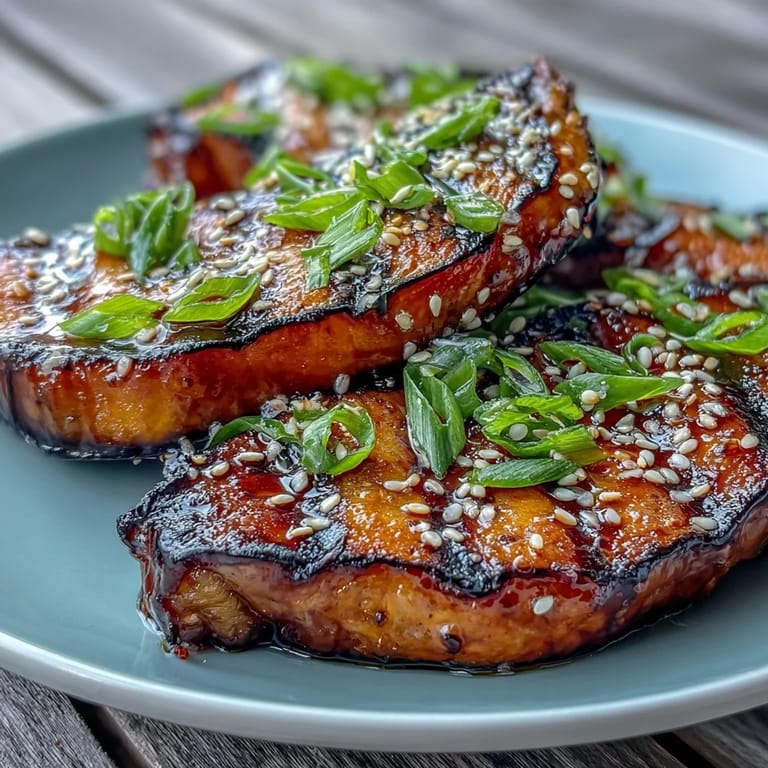
Save My neighbor handed me a perfectly halved Japanese eggplant across her kitchen counter one evening, steam still rising from her oven, and said, "Try this glaze—it changed how I think about vegetables." That miso-brushed, caramelized surface caught the light like lacquer, and one bite made me understand why she was so insistent. Now whenever I have eggplant, this is what I reach for.
I served this to my friend who claimed she "didn't really do eggplant," and she ate two halves while asking for the recipe before she'd even set down her fork. Watching her expression shift from skeptical to genuinely delighted reminded me that the right preparation can completely reframe how someone experiences a vegetable.
Ingredients
- Japanese eggplants (2 medium): These are more tender and have thinner skin than globe eggplants, so they don't need salting or peeling—just halve them lengthwise and you're ready to go.
- White miso paste (3 tbsp): The sweet, delicate version is crucial here; it's milder than red miso and won't overpower the eggplant's subtle sweetness.
- Mirin (1 tbsp): This sweet rice wine adds depth and helps the glaze caramelize beautifully under the broiler.
- Sake (1 tbsp): A splash of cooking sake rounds out the glaze with subtle complexity and helps balance the salt from the miso.
- Sugar (1 tbsp): Just enough to amplify the natural sweetness without making the glaze cloying.
- Sesame oil (1 tbsp, plus more for brushing): Use toasted sesame oil for that rich, nutty flavor that makes this dish unmistakably Japanese.
- Toasted sesame seeds (1 tbsp) and green onions (2, thinly sliced): These add textural contrast and a fresh finish that cuts through the richness.
Tired of Takeout? 🥡
Get 10 meals you can make faster than delivery arrives. Seriously.
One email. No spam. Unsubscribe anytime.
Instructions
- Heat your oven and prep the pan:
- Preheat to 400°F and line a baking sheet with parchment paper so the eggplant won't stick and you won't have a cleanup nightmare afterward.
- Halve and score the eggplant:
- Slice each eggplant in half lengthwise, then score the flesh in a gentle crosshatch pattern without cutting through the skin—this helps it cook evenly and absorb flavors. You'll notice how the flesh looks almost creamy when you cut into a good Japanese eggplant.
- Brush and roast:
- Lightly brush the cut sides with sesame oil, place them cut-side up on your prepared sheet, and roast for 20 to 25 minutes until the flesh is completely tender and has turned a soft golden color. The eggplant should yield easily to a fork when done.
- Whisk the glaze while eggplant roasts:
- In a small bowl, combine miso paste, mirin, sake, sugar, and sesame oil, stirring until smooth and well combined. You're looking for a consistency that's spreadable but not runny.
- Glaze and broil:
- Remove the roasted eggplant from the oven, spread a generous, even layer of miso glaze over each cut side, then switch your oven to broil and broil for 2 to 3 minutes until the glaze bubbles and turns a deep caramel color. Watch closely during this step—the difference between glossy and burnt is about 30 seconds.
- Finish and serve:
- Let cool for just a minute, then sprinkle with toasted sesame seeds and sliced green onions. Serve while warm, when the flesh is still silky and the glaze is still slightly sticky.
 Save
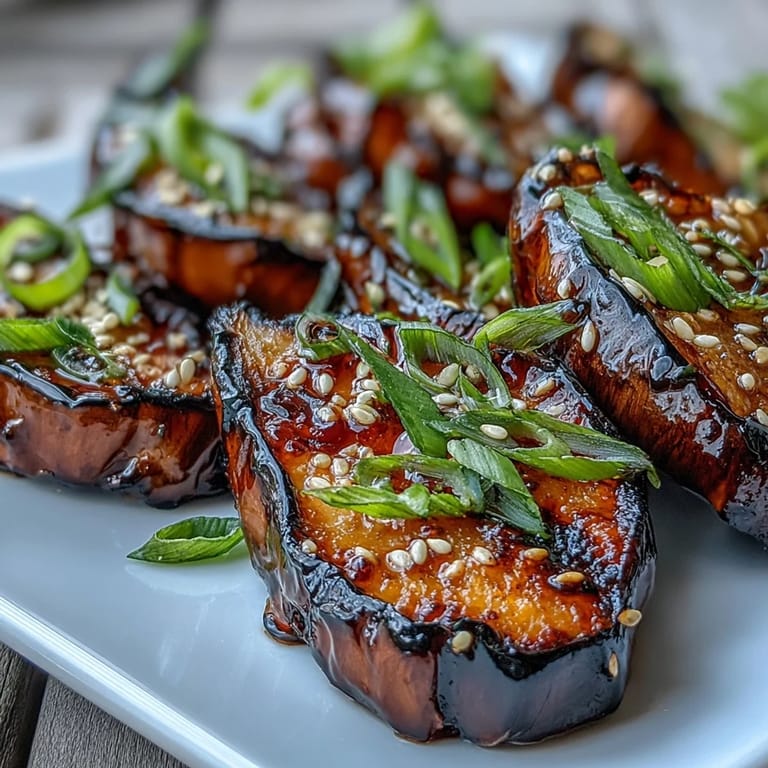
Save There's something about sitting down to eat something you made with your own hands that hits differently when it's this beautiful. The way the steam rises from the warm eggplant, how the miso glaze glistens under the light—it feels like a small ceremony, even if you're eating alone.
The Magic of the Miso Glaze
Miso is one of those ingredients that seems intimidating until you realize it's basically a flavor amplifier with soul. The white miso in this recipe is gentler than its red cousins, bringing a subtle sweetness and umami punch without overwhelming delicate roasted eggplant. When you whisk it with mirin and sake, you're creating a glaze that tastes like it took hours to develop, even though you're done in under five minutes. The sesame oil ties everything together with that warm, toasted note that makes you close your eyes a little when you take the first bite.
Why Japanese Eggplant Matters Here
Japanese eggplants are thinner, more delicate, and naturally sweeter than the globe eggplants you find in most grocery stores. Their tender flesh absorbs the glaze without becoming mushy, and their thin skin means you don't have to peel them or salt them to remove bitterness. I used to make this with regular eggplant until someone pointed out that I was working twice as hard for half the result. Once I switched, I never looked back.
Serving and Storage
This dish is at its best served warm, alongside steamed rice and a simple green salad or miso soup. Leftovers keep in the refrigerator for up to three days and can be gently reheated in a 350°F oven for about 10 minutes, though honestly, it's also delicious cold or at room temperature the next day. You can prep the glaze ahead of time and store it in a container; the eggplant itself is best roasted fresh, but knowing you've got half the work done takes the pressure off.
- Pair this with steamed jasmine rice and a light dashi broth for a complete meal.
- Make the miso glaze up to two days ahead and store it covered in the fridge to save time on cooking day.
- If you can't find Japanese eggplants, look for long, thin varieties like Italian eggplants, which have similarly tender flesh.
 Save
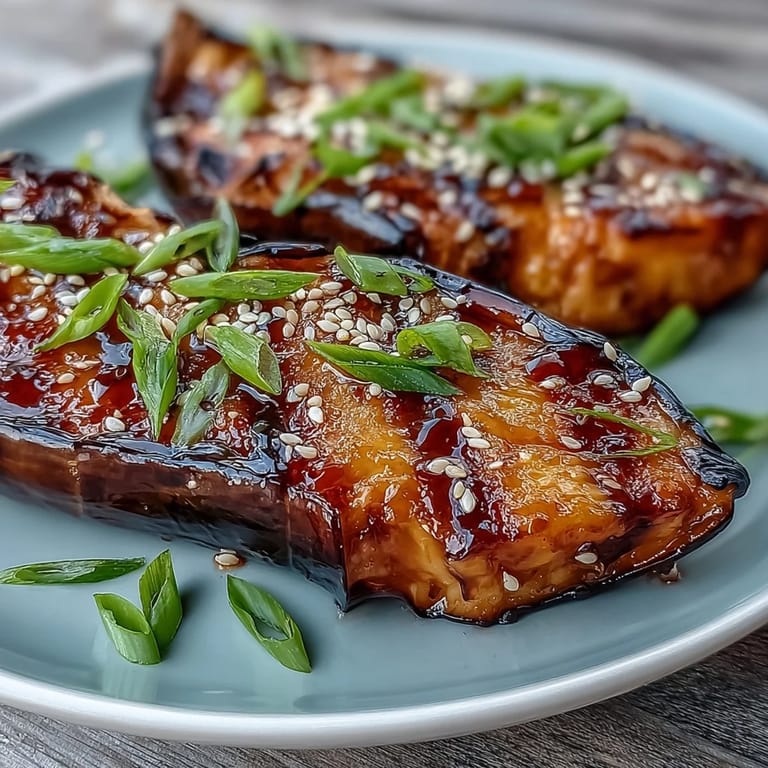
Save This recipe proves that some of the most memorable dishes don't need complicated techniques or exotic ingredients—just a little attention, good timing, and the willingness to let the broiler do its magic. Make this once, and it becomes one of those recipes you return to again and again.
Recipe Guide
- → Can I use regular eggplant instead of Japanese?
Yes, though Japanese eggplants have thinner skin and a creamier texture. If using globe eggplants, slice lengthwise and extend roasting time by 5–10 minutes until fully tender.
- → What makes the glaze caramelized?
The sugar combined with high-heat broiling creates the caramelized effect. The natural sugars in miso and mirin also contribute to that golden, bubbling finish.
- → Is this dish gluten-free?
It can be! Use certified gluten-free miso paste and check that your sake and mirin are labeled gluten-free. Traditional versions may contain wheat-based ingredients.
- → Can I make this ahead?
Roast the eggplants in advance, then glaze and broil just before serving. This keeps the texture best—reheating fully glazed eggplants can make them overly soft.
- → What can I substitute for mirin?
A mixture of equal parts dry sherry or white wine with a pinch of sugar works well. Alternatively, use Chinese Shaoxing wine with added sugar to mimic mirin's sweetness.
- → How do I store leftovers?
Keep in an airtight container in the refrigerator for up to 3 days. Reheat gently in a 350°F oven for 10 minutes to restore texture, though the caramelization won't be quite the same.