 Save
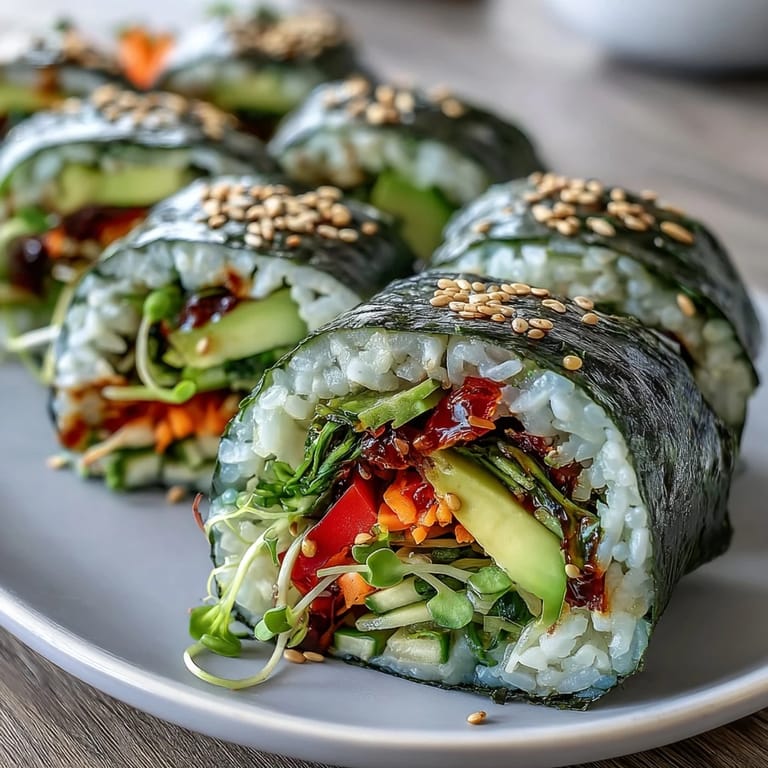
Save My neighbor taught me to make nori rolls on a rainy afternoon when she stopped by with a bag of vegetables from her garden. She had this zen-like calm as she arranged cucumber and avocado on the mat, moving her hands like she'd done it a thousand times. Within twenty minutes, we had eight perfect rolls sitting on her cutting board, and suddenly I understood why people paid so much money for these at restaurants. What got me wasn't the technique—it was how easy it felt once someone showed me the rhythm.
I made these for my daughter's school potluck, and watching the other kids unwrap them with genuine excitement made me realize how much better homemade versions are than the sad plastic-wrapped grocery store kind. She beamed when her friends asked for the recipe, and suddenly this simple vegetable roll became this small moment of pride for both of us.
Ingredients
- Nori (roasted seaweed): The foundation of everything—look for sheets that smell ocean-fresh and feel crispy to the touch, not rubbery or stale.
- Cucumber: Julienne it thin so it stays tender and doesn't water down the roll as it sits.
- Avocado: Choose one that yields just slightly to pressure; too hard and it won't slice cleanly, too soft and it falls apart during rolling.
- Mixed sprouts: These add life and crunch—alfalfa is mild, radish gives a peppery kick, broccoli sprouts taste slightly nutty.
- Carrot: The sweetness balances the umami from the nori and adds color that makes people want to eat with their eyes first.
- Red bell pepper: Raw bell pepper brings a crisp sweetness that cuts through the richness of avocado beautifully.
- Sushi rice (optional): The rice vinegar is key—it gives the rice its slight tang and helps it hold together as you roll.
- Toasted sesame seeds: Don't skip these; they add a nutty finish and actually help seal the roll together.
- Soy sauce or tamari: For dipping—tamari is the gluten-free choice if you need it, and it's just as flavorful.
Tired of Takeout? 🥡
Get 10 meals you can make faster than delivery arrives. Seriously.
One email. No spam. Unsubscribe anytime.
Instructions
- Prepare your rice if using it:
- Mix cooled cooked rice with rice vinegar and let it sit for a few minutes so the vinegar distributes evenly. The rice should feel slightly sticky but not mushy, and it should smell faintly tangy.
- Set up your rolling station:
- Lay your bamboo mat on a flat surface with the nori shiny side down. Have a small bowl of water nearby for sealing—you'll want damp fingertips, not dripping wet ones.
- Spread your base:
- If using rice, spread a thin layer across the lower two-thirds of the nori sheet, leaving that important 2 cm border at the top and small borders on the sides. This space is what lets you seal the roll at the end.
- Layer your vegetables:
- Arrange cucumber, avocado, sprouts, carrot, and bell pepper in a line about a third of the way up from the bottom edge. Sprinkle sesame seeds over everything—they stick to the rice and add texture.
- Roll with gentle pressure:
- Using the mat, lift the bottom edge of nori up and over the fillings, pressing down lightly as you go. Roll forward in one smooth motion, using the mat to guide and contain everything, then let it seal naturally or add a damp finger to the top edge if needed.
- Slice cleanly:
- Use a sharp knife dipped in water, and slice with a gentle sawing motion rather than pressing down hard. Wet your knife between each cut so the rice doesn't stick.
- Serve right away:
- Nori rolls taste best within the first hour when everything is still crisp. Arrange them on a plate with small bowls of soy sauce, pickled ginger, and wasabi if you want the full experience.
 Save
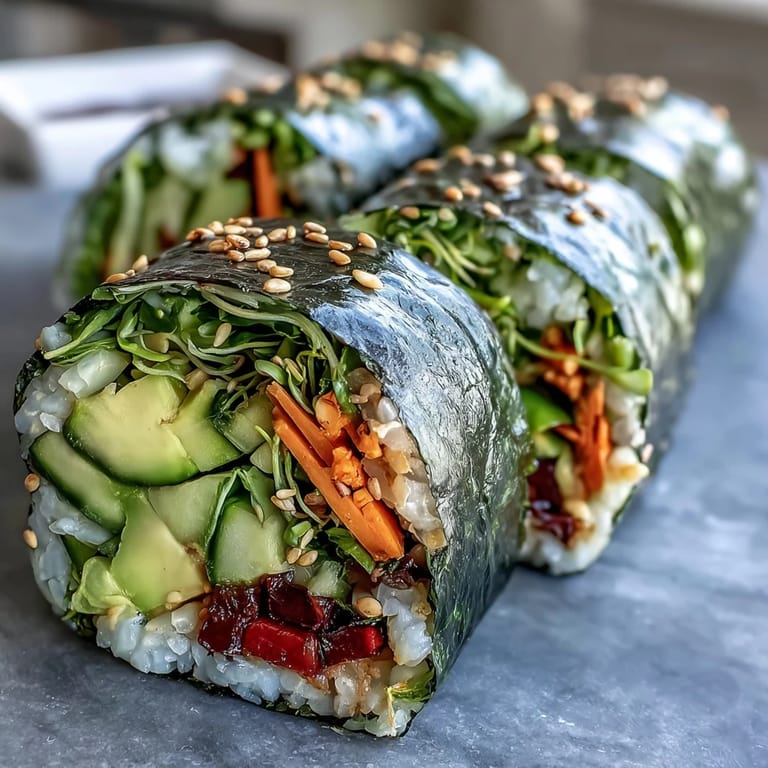
Save There was this moment at dinner when my partner ate one of these rolls and paused mid-bite, then smiled in a way that made me realize I'd created something that tasted both familiar and special to him. It's funny how something so simple—just vegetables wrapped in seaweed—can become a small ritual you both actually look forward to.
Building Your Flavor Layers
The magic of nori rolls isn't in doing anything complicated; it's in understanding how each vegetable contributes something different. The cucumber brings freshness and hydration, the avocado adds richness and creaminess, the sprouts give you a living crunch, and the carrot brings sweetness that balances the slight brininess of the nori. When you arrange them all together, you're not just making a snack—you're building a complete flavor journey in every bite.
The Rice Question
I used to think sushi rice was absolutely necessary, but then I made these without it for someone on a low-carb diet, and honestly, the vegetable flavors became even more prominent. You lose some structure and heartiness, but you gain a lighter feel and the vegetables shine brighter. The nori still holds everything together beautifully, especially if you use enough sesame seeds and pack the fillings snugly.
Why This Works as Your Go-To Snack
What I love most about nori rolls is that they require zero cooking and almost zero skill once you get the rolling motion down. They're impressive enough to serve at a potluck or small gathering, but simple enough that you can make them any Tuesday afternoon when you want something that feels special but tastes fresh. The whole process takes the time it would take to order delivery, but the result feels like you actually tried.
- Make these the night before and keep them wrapped in plastic wrap—they stay fresh and actually get slightly better as flavors meld together.
- If a roll falls apart while rolling, just unwrap it and try again; the nori pieces are still usable, and you'll learn what tight enough feels like.
- Customize your fillings based on what vegetables are in your crisper drawer, because rigidity here is less important than using what you actually have.
 Save
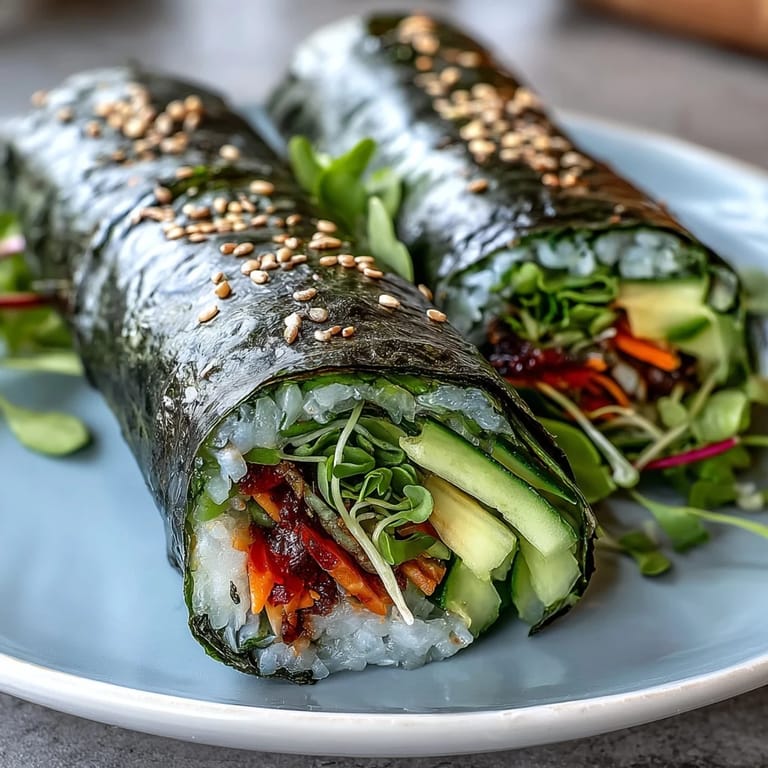
Save Making nori rolls feels like joining a small club of people who know a simple secret: sometimes the best meals are the ones you make yourself in about twenty minutes with whatever vegetables you have on hand. Once you make your first batch, you'll understand why people keep coming back to this.
Recipe Guide
- → Do I need a bamboo rolling mat?
A bamboo mat makes rolling easier and helps achieve tight, even rolls. If you don't have one, a clean kitchen towel works as a substitute. The key is applying gentle, consistent pressure as you roll forward.
- → Can I make these ahead of time?
Best enjoyed fresh for optimal texture. If preparing ahead, wrap tightly in plastic and refrigerate up to 4 hours. The nori may soften slightly, but flavors remain delicious. Slice just before serving.
- → What vegetables work best inside?
Julienned vegetables provide the best texture and distribution. Cucumber, carrot, bell pepper, and avocado are classic choices. Try daikon radish, snap peas, red cabbage, or lightly steamed asparagus for variety.
- → Is sushi rice necessary?
Optional depending on preference. Omitting rice creates lighter, low-carb rolls perfect for warmer weather. Adding rice seasoned with vinegar makes them more substantial and traditional. Both versions taste excellent.
- → How do I prevent nori from tearing?
Handle sheets gently and keep them dry until ready to fill. If the nori feels brittle, let it sit uncovered briefly to absorb ambient moisture. Moisten the top edge slightly with water to help seal the roll.
- → What dipping sauces pair well?
Traditional soy sauce or tamari enhances the salty elements. Try ponzu for citrus brightness, spicy mayo for creaminess, or a simple mixture of rice vinegar and sesame oil for lighter flavor.