 Save
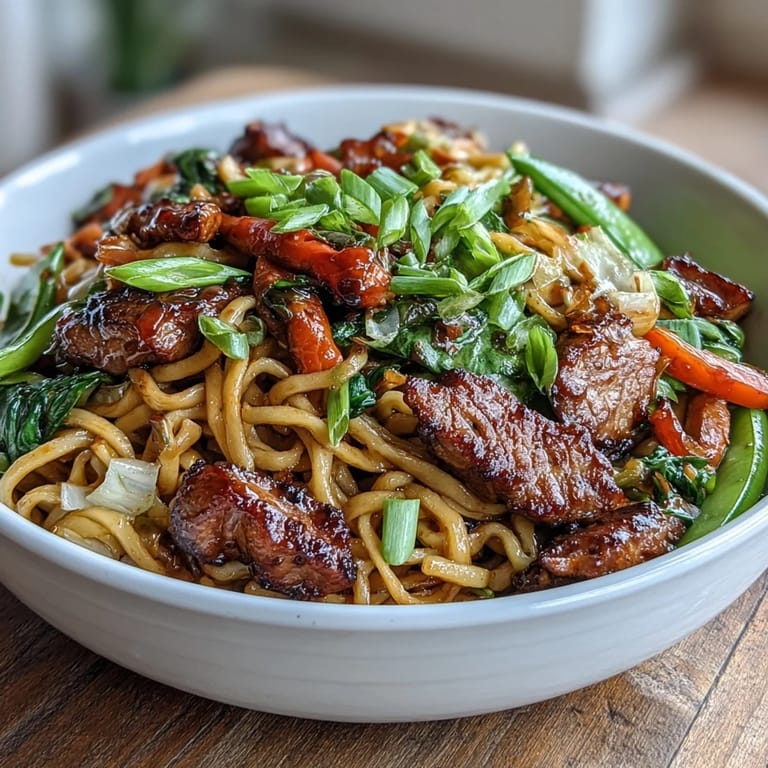
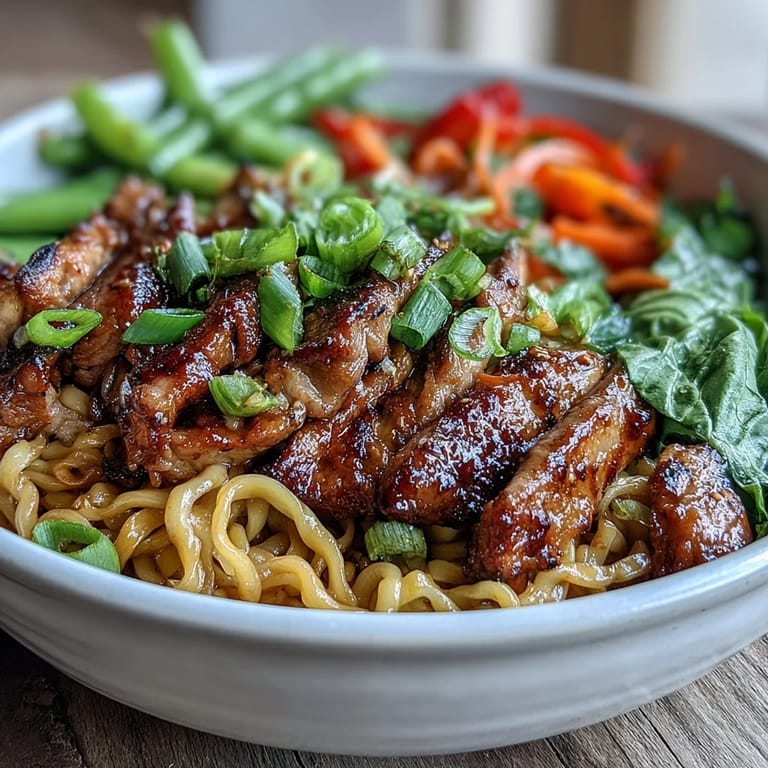
Save There's something about the sound of a hot wok that instantly transforms my kitchen into a focused, almost meditative space. One Thursday evening, running late from work, I threw together this pork noodle stir-fry almost by accident—grabbing whatever vegetables looked fresh and a cut of pork that needed using. What came out was so vibrant and satisfying that I realized dinner didn't need to be complicated to be memorable. Now it's become my go-to when I want something that feels restaurant-quality but doesn't demand hours of planning.
I made this for a friend who'd been working brutal shifts, and watching her face light up when she tasted the first bite reminded me why cooking for people matters. She asked for the recipe before she'd even finished eating, which is always the highest compliment. That moment made me realize this dish has that rare quality of being both comforting and exciting at the same time.
Ingredients
- Pork loin or tenderloin (400 g), thinly sliced: The thinner you slice it, the faster it cooks and the more tender it becomes; I learned this the hard way after overcooking a thicker cut years ago.
- Soy sauce (1 tbsp for marinade, 3 tbsp for sauce): This is your backbone flavor, so don't skimp on quality—a good soy sauce makes an enormous difference in how everything tastes.
- Cornstarch (1 tsp): This magical little ingredient keeps the pork silky and helps it brown beautifully instead of steaming.
- Egg noodles or rice noodles (250 g): Pick whichever you prefer; egg noodles give you more richness, while rice noodles feel lighter and more delicate.
- Red bell pepper, carrot, sugar snap peas (1 of each): These three create the perfect balance of sweetness, crunch, and color; the sugar snap peas especially keep their snap if you don't overcook them.
- Garlic and ginger (2 cloves and 1 tbsp): Fresh ginger is essential here—the ground stuff just doesn't have the same brightness and warmth.
- Oyster sauce (2 tbsp): It adds depth and umami that soy alone can't quite reach, creating that restaurant-quality depth.
- Hoisin sauce (1 tbsp): A small amount adds sweetness and body without overwhelming the dish.
- Sesame oil (1 tsp): Use it sparingly since it's potent, but it's what gives everything that final nod of authenticity.
- Spring onions (2), sesame seeds, and fresh coriander: These aren't optional toppings; they're the final note that makes the dish feel complete.
Tired of Takeout? 🥡
Get 10 meals you can make faster than delivery arrives. Seriously.
One email. No spam. Unsubscribe anytime.
Instructions
- Prepare your pork with intention:
- Toss your sliced pork with soy sauce and cornstarch, then let it sit for 10 minutes while you gather everything else. This isn't wasted time; the cornstarch is gently coating each piece, promising a silky texture.
- Get your noodles ready:
- Cook them according to the package, drain well, and set them aside so they're not waterlogged when you need them. A light toss with a tiny bit of oil prevents them from sticking together.
- Mix your sauce ahead:
- Combine soy, oyster, hoisin, sesame oil, brown sugar, and water in a bowl before you start cooking. Having this ready means you won't be scrambling while everything's sizzling in the wok.
- Sear the pork with high heat:
- Heat 1 tbsp oil in your wok over high heat until it shimmers, then add the pork and don't move it around for the first minute—let it develop a golden crust. Stir-fry for 2 to 3 minutes total until browned, then remove and set aside.
- Build the vegetable layer:
- Add the remaining oil, then add garlic and ginger first so they perfume the oil. Follow with firmer vegetables (bell pepper and carrot), then add the snap peas in the last minute so everything stays crisp and vibrant.
- Bring it all together:
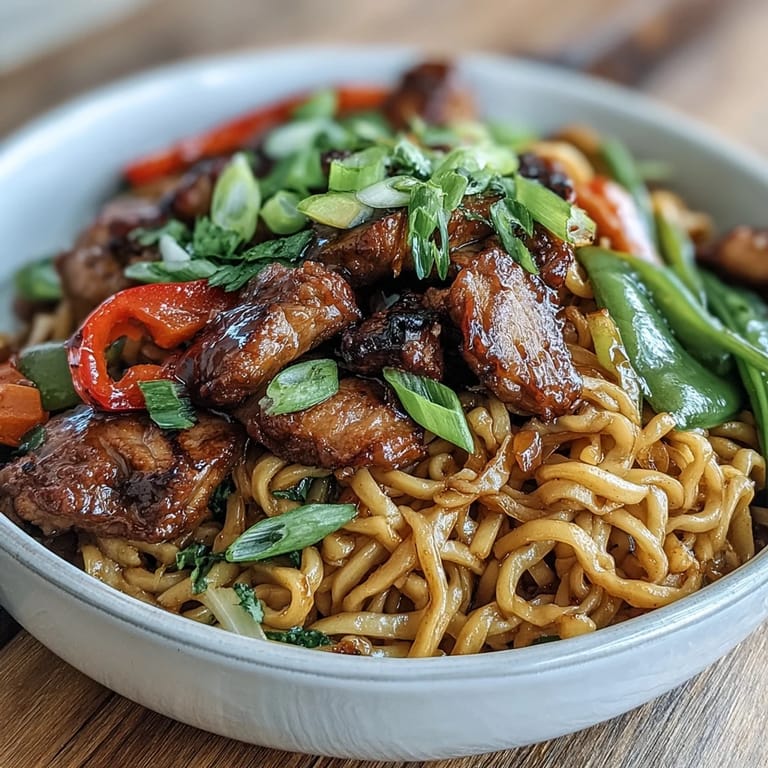
- Return the pork to the wok, add your cooked noodles and sauce, and toss everything for 2 to 3 minutes until the noodles are glossy and heated through. The sauce should coat everything evenly, not pool at the bottom.
- Finish with brightness:
- Add the spring onions, give it one last toss off the heat, then immediately transfer to plates. This final step keeps the onions fresh and adds a sharp, clean note that makes the whole dish sing.
 Save
Save I'll never forget the Saturday morning my partner woke up early and made this without asking, just because they knew I'd had a rough week. The kitchen filled with that warm, gingery steam, and somehow that one gesture felt like the most caring thing anyone could do. Food made with attention really does taste different.
The Wok Technique That Changed Everything
Learning to respect high heat was the turning point for my stir-frying. For years I'd turned the heat to medium-high and wondered why everything came out soft and stewed instead of vibrant and alive. A friend finally showed me that a proper sear on the pork requires the wok to be almost smoking, and that the vegetables should go in with a confident hiss. Once I stopped being afraid of high heat, stir-fries went from something I tolerated to something I genuinely looked forward to making.
Why Fresh Ginger and Garlic Really Matter Here
This dish lives or dies on the freshness of its aromatics. I once tried to rush things with ground ginger from a jar that had been sitting in my cabinet, and the result was flat and one-dimensional. Fresh ginger has this bright, almost spicy note that dried simply can't replicate, and fresh garlic brings an intensity that keeps the whole dish from tasting generic. If you only upgrade one thing about how you make this, make it the ginger and garlic.
Making It Work for Different Nights
I've learned that this recipe is wonderfully flexible once you understand its core logic—tender protein, crisp vegetables, silky noodles, and balanced sauce. The framework stays the same whether you're using chicken on a lighter evening or tofu when you want something plant-based. Some nights I add mushrooms for earthiness or bok choy for extra green; other times I keep it exactly as written because sometimes the simplest version is the best.
- Swap the pork for chicken breast, shrimp, or crumbled tofu depending on what you're craving that week.
- Add mushrooms, baby corn, or bok choy for extra vegetables without changing the cooking method at all.
- Keep the sauce components consistent even when you vary proteins, because that's what makes everything feel cohesive.
 Save
Save This dish has become the recipe I recommend when someone asks what to make when they're tired but don't want to settle for something mediocre. There's real magic in how 30 minutes and a few good ingredients can create something that tastes like you spent all afternoon cooking.
Recipe Guide
- → Can I use different types of noodles?
Yes, both egg noodles and rice noodles work perfectly. You can also substitute with udon, soba, or even spaghetti in a pinch. Just cook according to package directions and drain well before adding to the stir-fry.
- → How do I prevent the pork from becoming tough?
Slice the pork thinly against the grain and marinate it with soy sauce and cornstarch for at least 10 minutes. Cook over high heat for just 2-3 minutes until browned, then remove and set aside to avoid overcooking.
- → What vegetables can I substitute or add?
Feel free to add mushrooms, baby corn, bok choy, broccoli, or snow peas. Use whatever fresh vegetables you have on hand, keeping the total amount similar to maintain the balance of the dish.
- → Can I make this ahead of time?
Stir-fries are best served fresh, but you can prep all ingredients in advance. Slice the pork, julienne vegetables, and mix the sauce ahead. Store separately and cook when ready to serve for optimal texture.
- → How can I make this gluten-free?
Use tamari instead of soy sauce, rice noodles, and a gluten-free oyster sauce alternative. Check all sauce labels carefully as many contain hidden gluten ingredients.
- → What protein substitutes work well?
Chicken breast, firm tofu, beef strips, or shrimp all make excellent alternatives to pork. Adjust cooking times slightly—shrimp cooks faster while beef may need an extra minute.