 Save
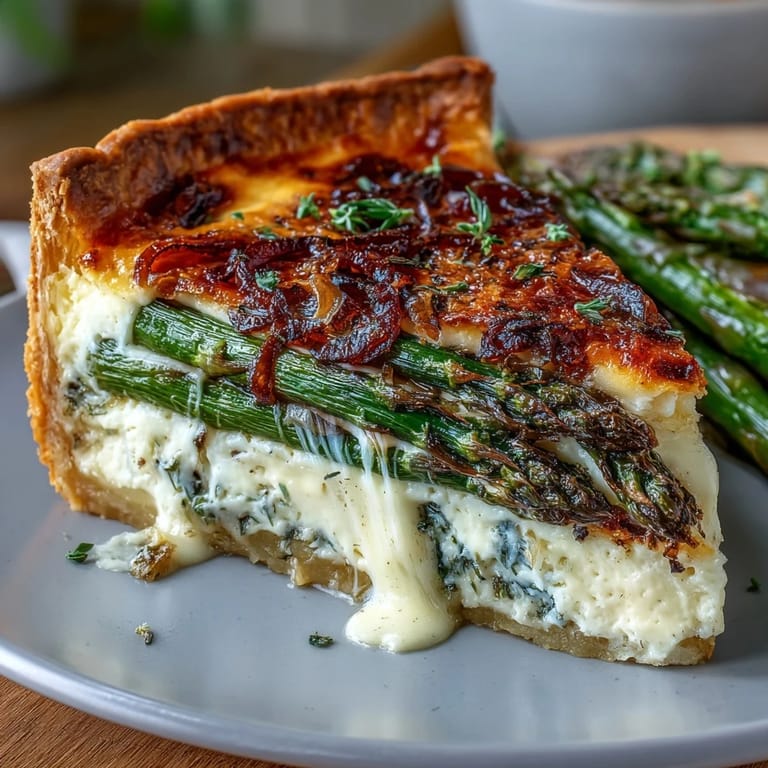
Save The first time I baked this Spring Asparagus Quiche, I hadn&apost planned to make a quiche at all. It was the quiet hum of the weekend morning and a glance at a bounty of asparagus in my fridge that started it. There&aposs something about chopping fresh asparagus that wakes up your senses, especially when sunlight streams onto your countertop. I found myself reaching for Gruyère and savoring the nutty notes before it even hit the bowl. This quiche brought a calm cheerfulness to an otherwise ordinary day.
Once, on a slightly chilly spring afternoon, I brought this quiche out to our back patio for lunch with a friend who&aposs notoriously picky. To my quiet delight, she requested a second slice and asked for "that asparagus recipe" before she left. There&aposs something satisfying about watching people reach for seconds. The golden crust and vivid green asparagus just look inviting enough for anyone to say yes. Even our cat sat at the patio door, hoping for crumbs.
Ingredients
- All-purpose flour: Choose a good quality flour for your crust as it creates a delicate, tender structure—I've learned to fluff it lightly before measuring for best results.
- Unsalted butter: Keep this as cold as possible and cut into small cubes; grating the butter can also work wonders for texture.
- Salt: Don't skip this—just a pinch seasons every layer, from dough to filling.
- Ice water: Adding it tablespoon by tablespoon is key; if you rush, your crust could toughen up.
- Olive oil: This brings out the shallots' sweetness when caramelizing—use a mild one so it doesn't overpower.
- Shallots: Sliced thin and slow-cooked, they caramelize perfectly and add a delicate, sweet layer beneath the veggies.
- Asparagus: Choose stalks that are bright and snappy; thick ones should be halved lengthwise so they cook evenly.
- Gruyère cheese: Its nutty creaminess melts like a charm—if you have to sub, go for something just as robust.
- Eggs: These bind everything and give the quiche that classic custardy texture—room temperature makes for smoother mixing.
- Heavy cream: This is what makes the filling luscious; don't swap for milk alone if you can help it.
- Whole milk: Balances the richness of the cream, making sure the texture isn't overly dense.
- Fine sea salt: This melts in perfectly, dialing up each flavor note without overwhelming.
- Freshly ground black pepper: A little freshly-cracked pepper rounds out the custard nicely.
- Ground nutmeg: Just a pinch gives surprising warmth and a classic French touch—trust me on this one.
Tired of Takeout? 🥡
Get 10 meals you can make faster than delivery arrives. Seriously.
One email. No spam. Unsubscribe anytime.
Instructions
- Make the Crust:
- In a large bowl, stir flour and salt, then cut in cold butter until the mix looks like coarse crumbs. Drizzle in ice water a tablespoon at a time, gently mixing just until the dough comes together, then shape into a disc, wrap, and chill it for at least 30 minutes.
- Roll and Blind Bake:
- Roll out your chilled dough on a floured surface, ease it into your tart or pie pan, trim, prick with a fork, and line with parchment and pie weights. Bake at 375°F for 15 minutes, then remove weights and parchment, baking another 5 minutes until golden and letting it cool a bit.
- Caramelize Shallots:
- In a skillet over medium heat, warm the olive oil, add the sliced shallots, and stir them until soft and golden for about 8–10 minutes; then set aside.
- Blanch Asparagus:
- Bring salted water to a boil, add asparagus pieces, let them cook for 2 minutes, then drain and rinse with cold water before gently patting them dry.
- Whisk Custard:
- In a big bowl, whisk the eggs, heavy cream, milk, salt, pepper, and nutmeg together briskly so everything becomes airy and smooth.
- Layer and Fill:
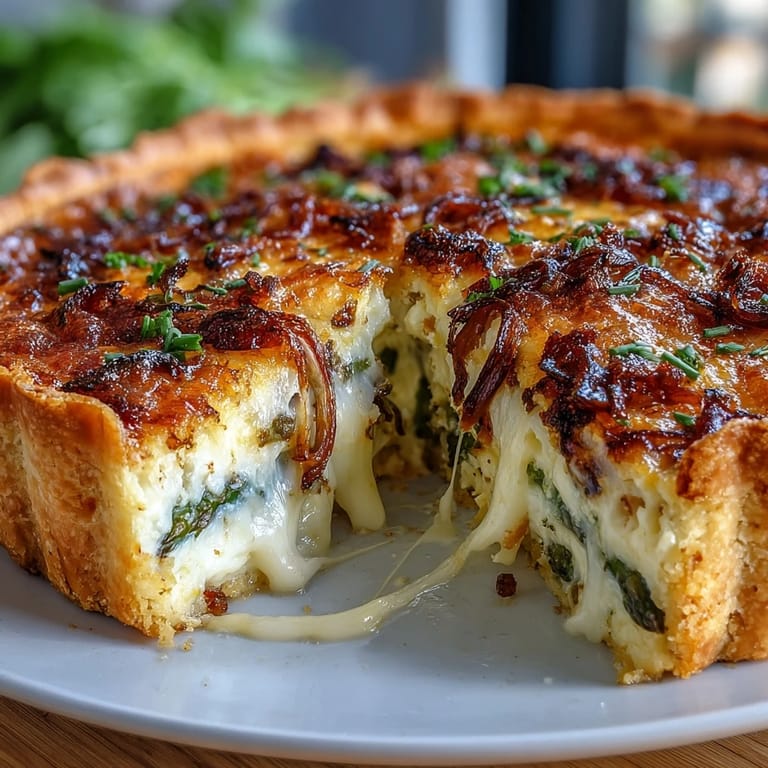
- Spread caramelized shallots over the cooled crust, then scatter asparagus and Gruyère evenly on top so each slice will get the best bite.
- Add Custard and Bake:
- Pour the custard evenly over the filling, bake for 35–40 minutes until just set in the center and nicely golden on top.
- Rest and Serve:
- Let your quiche rest for 10 minutes so the slices hold together beautifully, then serve warm or at room temperature.
 Save
Save  Save
Save One Sunday, my nephew asked if he could help make the quiche, his small hands carefully lining up asparagus tips in a spiral. I realized then this dish invites all sorts of hands to the table, turning lunch into a team effort that leaves you smiling way after the plates are cleared.
The Secret to a Flaky Quiche Crust
I used to overwork my pastry until a wise friend showed me that less truly is more. Keep everything as cold as possible, handle the dough just enough for it to come together, and don't worry about perfection—it's meant to be a bit rustic.
Making the Most of Fresh Asparagus
If you snap the ends of each asparagus stalk instead of slicing, you'll ditch any woodiness and keep only the tender bits. I've also found those skinny spears need less time in the water, so watch them closely—bright green is your signal.
Serving and Storing: My Best Advice
This quiche holds up beautifully if you make it ahead; just let it return to room temp for the best texture and flavor. It&aposs just as delicious cold from the fridge for a spontaneous snack, with its flavors deepening after a night of rest.
- Bake the night before for a stress-free brunch.
- Pair leftovers with arugula and a squeeze of lemon for lunch.
- Don't forget to line your pan—clean-up will thank you!
 Save
Save 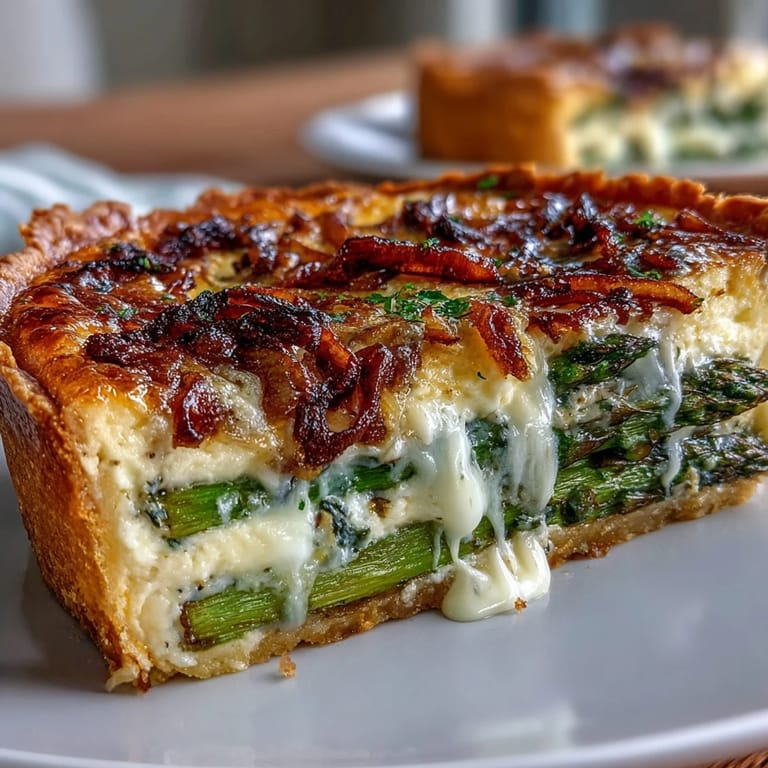 Save
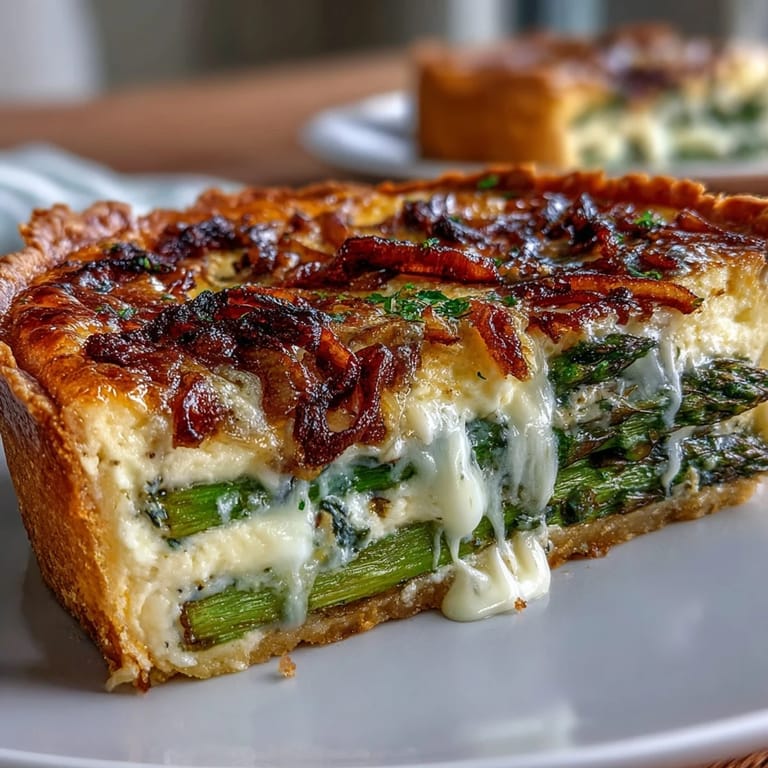
Save This Spring Asparagus Quiche is a little celebration of what the season offers. Whether you serve it for a laidback brunch or quietly savor a wedge alone, it has a way of making any moment feel just right.
Recipe Guide
- → How do I prevent a soggy bottom?
Blind-bake the crust with parchment and weights until lightly golden, and cool slightly before adding the filling. Use a hot oven at the start of baking to help set the custard quickly.
- → Can I swap Gruyère for another cheese?
Yes. Emmental, Swiss or a sharp white cheddar work well for similar melt and flavor. Choose a firm, flavorful cheese that melts evenly.
- → What’s the best way to cook asparagus for this tart?
Blanch asparagus for about 2 minutes in salted boiling water, then plunge into ice water to stop cooking. This keeps stalks tender-crisp and bright green.
- → How long can I make it ahead?
You can blind-bake the crust and caramelize shallots a day ahead. Assemble and bake the filling the same day for best texture; the finished tart also keeps 2 days refrigerated.
- → How should I reheat leftovers?
Reheat slices in a 350°F (175°C) oven for 10–12 minutes until warmed through to preserve the flaky crust. A quick turn in a skillet over low heat also refreshes the base.
- → Any tips for extra flavor?
Fold chopped fresh herbs such as chives, tarragon or dill into the custard or sprinkle on top after baking. A light grating of lemon zest brightens the filling without overpowering it.