 Save
Save There was an October evening when my neighbor knocked on the door with a bag of acorn squash from her garden, and I had no idea what to do with them. She mentioned soup, so I roasted one out of curiosity, and the kitchen filled with this warm, honeyed aroma that made me stop what I was doing and just breathe it in. That first spoonful was a revelation—creamy without any cream at first, naturally sweet but not dessert-like, with these whispers of nutmeg and cinnamon that made everything feel intentional. Now this soup shows up every fall without fail, and it's become the thing people ask me to bring.
I made this for a dinner party once when I was nervous about impressing someone, and watching their face when they tasted it—that moment of quiet recognition that something simple could taste this good—that's when I realized this soup had become my secret weapon. It's the kind of dish that whispers rather than shouts, which somehow makes people listen more closely.
Ingredients
- 2 medium acorn squash (about 2 lbs total), halved and seeded: These are your foundation—look for ones that feel heavy for their size, which means they're packed with flesh and sweetness.
- 1 medium yellow onion, chopped: Yellow onions are sweeter than white ones, which matters here because you want them to play nicely with the squash's natural sweetness rather than fighting it.
- 2 cloves garlic, minced: Fresh garlic is non-negotiable; it adds a subtle backbone that keeps the soup from feeling one-dimensional.
- 1 medium carrot, peeled and chopped: Carrots bring a gentle earthiness and help balance the sweetness—they're honestly the unsung hero of this soup.
- 4 cups vegetable broth and 1 cup water: The broth should be good quality because it's a main player; the water dilutes it just enough to let the squash flavor shine through.
- 1/2 cup heavy cream or coconut milk: This is where you choose your path—dairy makes it richly velvety, coconut milk keeps it clean and slightly tropical, both are honest choices.
- 2 tbsp olive oil: Use olive oil you'd actually eat on a salad; the roasting process will make it taste even better.
- 1 tsp salt, 1/2 tsp black pepper, 1/4 tsp ground nutmeg, 1/4 tsp ground cinnamon: These seasonings are measured like whispers—start here, but trust your own taste buds to adjust at the end.
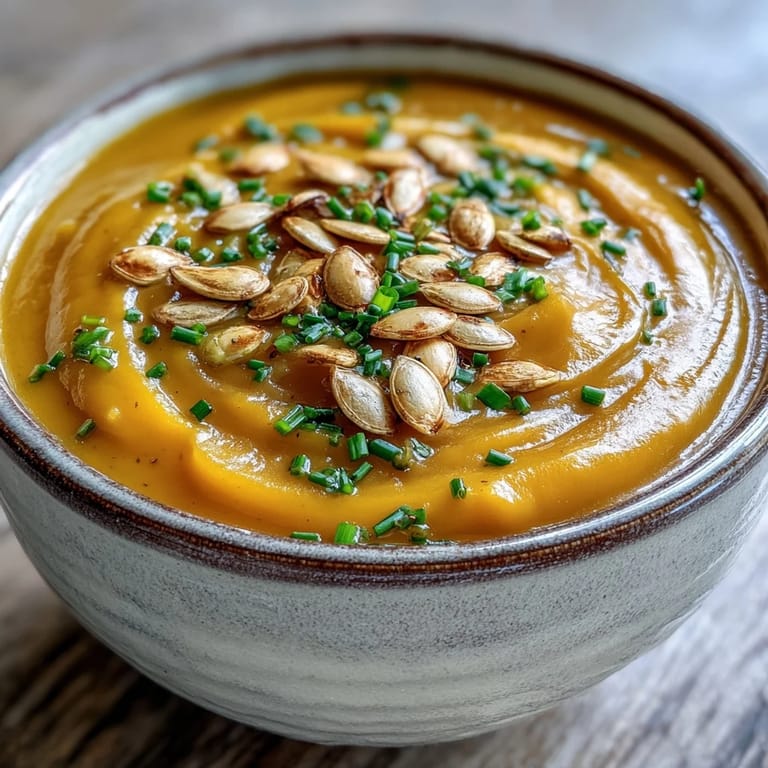
- Toasted pumpkin seeds, fresh chives, and cream for garnish: These aren't just decoration; they're the final conversation the soup has with your mouth.
Tired of Takeout? 🥡
Get 10 meals you can make faster than delivery arrives. Seriously.
One email. No spam. Unsubscribe anytime.
Instructions
- Get your oven ready and prep your squash:
- Heat the oven to 400°F and line a baking sheet with parchment paper. Halve your acorn squash, scoop out the seeds, then brush the cut sides with a tablespoon of olive oil—this is where the magic begins, in those crevices where the oil will help everything caramelize.
- Roast the squash until it's completely tender:
- Place the halves cut side down on the sheet and let them roast for 30 to 35 minutes; you'll know they're ready when the flesh gives easily to a fork. The kitchen will smell like you're doing something important, which you are.
- Build your flavor base:
- While the squash is roasting, warm the remaining olive oil in a large pot over medium heat. Add your chopped onion, carrot, and garlic, then let them soften together for about 5 to 7 minutes—this isn't a race, you want them to become tender and release their sweetness.
- Bring everything together:
- Once the squash is cool enough to handle, scoop the flesh into the pot. Pour in the vegetable broth and water, then add your salt, pepper, nutmeg, and cinnamon. Bring the whole thing to a boil, then lower the heat and let it simmer for about 10 minutes while the flavors get to know each other.
- Transform it into something silky:
- Take the pot off the heat and use an immersion blender to puree everything until it's smooth as silk—or if you don't have one, carefully transfer it in batches to a countertop blender. This is the moment when a pot of vegetables becomes something that feels luxurious.
- Finish with cream and final seasoning:
- Stir in your cream or coconut milk, then taste carefully and adjust the salt, pepper, or spices if your palate tells you something's missing. Reheat gently if it's cooled, but don't let it boil.
- Serve with intention:
- Ladle the soup into bowls and scatter pumpkin seeds across the top, add a few chives, maybe a drizzle of cream. Each bowl becomes its own little presentation.
 Save
Save There's something about serving a bowl of this soup to someone and watching them close their eyes after the first spoonful that reminds you why cooking matters. It's not fancy, it's not complicated, but it tastes like you spent all afternoon thinking about making someone happy.
Why Roasting Changes Everything
Roasting the squash instead of boiling it is the decision that separates a forgettable soup from one people remember. When you roast, the natural sugars concentrate and caramelize slightly at the edges, and somehow that small change makes the entire soup taste more intentional, more developed. The flesh becomes almost buttery before it ever touches a blender, and that richness carries through to the final bowl.
Playing with Flavors and Variations
This soup is forgiving in the best ways. The base—roasted squash, onion, carrot, garlic, and broth—is almost unchangeable, but from there you can drift in different directions depending on your mood. Some days I want to push the warmth and add a pinch of cayenne that sneaks up on you; other times I'll add a splash of apple cider vinegar to brighten everything up. The cinnamon and nutmeg are your anchor, but they're flexible enough to share space with other ideas.
Storage, Reheating, and Making It Last
This soup keeps beautifully in the refrigerator for about four days, and it actually tastes better on day two or three once the flavors have had time to settle and meld. You can also freeze it for a couple of months, though I usually skip the cream before freezing and stir it in fresh after reheating—it keeps everything tasting bright and newly made. Reheat gently on the stovetop rather than blasting it in the microwave, and you'll taste the difference in how the flavors come alive again.
- If the soup thickens too much after a day or two, just add a splash of broth or water when you reheat it to bring back that silky consistency.
- The garnishes—pumpkin seeds, chives, cream—are what transform a good soup into one that feels special, so don't treat them as optional.
- Make this when acorn squash is at the farmer's market; there's no substitute for the real thing at its peak.
 Save
Save This soup has become the thing I make when I want to slow down and remember that cooking is a form of kindness, mostly to yourself. It's an hour well spent, and a bowl that tastes like someone cared.
Recipe Guide
- → Can I make this soup ahead of time?
Absolutely. This soup actually tastes better the next day as flavors have time to meld. Store in an airtight container in the refrigerator for up to 4 days. Reheat gently over low heat, adding a splash of broth or cream if needed to restore consistency.
- → What's the best way to achieve the smoothest texture?
Roasting the squash until completely tender is key—it should scoop easily from the skin. Use an immersion blender directly in the pot for convenience, or a high-speed countertop blender in batches for ultra-silky results. Straining through a fine-mesh sieve creates an even more refined texture.
- → Can I freeze this soup?
Yes, though the cream may separate slightly upon thawing. For best results, freeze before adding the cream—simply blend the cooled soup without cream, freeze for up to 3 months, then stir in fresh cream when reheating.
- → What can I substitute for acorn squash?
Butternut squash works beautifully as a substitute, offering similar sweetness and texture. Kabocha squash or delicata squash also work well. Adjust roasting time as needed based on squash size and density.
- → How can I add more protein to this soup?
Stir in white beans like cannellini during the final simmer for added protein and creaminess. Alternatively, serve with protein-rich sides like grilled chicken, roasted chickpeas, or crusty bread topped with cheese.
- → What's the purpose of nutmeg and cinnamon?
These warm spices enhance the squash's natural sweetness without making the soup taste like dessert. The nutmeg adds subtle earthiness while cinnamon provides gentle warmth—both complement the roasted flavors beautifully.