 Save
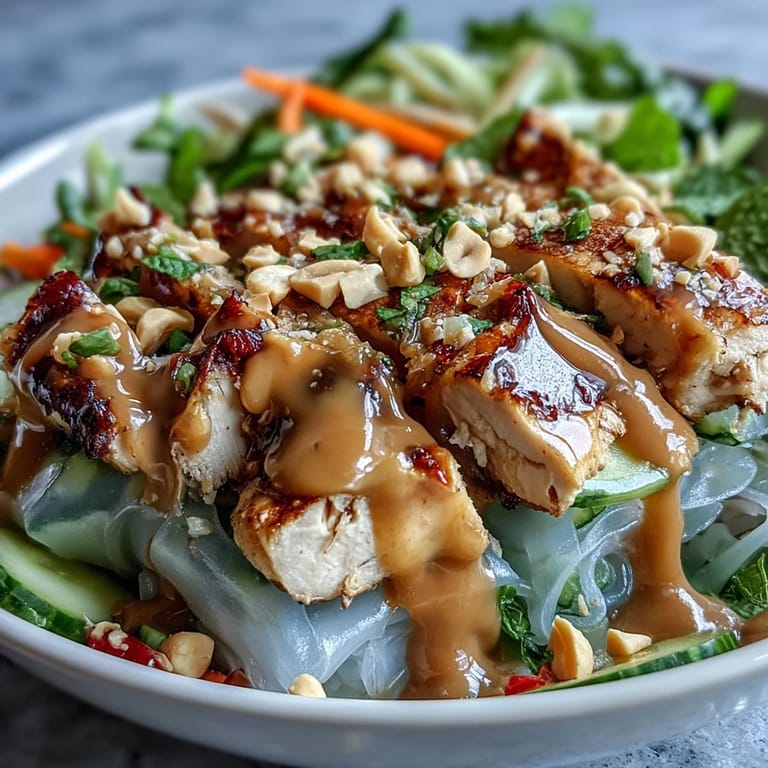
Save The first time I tried to soften rice paper, I left the sheets in too long and ended up with a sticky, impossible-to-separate mess that clung to my fingers like wet tissue. I nearly gave up on the whole idea of spring rolls until a friend showed me the trick: just a quick dip, five seconds max, and let them finish softening on the towel. That revelation changed everything, and eventually I stopped rolling them altogether and started tossing the silky shards into bowls with all the fixings. It's faster, just as delicious, and there's something satisfying about the way the rice paper picks up the peanut sauce in every bite.
I made this for a small dinner party on a warm summer evening when turning on the oven felt like a punishment. Everyone built their own bowls at the table, piling on extra mint and fighting over the last of the fried shallots. One guest, who claimed she didn't like tofu, went back for seconds with the crispy cubes I'd pan-fried in a little sesame oil. By the end of the night, three people had texted themselves the recipe from my phone.
Ingredients
- Rice paper: These translucent sheets turn silky and chewy when briefly soaked, and cutting them into shards means you skip the tricky rolling step entirely.
- Jasmine rice or vermicelli noodles: Optional, but they add a comforting base that soaks up the peanut sauce and makes the bowl more filling.
- Grilled chicken, tofu, or shrimp: Choose based on your mood or what's in the fridge, each one works beautifully and brings its own texture to the mix.
- Carrot, cucumber, red bell pepper, red cabbage: The crunch and color here are non-negotiable, they're what make each bite feel alive and refreshing.
- Mixed salad greens: Any tender greens work, I like a mix of butter lettuce and baby spinach for a soft contrast to the crisp vegetables.
- Fresh mint and cilantro: These herbs are the soul of the dish, bright and aromatic, don't skip them or use dried versions.
- Creamy peanut butter: The base of the sauce, it should be the kind that's smooth and easily stirred, not the natural separated stuff unless you're willing to stir it well first.
- Soy sauce and hoisin sauce: They bring salty depth and a hint of sweetness, use tamari if you need it gluten-free.
- Rice vinegar and lime juice: The acidity cuts through the richness of the peanut butter and wakes up all the other flavors.
- Sriracha: Optional but recommended, it adds a gentle heat that builds without overwhelming the fresh vegetables.
- Roasted peanuts and fried shallots: The final crunch and savory bite that make you want to eat this bowl slowly to savor every layer.
Tired of Takeout? 🥡
Get 10 meals you can make faster than delivery arrives. Seriously.
One email. No spam. Unsubscribe anytime.
Instructions
- Soften the rice paper:
- Fill a large shallow dish with warm, not hot, water and dip each sheet for just five to ten seconds until it starts to feel pliable. Lay them on a clean kitchen towel and stack two or three at a time before cutting them into rough strips or squares with kitchen scissors or a sharp knife.
- Cook your protein:
- If using chicken, grill or pan-fry the breasts until golden and cooked through, then slice them thin. For tofu, press out the excess moisture, cube it, and pan-fry in a little oil until crispy on all sides, and if you're using shrimp, cook them quickly in a hot pan with a pinch of salt until they just turn pink.
- Prep the vegetables:
- Julienne the carrot and cucumber, slice the bell pepper into thin strips, and shred the cabbage as finely as you can manage. Wash and dry the salad greens and pick the mint and cilantro leaves from their stems, keeping them whole for the best flavor and texture.
- Make the peanut sauce:
- In a medium bowl, whisk together the peanut butter, soy sauce, hoisin, rice vinegar, lime juice, and sriracha if using, then add warm water a tablespoon at a time, whisking until the sauce is smooth, glossy, and just thin enough to drizzle. Taste it and adjust with more lime for brightness or sriracha for heat.
- Build the bowls:
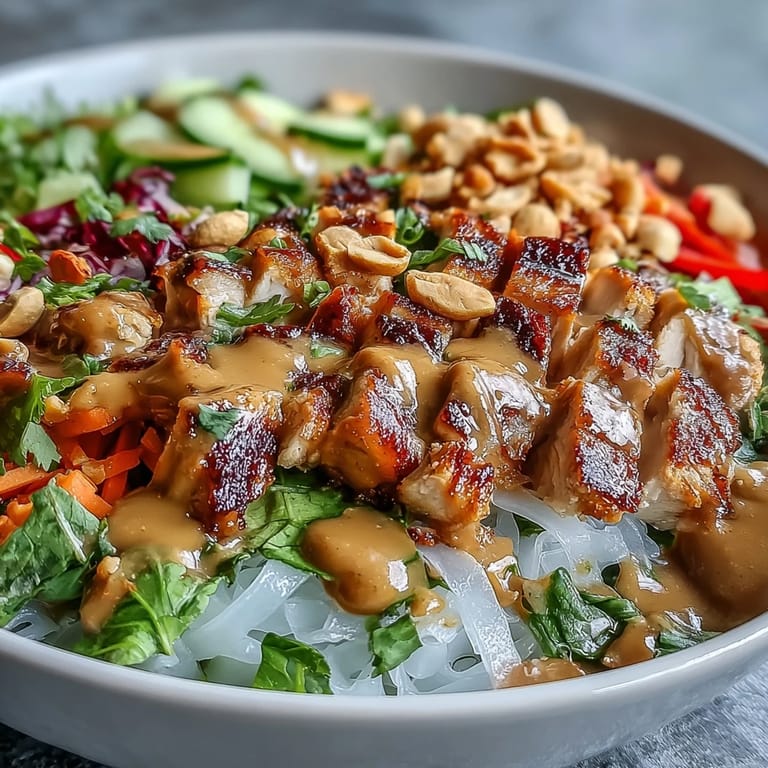
- Divide the cooked rice or noodles, if using, among four bowls, then arrange the rice paper pieces, all the prepared vegetables, the greens, and the herbs in separate piles or casual heaps. Top with your chosen protein, then drizzle generously with the peanut sauce and finish with chopped peanuts, fried shallots, and a lime wedge on the side.
 Save
Save One Sunday afternoon, I made this for myself when I was too tired to cook anything complicated but still wanted something that felt like a treat. I sat in the backyard with my bowl, the sun filtering through the trees, and realized that sometimes the best meals are the ones you don't have to share. The herbs smelled like summer, the peanut sauce was perfectly tangy, and I felt proud of myself for turning a handful of ingredients into something this good.
Choosing Your Protein
Grilled chicken is the safe, crowd-pleasing choice, especially if you marinate it first in a little soy sauce, lime, and garlic. Tofu is my go-to when I want something lighter and quicker, and if you press it well and get a good sear, it has a satisfying chew that holds up against all the fresh vegetables. Shrimp cooks in minutes and adds a subtle sweetness that pairs beautifully with the peanut sauce, just don't overcook them or they'll turn rubbery. You could even use leftover rotisserie chicken or skip the protein entirely and load up on avocado and extra peanuts for a vegetarian version that's just as filling.
Making It Your Own
This bowl is endlessly adaptable, and I've made it dozens of ways depending on what's in the fridge. Swap the peanut butter for almond or sunflower butter if you have a nut allergy, or add pickled carrots and daikon for a tangy crunch that mimics banh mi. I've thrown in sliced avocado, roasted sweet potato cubes, and even leftover grilled corn, and it always works. If you like more heat, add thinly sliced fresh chili or a drizzle of chili oil on top, and if you want it richer, a soft-boiled egg with a jammy yolk is a perfect addition.
Serving and Storing
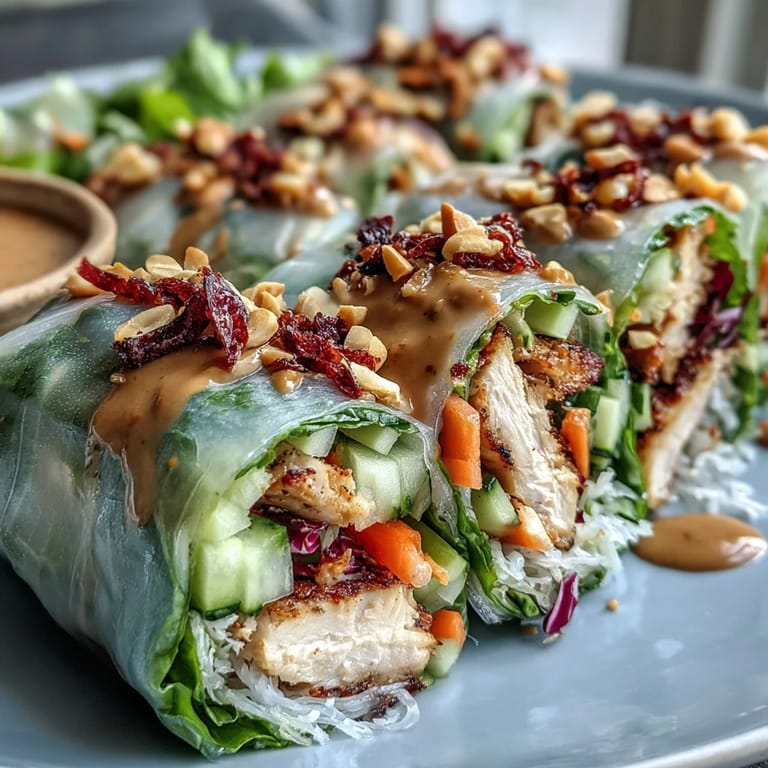
I like to set out all the components in separate bowls and let everyone build their own, it turns dinner into a little interactive moment and means everyone gets exactly what they want. If you're meal prepping, keep the rice paper, vegetables, protein, and sauce in separate containers, and assemble everything just before eating so nothing gets soggy. The peanut sauce will keep in the fridge for up to a week and is incredible on grain bowls, noodles, or as a dip for raw vegetables.
- Serve this with lime wedges and extra herbs on the side so people can adjust the brightness and freshness to their taste.
- If the rice paper shards stick together after cutting, lightly toss them with a tiny bit of oil to separate them before adding to the bowls.
- Leftovers are best eaten within a day, after that the vegetables start to lose their crunch and the rice paper can get a little gummy.
 Save
Save This bowl has become one of those recipes I turn to when I want something that feels special but doesn't require much effort or planning. It's bright, satisfying, and adaptable, and every time I make it, I'm reminded that the best food doesn't have to be complicated to be memorable.
Recipe Guide
- → What does rice paper taste like in a bowl?
Rice paper has a mild, neutral flavor that absorbs the peanut sauce beautifully. When softened and cut into strips, it adds silky, slightly chewy texture similar to wide rice noodles but lighter. The pieces soak up the tangy, savory dressing while maintaining their delicate structure.
- → Can I make this bowl ahead for meal prep?
Yes, this bowls meal preps excellently. Store components separately in airtight containers: rice paper pieces, vegetables, protein, and sauce each in their own container. The rice paper may soften further but still maintains texture. Keep the sauce separate and add just before serving to prevent sogginess. Fresh herbs are best added the day of eating.
- → What protein works best in this bowl?
All three options shine here. Grilled chicken breast adds smoky depth and holds up well to the bold peanut flavors. Tofu becomes wonderfully tender when pressed and cubed, soaking up the sauce. Cooked shrimp provides sweet, braky notes that complement the fresh vegetables. Choose based on preference or dietary needs—all pair perfectly with the Vietnamese-inspired profile.
- → How do I prevent rice paper from getting too soft?
Soak rice papers briefly—just 5-10 seconds in warm water—until pliable but not completely limp. Stack 2-3 sheets before cutting to maintain texture. Cut into strips rather than small pieces to preserve some structure. Add rice paper to bowls just before serving rather than tossing with sauce in advance to maintain the ideal tender-yet-toothsome texture.
- → Is the peanut sauce spicy?
The sauce has mild heat from optional sriracha—start with 1 teaspoon for gentle warmth or increase to 2 teaspoons for more pronounced spice. The sriracha balances the rich peanut butter and sweet hoisin without overpowering. Omit entirely if spice-sensitive; the sauce remains delicious with just the salty-sweet combination of soy sauce and hoisin.