 Save
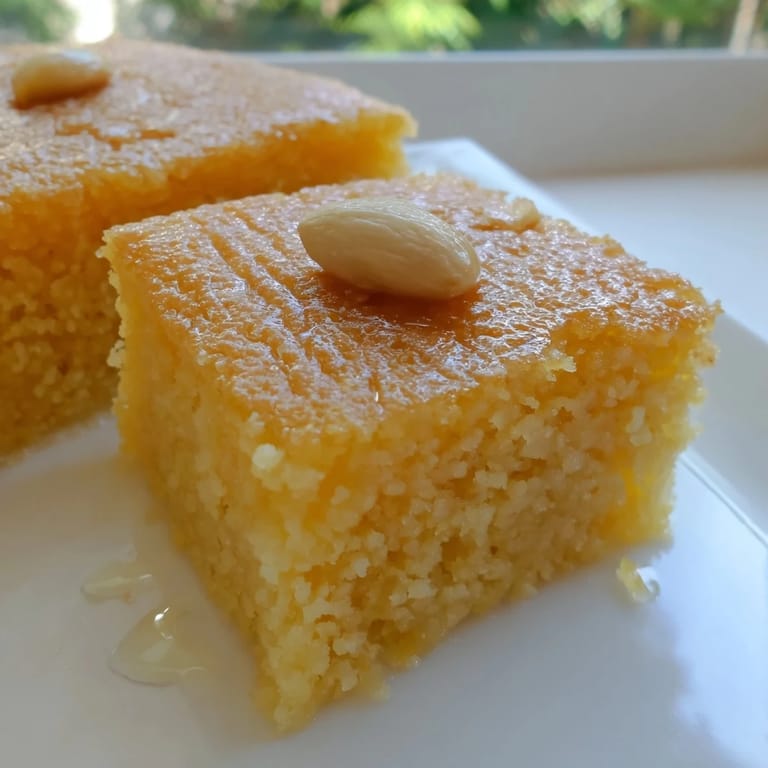
Save My neighbor brought over a square of basbousa one afternoon with steaming mint tea, and I was immediately transported to a Cairo kitchen I'd never visited. That buttery, coconut-sweetened bite paired with the light syrup felt like someone had baked hospitality itself. I asked for the recipe that same day, and what started as curiosity became a ritual—now whenever I need comfort or want to share something meaningful, basbousa is what I make.
I made basbousa for a small gathering last spring, and my friend Sarah—who doesn't usually care for desserts—came back to the pan three times. She kept saying it tasted like memory, which I think meant it tasted like belonging. Now when she visits, basbousa is non-negotiable.
Ingredients
- Fine semolina: This is your cake's foundation, giving basbousa its characteristic tender crumb and slight graininess that melts on your tongue.
- Granulated sugar: Sweetness balanced just right—too much makes it cloying, too little and you miss the point.
- Desiccated coconut, unsweetened: The soul of this dessert; unsweetened is crucial because the syrup provides all the sugar you need.
- Plain yogurt: This is the secret to moisture—it keeps the cake tender even after it's soaked in syrup.
- Unsalted butter or ghee, melted: Use ghee if you want deeper richness, though butter works beautifully too.
- Baking powder: Just enough to give the cake a subtle lift without making it fluffy.
- Vanilla extract: A quiet note that rounds out the flavor profile.
- Salt: A pinch to balance all that sweetness and wake up your taste buds.
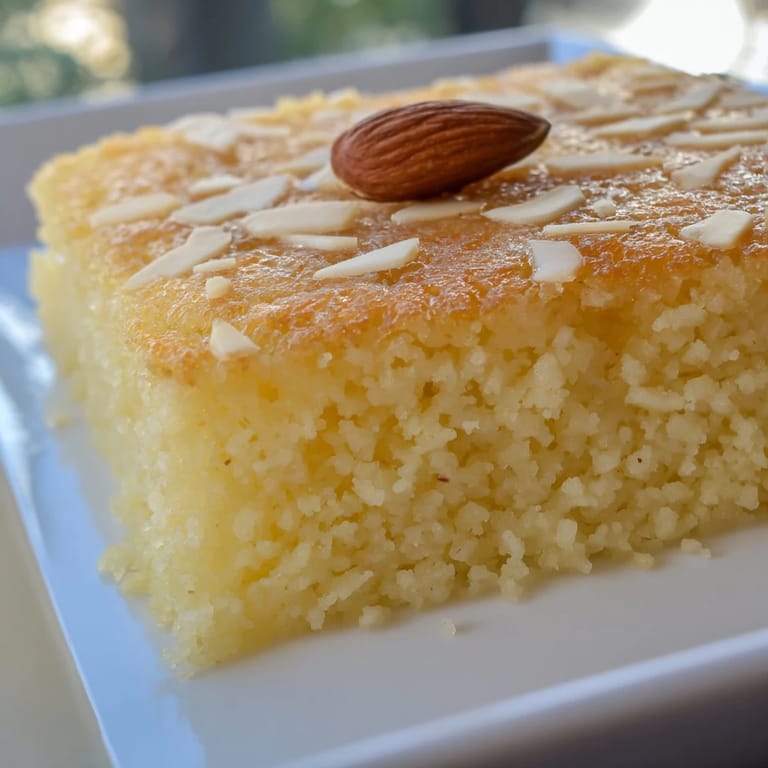
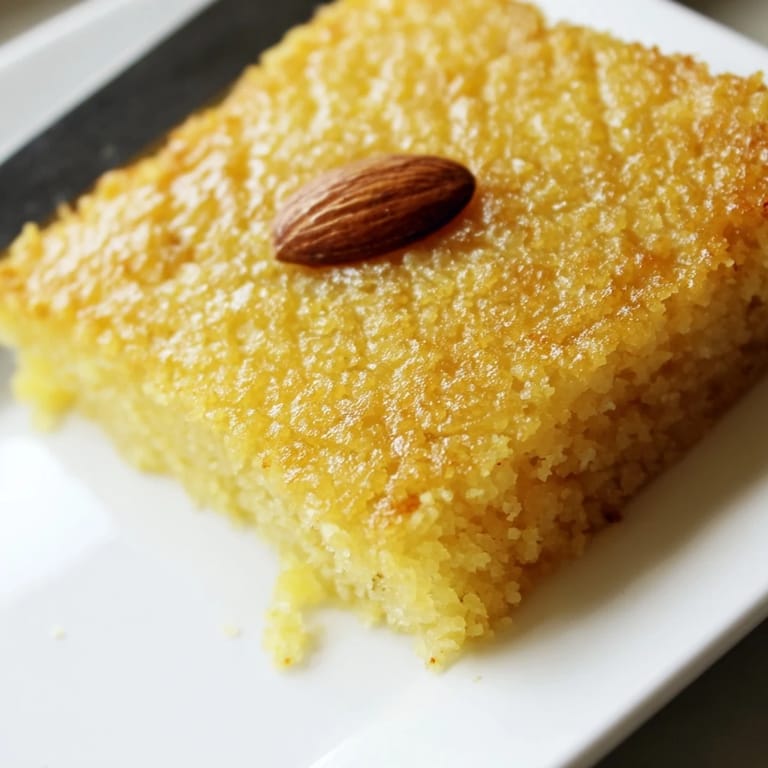
- Whole blanched almonds: Each square gets one centered on top—they're almost like a promise of what's inside.
- Granulated sugar for syrup: Dissolved into a light, fragrant coating that soaks into every layer.
- Water: The base of your syrup, bringing everything together.
- Lemon juice: Just enough brightness to cut through the sweetness without being noticeable.
- Rose water or orange blossom water: Optional but worth it—this is where the magic happens, adding that Middle Eastern elegance.
Tired of Takeout? 🥡
Get 10 meals you can make faster than delivery arrives. Seriously.
One email. No spam. Unsubscribe anytime.
Instructions
- Set your stage:
- Preheat your oven to 350°F and grease your 9x9 inch pan generously. I use a mix of butter and a little tahini for extra flavor.
- Mix the dry foundation:
- Combine semolina, sugar, coconut, baking powder, and salt in a large bowl. Stir until everything is evenly distributed—this step matters more than you'd think.
- Bring it together:
- Add yogurt, melted butter, and vanilla, then stir until a thick, cohesive batter forms. The texture should be thick enough to hold its shape but still soft enough to spread.
- Spread and score:
- Press the batter evenly into your pan, then use a sharp knife to score the surface into 12 squares or diamonds. Go all the way to the bottom so each piece separates cleanly.
- Crown each piece:
- Place one almond in the center of each square—this small gesture makes the final dessert feel intentional.
- Bake until golden:
- Bake for 30 to 35 minutes until the top is deep golden and a toothpick comes out clean. Trust your nose—when it smells like toasted coconut, you're close.
- Prepare the syrup:
- While the cake bakes, combine sugar, water, and lemon juice in a saucepan. Bring to a boil, then simmer for 8 to 10 minutes until it thickens slightly and cools for a few minutes.
- The magic pour:
- Once basbousa comes out of the oven, immediately pour the cooled syrup evenly over the hot cake. The warmth helps it absorb beautifully.
- Rest and serve:
- Let the cake cool completely, then re-cut along your scored lines. Serve at room temperature with mint tea or coffee.
 Save
Save There's a moment when you pour that warm syrup over the fresh-baked basbousa and hear the soft sizzle—that's when you know you've done something right. It's not loud or dramatic, just honest kitchen magic.
Why This Dessert Matters
Basbousa isn't just a recipe; it's a bridge between kitchens, cultures, and moments of generosity. In Egyptian tradition, it appears at celebrations, on ordinary afternoons with tea, at gatherings where everyone brings something to share. Making it yourself transforms it from something you buy into something you give, and that shift changes everything.
Storage and Keeping
Basbousa keeps beautifully for up to four days in an airtight container at room temperature—if it lasts that long. The longer it sits, the more the syrup settles into every layer, making day three sometimes better than day one. I've never successfully frozen it because someone always discovers it first, but an airtight container in the cool part of your kitchen will preserve it perfectly.
Variations and Personal Touches
This recipe is forgiving enough to adapt to what you have on hand and what calls to you. Some bakers add a touch of cardamom to the batter for warmth, others brush the top with a little extra butter before baking to deepen the golden color. I've experimented with half the yogurt swapped for sour cream, and the result was richer, almost decadent. The almonds can become pistachios, the rose water can swap for orange blossom water, or you can skip the floral notes entirely if that's not your language. What matters is that you're making it with intention.
- Sprinkle extra coconut on top before baking for more texture and toasted coconut aroma.
- Try pistachios instead of almonds for a different flavor profile and visual appeal.
- A pinch of cardamom in the batter adds a subtle warmth that feels like a secret.
 Save
Save Make basbousa when you want to turn an ordinary day into something worth remembering. Share it warm with someone you're glad to see.
Recipe Guide
- → What gives Basbousa its moist texture?
The combination of yogurt and melted butter creates a rich, moist crumb in Basbousa, while the syrup poured over enhances the softness.
- → Can I substitute almonds with other nuts?
Yes, pistachios or hazelnuts can be used as toppings to add different flavors and textures.
- → How to make the syrup fragrant?
Adding rose water or orange blossom water to the lemon and sugar syrup infuses a delicate floral aroma to the cake.
- → What type of semolina is best for this dessert?
Fine semolina works best to ensure a tender yet structured texture in the finished cake.
- → Are there any common allergens in this dish?
This dish contains dairy, tree nuts, and gluten from semolina, so it’s important to check ingredient labels carefully.