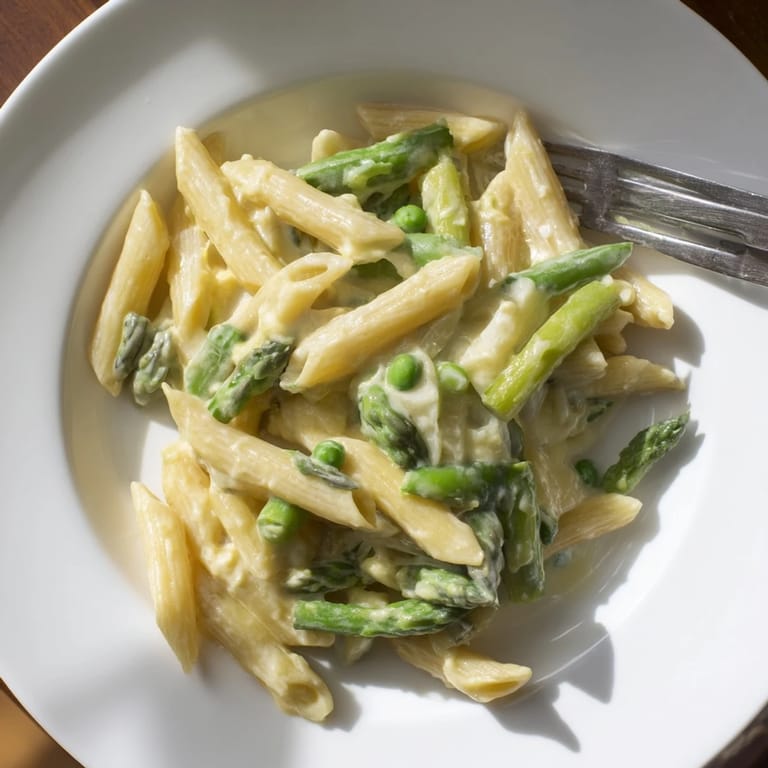
 Save
Save My neighbor showed up at my door last April with a bag of asparagus from the farmers market, insisting I take half because she'd bought too much. I had penne in the cupboard, some peas in the freezer, and a hunk of Parmesan that needed using. What started as a way to avoid waste turned into something I now make every spring when the vegetables start coming back to life. The kitchen smelled like garlic and lemon, and I remember thinking how rare it is that throwing things together actually works out this well.
I made this for my sister when she came over after a long week, and she ate two bowls without saying much, which is how I knew it was good. We sat on the back porch with the windows open, and the lemony smell mixed with the cool evening air. She asked for the recipe, which she never does, and then made it for her book club the next month. Now every time spring comes around, she texts me a photo of asparagus at the store like it's some kind of inside joke between us.
Ingredients
- Penne pasta (350 g): The ridges catch the creamy sauce beautifully, and it holds up better than delicate shapes when you toss everything together.
- Asparagus (200 g): Snap off the woody ends instead of cutting them, it's faster and you can feel exactly where they break naturally.
- Fresh or frozen peas (150 g): Frozen peas are honestly just as good here and save you from shelling, which nobody has time for on a weeknight.
- Green beans (150 g): Trim them into similar sized pieces so they cook evenly and don't end up half crunchy, half soggy.
- Olive oil (2 tbsp): Use something decent because it's one of the first flavors you taste when the garlic hits the pan.
- Garlic (3 cloves, minced): Mince it fine so it melts into the sauce instead of sitting in sharp little pockets.
- Vegetable broth (60 ml): This loosens the sauce and adds a savory backbone without making it feel like soup.
- Heavy cream (120 ml): Just enough to make it creamy without feeling like you're eating alfredo, it stays light and springy.
- Parmesan cheese (60 g, grated): Grate it yourself from a block, the pre-grated stuff doesn't melt the same and tastes like cardboard.
- Black pepper (1/2 tsp): Freshly ground makes a difference here, it adds a gentle bite that plays nicely with the lemon.
- Salt (1/4 tsp): Taste before you add more, the Parmesan and pasta water both bring salt to the party.
- Lemon zest (from 1 lemon): This is where the magic happens, it brightens everything and makes the whole dish wake up.
- Lemon juice (1 tbsp): Adds just enough tang to balance the cream without making it taste sour.
- Fresh basil or parsley: A handful of chopped herbs at the end makes it look like you tried harder than you did.
Tired of Takeout? 🥡
Get 10 meals you can make faster than delivery arrives. Seriously.
One email. No spam. Unsubscribe anytime.
Instructions
- Boil the pasta:
- Bring a large pot of salted water to a rolling boil and cook the penne until al dente, usually about 10 minutes. Before you drain it, scoop out half a cup of the starchy pasta water and set it aside, you'll need it later to loosen the sauce.
- Sauté the garlic:
- Heat the olive oil in a large skillet over medium heat, then add the minced garlic and stir it around for about a minute until it smells amazing and just starts to turn golden. Don't walk away or it'll burn and turn bitter in seconds.
- Cook the vegetables:
- Toss in the asparagus, green beans, and peas, stirring them around so they all get coated in the garlicky oil. Let them cook for 3 to 4 minutes until they're tender but still have a little snap, you want them bright green and full of life.
- Add the broth:
- Pour in the vegetable broth and let it simmer for a couple of minutes, stirring occasionally. This deglazes the pan and picks up all the little flavorful bits stuck to the bottom.
- Make the creamy sauce:
- Turn the heat down to low and stir in the heavy cream and grated Parmesan, whisking gently until the cheese melts into a smooth, silky sauce. It should look glossy and smell like a hug.
- Toss with pasta:
- Add the drained penne to the skillet and toss everything together, adding splashes of the reserved pasta water until the sauce clings to every piece without being goopy. The starch in the water helps everything come together like magic.
- Season and finish:
- Stir in the black pepper, salt, lemon zest, and lemon juice, tasting as you go. The lemon should make everything pop without tasting citrusy, just bright and balanced.
- Serve:
- Divide into bowls and top with extra Parmesan and a generous sprinkle of fresh basil or parsley. Serve it right away while it's hot and the vegetables are still vibrant.
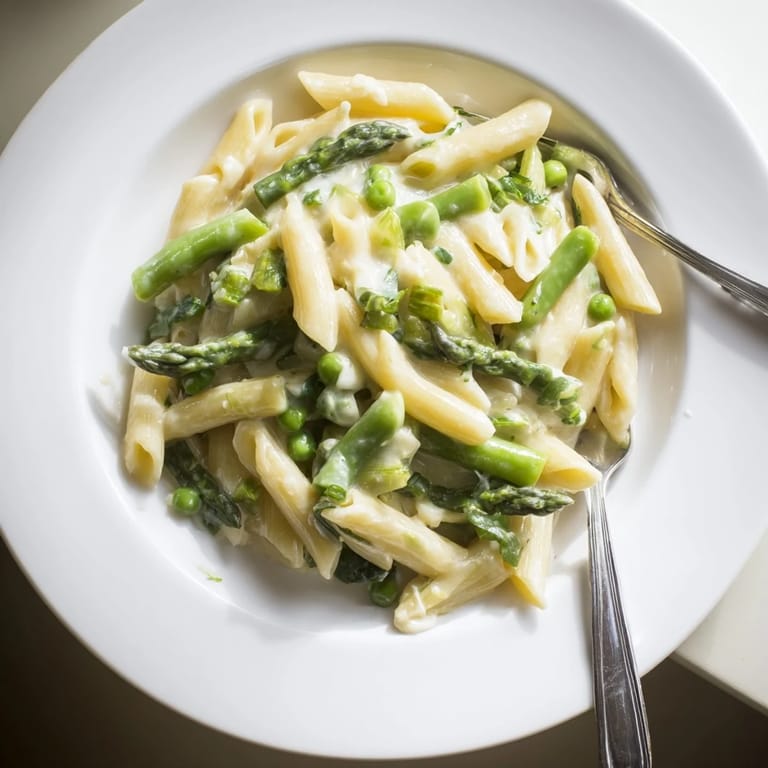 Save
Save There was a night last May when I made this after a long day and sat on the kitchen floor eating it straight from the pan, too tired to bother with a bowl. The lemony, garlicky smell filled the whole apartment, and I realized I'd been stressed about nothing all week. It's funny how a plate of pasta can do that, remind you that some things are simple and good and worth slowing down for.
How to Pick the Best Vegetables
Look for asparagus with tight, compact tips and firm stalks that snap easily when you bend them. Avoid any that look dried out or slimy at the ends. Green beans should be bright and crisp, not bendy or spotty. If you're using frozen peas, buy a bag you can feel through and make sure they're loose and not stuck together in one solid icy block, which means they've been thawed and refrozen.
Making It Your Own
This recipe is forgiving and practically begs you to swap things around based on what you have. I've used snap peas instead of regular peas, tossed in spinach at the end, and even added leftover roasted chicken when I needed more protein. If you want it lighter, use half and half instead of cream, or go the other direction and stir in a little mascarpone for something truly luxurious. A pinch of red pepper flakes adds a nice gentle heat that plays well with the lemon.
Storing and Reheating
Leftovers keep in the fridge for up to three days in an airtight container, though the pasta soaks up some of the sauce as it sits. When you reheat it, add a splash of broth or pasta water and warm it gently in a skillet over low heat, stirring often so the cream doesn't break. It won't be quite as silky as when it's fresh, but it's still good enough to pack for lunch or eat cold straight from the container at midnight.
- Reheat on the stovetop instead of the microwave if you can, it keeps the texture better.
- Toss in a handful of fresh arugula or spinach when reheating to liven it back up.
- Don't freeze this one, cream sauces get grainy and weird when thawed.
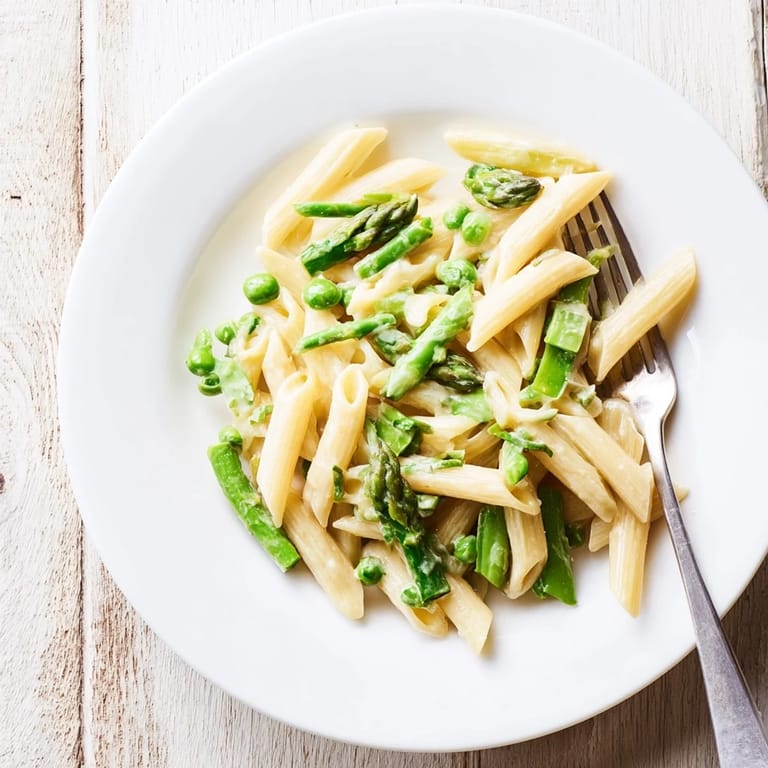 Save
Save This is the kind of dish that makes spring feel like it's arrived in your kitchen, bright and easy and full of flavor without trying too hard. I hope it becomes one of those recipes you reach for when the world feels softer and the vegetables start showing up again.
Recipe Guide
- → Can I use frozen vegetables instead of fresh?
Yes, frozen vegetables work wonderfully in this dish. Use frozen asparagus, peas, and green beans—no thawing needed. Simply add them directly to the skillet and reduce cooking time by 1-2 minutes since they're already partially cooked during freezing.
- → How do I prevent the sauce from becoming too thick?
Reserve pasta water while draining and use it to adjust sauce consistency. Add it gradually while tossing the pasta and vegetables until you achieve a silky coating. The sauce will also continue to coat the pasta as it sits.
- → What type of Parmesan cheese is best?
Freshly grated Parmigiano-Reggiano provides the richest flavor and melts smoothly into the sauce. Pre-grated versions contain anti-caking agents that can make the sauce grainy. If using pre-grated, add it last and stir gently to prevent clumping.
- → Can I make this dish dairy-free?
Absolutely. Substitute heavy cream with cashew cream or oat-based alternatives, and use nutritional yeast or dairy-free Parmesan. The flavor profile remains delicious, though slightly different. Use vegetable broth as the base for added depth.
- → How should I store leftovers?
Store in an airtight container in the refrigerator for up to 3 days. Reheat gently in a skillet over low heat, adding a splash of vegetable broth or pasta water to restore the sauce's silky texture. Avoid microwaving, which can separate the cream.
- → What variations can enhance this dish?
Add sun-dried tomatoes, caramelized onions, or mushrooms for deeper flavor. A pinch of red pepper flakes provides heat, while fresh thyme or oregano adds Italian notes. Try adding crispy pancetta for a meat variation or toasted pine nuts for texture.