 Save
Save There's something magical about the moment when herb butter hits warm salmon and starts to melt into those little crevices. I discovered this combination on a Tuesday evening when I had exactly four salmon fillets and a desperate need for something that felt elegant but didn't require me to think too hard. The kitchen filled with this incredible aroma of dill and lemon, and suddenly what was supposed to be a weeknight dinner felt like something worth savoring. My partner walked in mid-roast, took one whiff, and actually sat down to wait instead of getting takeout like usual.
I made this for my sister's boyfriend the first time she brought him to dinner, and honestly, I was nervous about impressing him. But watching him take that first bite of salmon with the herb butter slowly pooling across the top, then turning to my sister with actual surprise on his face—that was the moment I knew this recipe was a keeper. He asked for seconds, and my sister later told me he couldn't stop talking about it. That's when I realized this dish had quietly become my go-to for occasions when I want to feel confident in the kitchen.
Ingredients
- Salmon fillets (150 g each): Look for fillets with bright color and a fresh smell; skin-on keeps everything moist and adds texture, but skinless works beautifully too if that's what you prefer.
- Unsalted butter (softened): Softening it beforehand means the herb butter blends smoothly without melting, giving you more control over the final texture.
- Fresh parsley: This is your bright, clean note that keeps the herb butter from tasting too heavy.
- Fresh dill: The real star here; its delicate anise flavor pairs with salmon like they were meant for each other.
- Fresh chives: They add a whisper of onion without overpowering, and they're honestly worth seeking out fresh if you can.
- Garlic clove (minced): One clove is enough to round everything out without drowning the more delicate herbs.
- Lemon zest: This gives brightness without the juice's acidity, keeping the herb butter stable.
- Sea salt and black pepper: Season to taste; keto cooking benefits from good seasoning since you're skipping a lot of other flavor layers.
- Cauliflower florets: Cut them roughly the same size so they roast evenly and get those golden, crispy edges.
- Olive oil: Use one you actually like; it matters more than you'd think when so few ingredients are doing the work.
- Smoked paprika (optional): This one ingredient transforms the cauliflower from simple to something with actual depth.
Tired of Takeout? 🥡
Get 10 meals you can make faster than delivery arrives. Seriously.
One email. No spam. Unsubscribe anytime.
Instructions
- Heat your oven and prep the pan:
- Set the oven to 220°C (425°F) and line your baking sheet with parchment paper—this is key because it prevents sticking and makes cleanup nearly effortless. While it preheats, take a moment to get your workspace organized; it makes everything feel less rushed.
- Build the herb butter magic:
- In a small bowl, combine softened butter with parsley, dill, chives, minced garlic, lemon zest, salt, and pepper. Mix gently until everything is evenly distributed and the herbs are flecked throughout the soft butter. This is your flavor foundation, so taste a tiny bit and adjust the seasoning if it needs it.
- Prepare the cauliflower for roasting:
- Spread your cauliflower florets on the prepared sheet, drizzle generously with olive oil, then sprinkle with salt, pepper, and smoked paprika if you're using it. Toss everything together with your hands until each floret has a light coating; this is how you get those golden, crispy edges.
- Start the cauliflower on its journey:
- Slide the sheet into the oven for about 25 minutes total, flipping the florets halfway through so they caramelize evenly on all sides. You'll know they're ready when they're golden brown and the edges are starting to crisp.
- Prepare the salmon for its moment:
- Pat your salmon fillets dry with paper towels—this step matters because it helps them cook more evenly and prevents them from steaming. Place them skin-side down in a baking dish lined with parchment, leaving a little space between each fillet so hot air can circulate.
- Crown each fillet with herb butter:
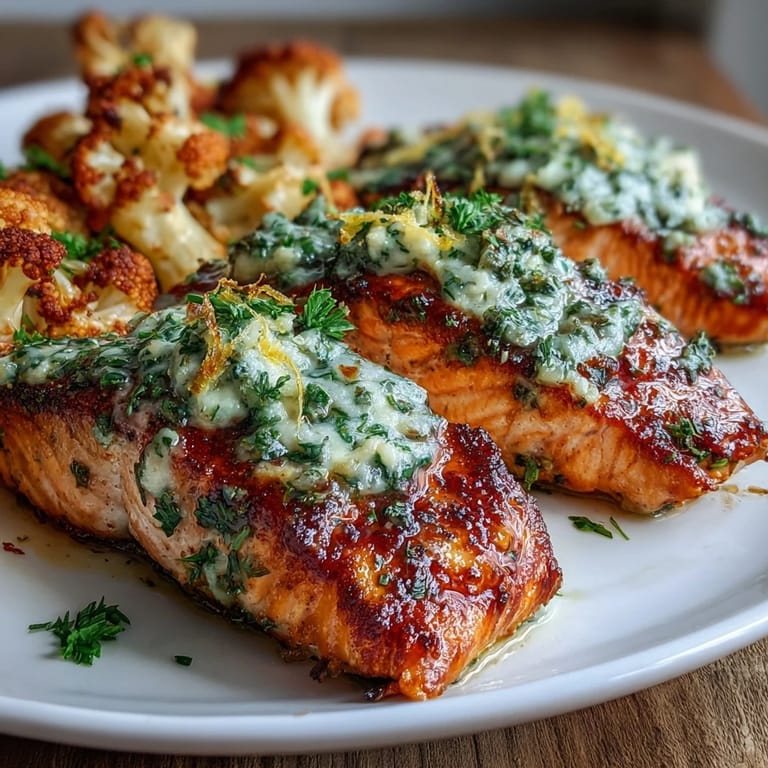
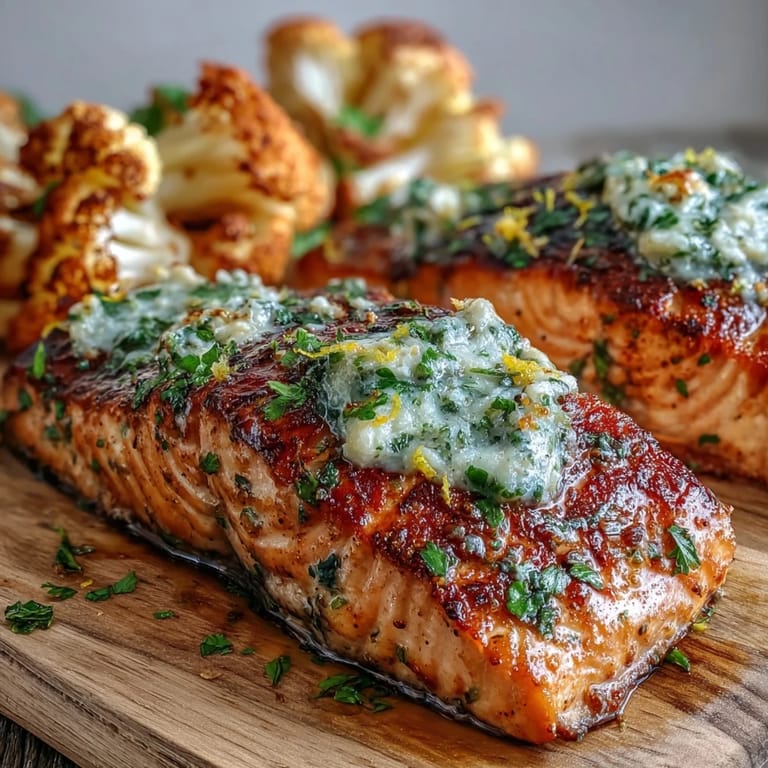
- Spread about one tablespoon of your herb butter over the top of each salmon fillet, letting it settle into the nooks and crannies. The butter will melt as the salmon cooks, infusing every bite with those beautiful flavors.
- Time the salmon perfectly:
- About 12 minutes before the cauliflower finishes, add the salmon to the oven so everything comes together at the same time. Bake the salmon for 10 to 12 minutes, watching until it flakes easily with a fork—this is crucial because overcooked salmon becomes dry and loses its magic.
- Bring it all together:
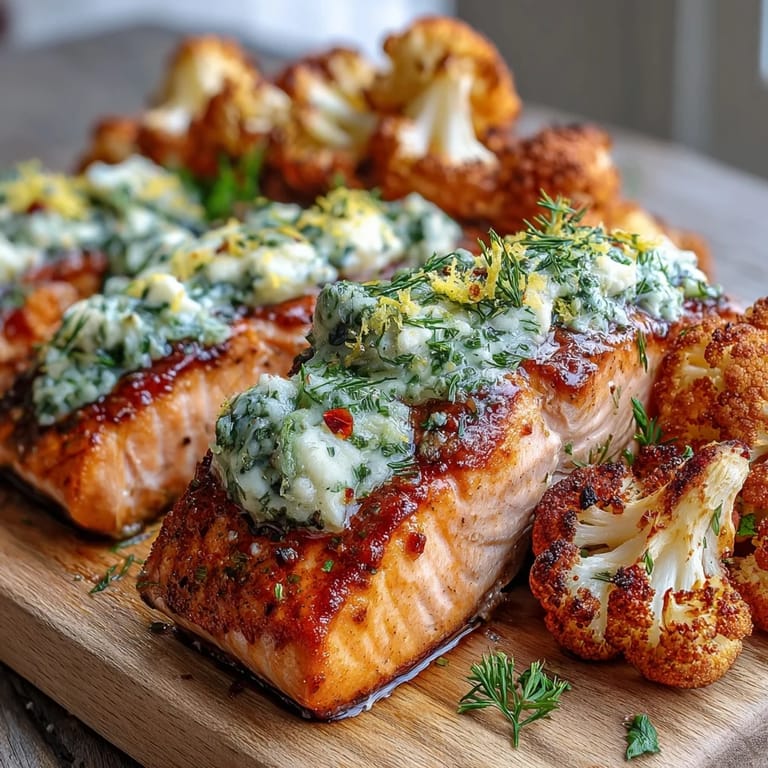
- Transfer the salmon to plates, top with any pan juices and extra fresh herbs if you have them, and serve alongside those golden cauliflower florets with lemon wedges on the side. The warmth of everything will make that herb butter glisten.
 Save
Save 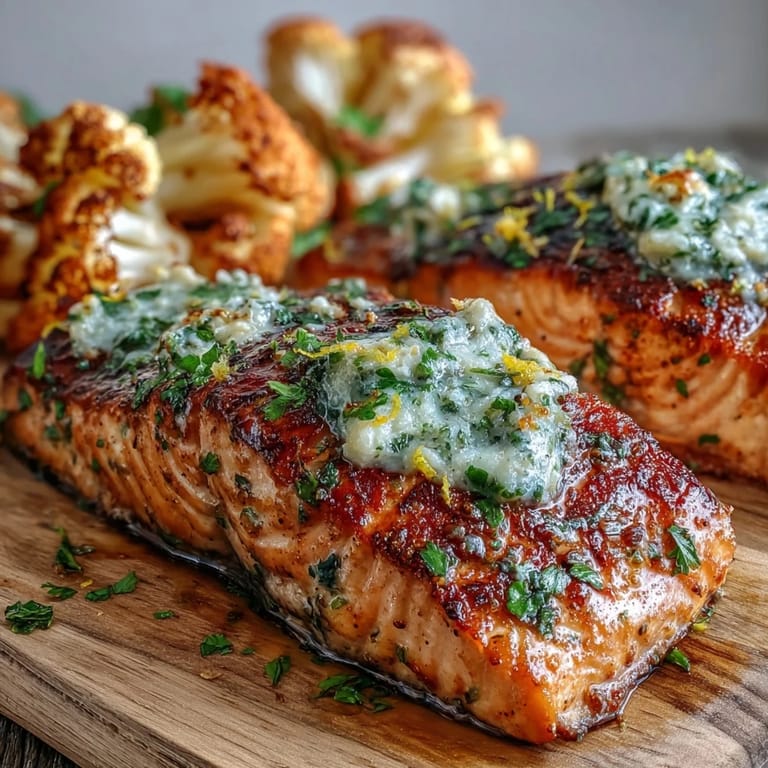 Save
Save The real transformation happens when you sit down and realize you've made something that tastes like a chef cooked it, but you're sitting in your regular kitchen in your regular clothes. That's the quiet victory of this recipe—it doesn't ask for anything fancy or demanding, yet it delivers something genuinely special. My kitchen has become the place where this meal happens now, and somehow that feels like the best kind of tradition.
Flavor Combinations That Actually Work
I've learned that salmon and herbs are one of those culinary marriages where almost nothing goes wrong, but some choices sing louder than others. The combination of dill and lemon is almost obvious because they complement each other so naturally, but what surprised me was how the smoked paprika on the cauliflower echoes and balances the richness of both the salmon and the herb butter. One evening I tried adding fresh tarragon instead of dill, and while it was delicious in a completely different way, I came back to the original because it just felt right. The key is honoring the ingredients you have without overthinking it.
Making This Meal Feel Special
There's something about serving this dish that makes an ordinary evening feel intentional. I started plating it more carefully—fanning the cauliflower, garnishing with those little herb sprigs, adding a lemon wedge like it matters—and honestly, it does matter because it changes how people perceive and taste the food. The visual presentation takes less than a minute but signals to everyone at the table that this meal was made with care. Even when I'm cooking for myself alone, that small extra effort somehow makes the food taste better.
Keto Simplicity Without the Sacrifices
When I first committed to keto cooking, I was terrified I'd end up eating the same boring things on repeat. This recipe completely changed that mindset because it proved that low-carb meals could be genuinely exciting and satisfying without any of that restrictive feeling. The herb butter adds fat and flavor in a way that feels luxurious rather than clinical, and the cauliflower roasted until it's golden reminds you that you're not missing anything—you're just making different, equally delicious choices. The beauty is in how simple it is: you're not using strange substitutes or complicated techniques, just pure, good ingredients that happen to align with how you want to eat.
- Pair this with sparkling water and fresh lemon for a light, refreshing meal that doesn't feel austere.
- Make extra herb butter and freeze it in small portions; it transforms any fish or vegetable in future weeks.
- Roast the cauliflower a few minutes longer if you like it extra crispy on the edges.
 Save
Save 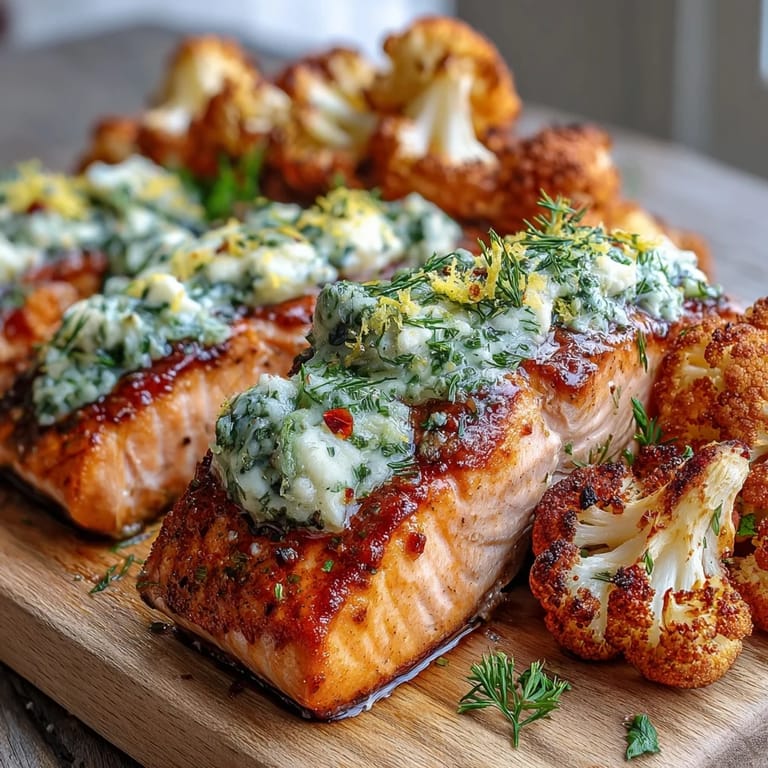 Save
Save This has become the dish I make when I want to feel accomplished without stress, when I want to cook something that makes people genuinely happy, and when I want to remember that eating well doesn't have to be complicated. It's taught me that sometimes the best meals are the ones where you trust good ingredients and your own instincts.
Recipe Guide
- → What herbs work best in the butter?
Fresh parsley, dill, and chives create a classic combination that complements salmon beautifully. You can substitute tarragon or basil if you prefer different flavors.
- → How do I know when the salmon is done?
The salmon is ready when it flakes easily with a fork and reaches an internal temperature of 145°F (63°C). The flesh should appear opaque throughout.
- → Can I use frozen salmon?
Yes, thaw the salmon completely in the refrigerator before cooking and pat it dry with paper towels to ensure proper searing and flavor absorption.
- → What can I serve alongside this dish?
A crisp green salad with vinaigrette, steamed asparagus, or sautéed spinach work wonderfully. This meal pairs nicely with Sauvignon Blanc or sparkling water.
- → Is this suitable for meal prep?
Absolutely. Cooked salmon keeps well for 2-3 days in the refrigerator. Store separately from the cauliflower and reheat gently to maintain texture.