 Save
Save The first time I tasted knafeh, it wasn't at a fancy restaurant or from a cooking show—it was at my neighbor's kitchen table on a Tuesday afternoon, still warm from her oven, the honey syrup pooling on the plate like liquid gold. She'd made it for her daughter's birthday, and watching her flip that golden, crispy pastry onto the platter with such confidence made it seem like pure magic. I must have asked her a dozen questions while eating, my mouth too full to wait for proper answers. She laughed and promised to teach me, and now whenever I make it, I think of that moment and how generously she shared not just the recipe, but the joy of making something that brings people together.
I served this for the first time at a dinner party when I was still nervous about entertaining, and one guest literally closed their eyes after the first bite and didn't say anything for a solid minute. That silence felt like the highest compliment I'd ever received. Now it's become my go-to dessert when I want to impress without spending the whole evening in the kitchen, and it never fails to get that same reaction.
Ingredients
- Akawi cheese: This is the star of the show—it gets wonderfully stretchy when heated, which is what gives knafeh its signature pull. If you can't find it, low-moisture mozzarella works beautifully, though you'll skip the soaking step.
- Ricotta cheese: This adds creaminess and prevents the filling from being too rubbery; don't skip it even though Akawi alone might seem tempting.
- Kataifi pastry: Those delicate shredded strands are what create the crackling texture—make sure they're thawed but still separated and not clumped together.
- Unsalted butter: Use good butter here because every strand of kataifi will taste it, and you want it to be something you'd actually enjoy eating.
- Granulated sugar: The backbone of your syrup; don't substitute with honey or brown sugar, as the texture and flavor need to be precise.
- Lemon juice: This prevents the syrup from crystallizing and adds a brightness that balances the sweetness.
- Orange blossom and rose water: These are non-negotiable for authentic flavor—they transform simple syrup into something that tastes like a memory.
- Pistachios: Finely chopped pistachios add color, a subtle nuttiness, and the visual signal that you've made something special.
Tired of Takeout? 🥡
Get 10 meals you can make faster than delivery arrives. Seriously.
One email. No spam. Unsubscribe anytime.
Instructions
- Soak the cheese if using Akawi:
- This step removes excess salt that would otherwise make your dessert unpleasant. Change the water every hour—it's tedious, but it matters. Pat the cheese completely dry afterward so moisture doesn't make your knafeh soggy.
- Mix your cheese filling:
- Combine your drained Akawi (or mozzarella) with ricotta in a bowl, keeping it loose and not over-mixing. The texture should feel soft and slightly chunky, ready to melt into pockets of gooey richness.
- Butter your kataifi strands:
- Separate the thawed kataifi gently with your fingers—it tangles easily—then pour melted butter over it while mixing with your hands until every strand is glossy and coated. This is where the crispiness comes from, so don't skimp on the butter.
- Build your base layer:
- Press half the buttered kataifi into a greased 9-inch round baking dish, creating an even, slightly compressed layer. Think of it as building a crispy nest that will hold everything together.
- Add the cheese:
- Spread the cheese mixture evenly over your kataifi base, leaving a small border so the top pastry layer can seal things in. The cheese should be distributed so each bite gets a fair share of that stretchy goodness.
- Seal with the top layer:
- Top with the remaining buttered kataifi, gently pressing down so it adheres to the cheese but doesn't compress everything into a dense cake. You want it to feel like a protective, delicious blanket.
- Bake until golden:
- Into a 350°F oven it goes for 30 to 35 minutes, until the top is deep golden brown and you can smell butter and pastry dancing together. The edges might darken slightly faster than the center—that's normal and adds flavor.
- Prepare your syrup while baking:
- Combine sugar, water, and lemon juice in a saucepan and bring to a boil, then lower the heat and simmer for 8 to 10 minutes until it thickens slightly. Remove from heat, stir in orange blossom and rose water, and let it cool completely—never pour hot syrup on hot pastry or it'll absorb unevenly and get soggy instead of glossy.
- The dramatic flip:
- Remove the knafeh from the oven and let it rest for just one minute, then place your serving platter on top and flip it with confidence. It should release cleanly, and that moment of transfer is when the magic happens.
- Soak with syrup:
- Pour about half the cooled syrup evenly over the hot knafeh while the pastry can still absorb it without becoming soggy—the heat will help it seep in beautifully. Reserve the rest for drizzling at the table.
- Garnish and serve:
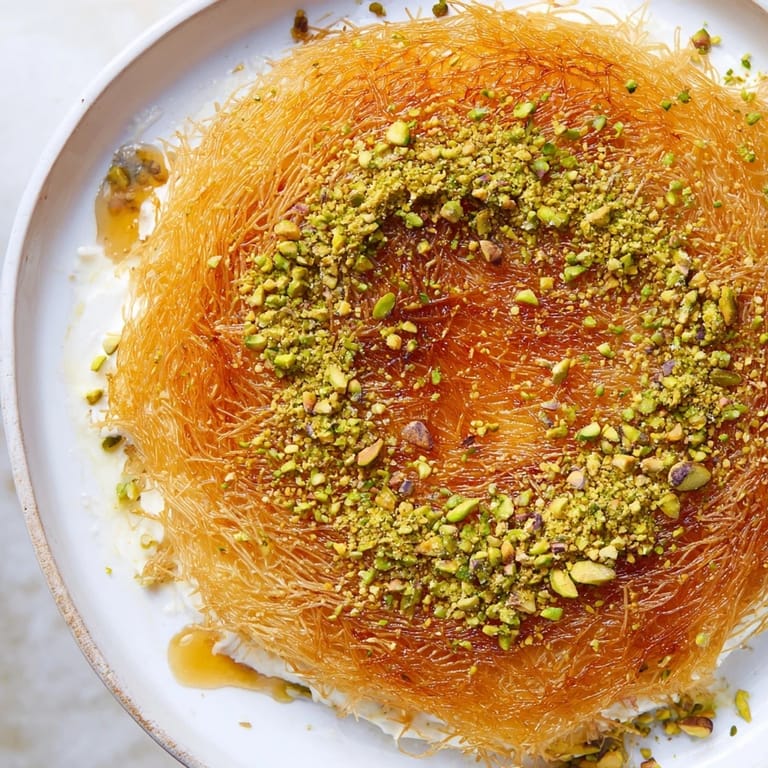
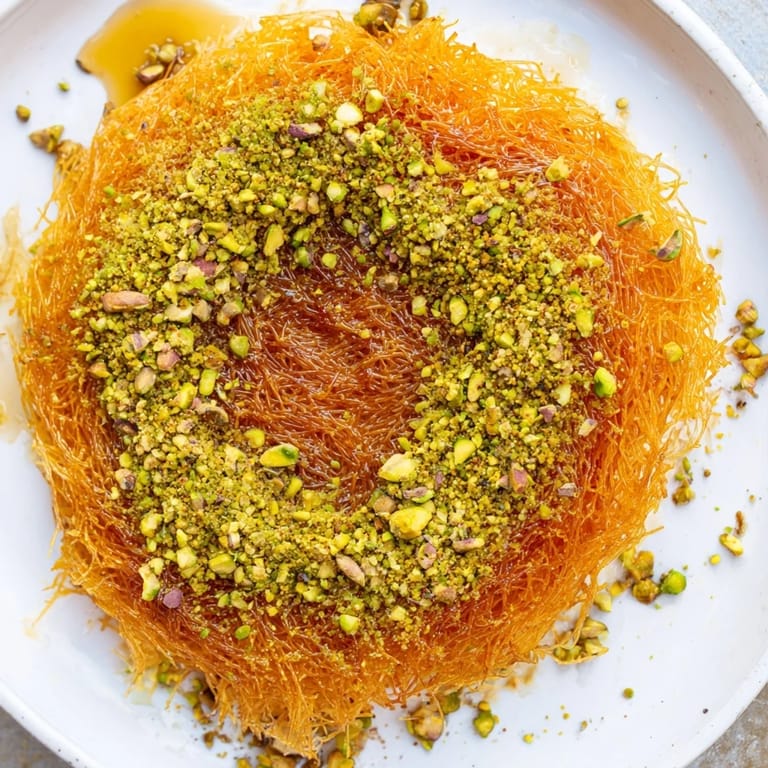
- Sprinkle finely chopped pistachios over the top and drizzle with honey if using, then serve while still warm with extra syrup on the side. This is best enjoyed immediately, when the contrast between crispy outside and soft, stretchy inside is at its peak.
 Save
Save There's something about the moment you flip knafeh onto the platter that feels like a small act of bravery, even though I've done it dozens of times now. It transforms from a round baking dish into a gorgeous, golden, crusty dessert, and somehow that transition never gets old. That's when it stops being just a recipe and becomes a small triumph you get to share.
The Magic of the Flip
The flip is genuinely easier than it looks, but it does require a moment of commitment. The kataifi will have formed a slight crust that releases cleanly from the baking dish—you can test this by gently tilting the dish and seeing if it moves. Place your serving platter firmly on top, take a breath, and flip with steady confidence rather than hesitation. The weight of the pastry works with you, not against you, and within a second you'll have a beautiful golden circle ready for syrup.
Why Knafeh Deserves a Spot in Your Rotation
This dessert exists in that perfect zone between special enough for celebrations and simple enough for a casual weekend craving. It teaches you about the importance of layering textures and how flavor compounds like orange blossom water can elevate something ordinary into memorable. Once you make it once, you'll understand why it's been a beloved Middle Eastern staple for generations, and you'll find yourself making it again.
Serving and Pairing Ideas
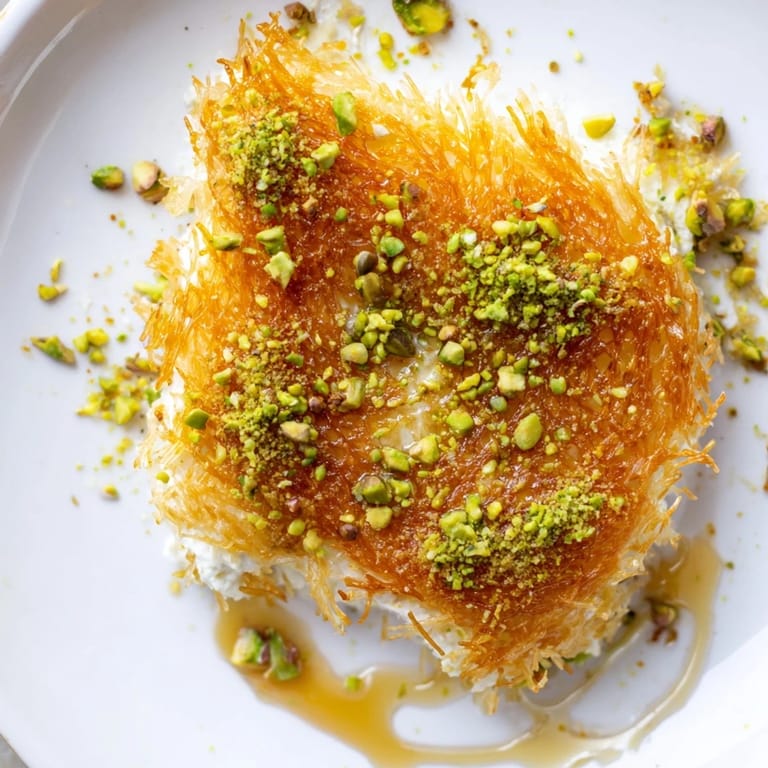
Knafeh is meant to be eaten warm, ideally within an hour of coming out of the oven when the contrast between crispy exterior and soft interior is most pronounced. Serve it alongside Turkish coffee, strong black tea, or fresh mint tea—the slight bitterness and aromatic qualities of these beverages complement the sweetness and floral notes of the dessert perfectly. A small glass of cold milk or even traditional orange blossom water-infused water works beautifully too if you want something refreshing alongside the richness.
- Timing matters: serve it within an hour of baking for maximum texture contrast, though it's still delicious at room temperature.
- The syrup is your seasoning—don't be shy with it, but let guests control how much they add to their own plate.
- Leftover knafeh can be gently reheated in a low oven, never the microwave, to restore some of its crispiness.
 Save
Save Making knafeh is like having a conversation with someone who really knows what they're doing—it teaches you something new every time, whether it's about patience, technique, or the joy of serving something warm and honeyed to people you love. I hope your kitchen smells as incredible as mine does when this comes out of the oven.
Recipe Guide
- → What cheeses are used in this dish?
Akawi cheese soaked to reduce saltiness is combined with ricotta to create a creamy, stretchy filling. Mozzarella can be used as a substitute for Akawi.
- → How is the kataifi pastry prepared?
The shredded kataifi is thawed, then mixed thoroughly with melted unsalted butter to ensure crispness when baked.
- → What flavors are infused in the syrup?
The syrup is made with sugar, water, lemon juice, and fragrant orange blossom and rose water for a delicate floral aroma.
- → How should the dessert be served?
Serve warm after soaking in the cooled syrup, garnished with finely chopped pistachios and optionally drizzled with honey for extra sweetness.
- → Can this dish be made vegetarian?
Yes, it naturally fits a vegetarian diet as it contains no meat ingredients and relies on cheese and pastry.