 Save
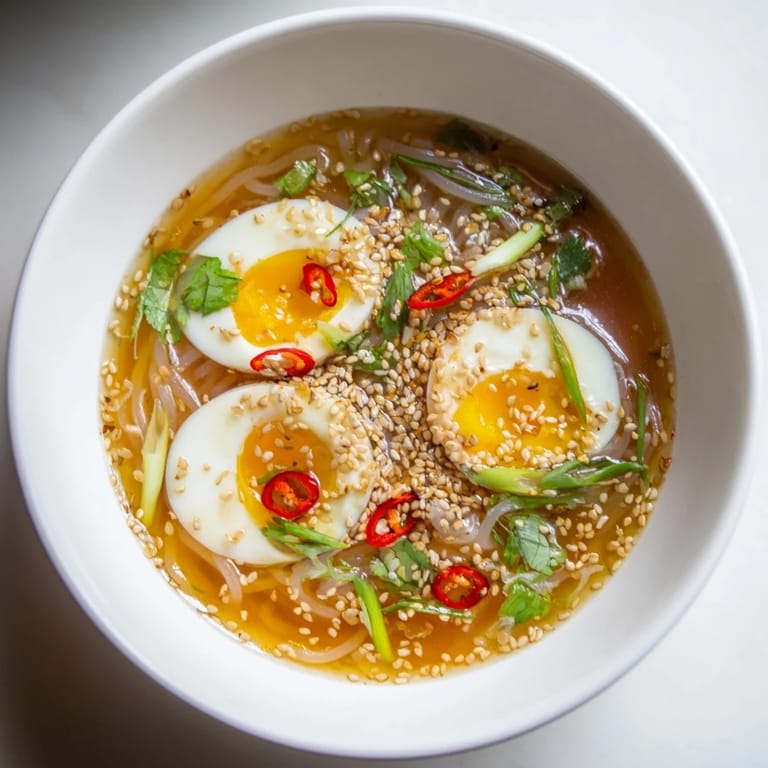
Save The steam rising from my bowl that first night stopped me in my tracks. I had been skeptical about these translucent noodles that everyone claimed could satisfy without the carb aftermath, but sitting there with the broth fragrant with ginger and garlic, I took my first spoonful and completely forgot I was eating something 'diet-friendly.'
My friend Maya came over exhausted from work one evening and I set this down in front of her. She took that first sip, closed her eyes, and said 'this is exactly what I didnt know I needed.' Now she texts me whenever she makes it, usually adding some variation she discovered in her own kitchen.
Ingredients
- 4 cups high-quality bone broth: The foundation of everything, so use one you actually enjoy drinking on its own
- Fresh ginger and garlic: Smashed and sliced rather than minced releases their aromatic oils more gently into the broth
- Soy sauce or tamari: Provides that deep umami note that makes the broth feel substantial and satisfying
- Rice vinegar: Just enough brightness to cut through the rich bone broth without making it taste distinctly sour
- Sesame oil: A finishing oil that adds an unmistakable nutty fragrance you notice the moment you lift the bowl
- Shirataki noodles: Rinse them thoroughly and pour boiling water over them to remove any natural rubbery aroma
- Soft-boiled eggs: The creamy yolk melts into the hot broth creating an extra silky texture
- Fresh toppings: Spring onions, chili, and herbs add the crunch and fresh contrast that prevents it from feeling one-note
Tired of Takeout? 🥡
Get 10 meals you can make faster than delivery arrives. Seriously.
One email. No spam. Unsubscribe anytime.
Instructions
- Build your flavorful base:
- Combine the bone broth with sliced ginger, smashed garlic cloves, soy sauce, rice vinegar, and sesame oil in a medium pot. Let it come to a gentle bubble over medium heat, watching as the aromatics start to infuse the liquid.
- Let the broth develop depth:
- Reduce the heat to maintain a steady simmer and let it cook for about 10 minutes. The kitchen will start smelling amazing, and youll notice the broth becoming more fragrant with every minute.
- Prep the noodles properly:
- While the broth simmers, drain and rinse the shirataki noodles thoroughly under cold water. Place them in a sieve and pour boiling water over them for about a minute, which eliminates any packaged smell and helps them absorb the broth better.
- Bring everything together:
- Add the prepared noodles to the simmering broth and let them heat through for just 2 to 3 minutes. They dont need long cooking, just enough time to warm up and take on the flavors.
- Finish with care:
- Fish out the ginger and garlic slices so youre left with a smooth broth. Divide the noodles and hot broth between two bowls, then arrange your toppings on top while everything is piping hot.
 Save
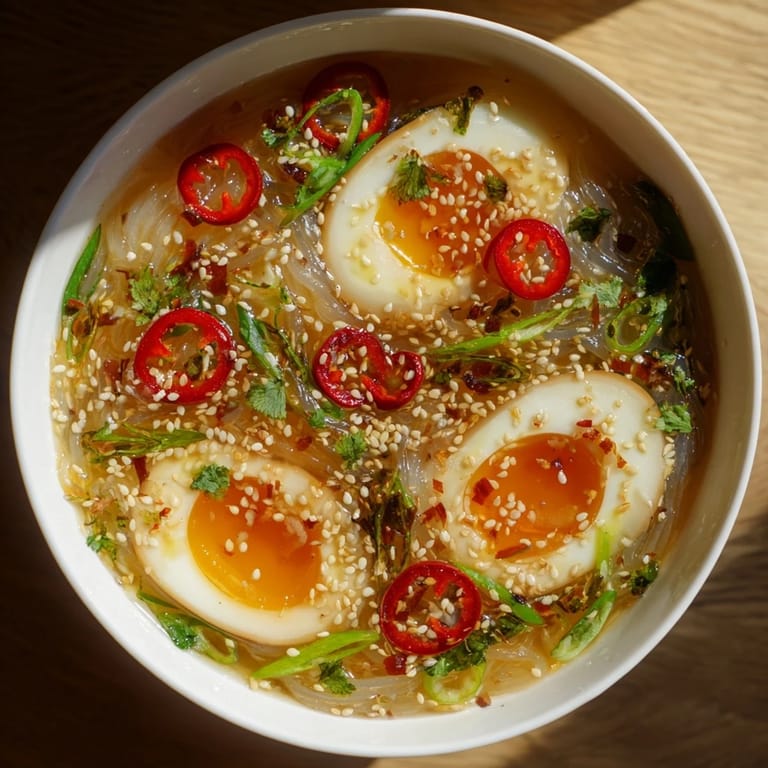
Save This became my go-to when I started eating lighter but still wanted something that felt like a proper meal. Theres something about holding a warm bowl with both hands that feels restorative regardless of whats inside.
Making It Your Own
The toppings are where this recipe really becomes yours. Ive added shredded rotisserie chicken on days I needed more substance, and sometimes I toss in baby spinach at the very end just until it wilts. The broth is incredibly forgiving.
Broth Wisdom
Homemade bone broth will always deliver the most nourishing result, but Ive found excellent store-bought versions that work perfectly well. Look for one with a gelatinous quality when cold and minimal added ingredients.
Perfecting The Noodles
Shirataki noodles can have a slight texture that takes getting used to. The boiling water rinse is non-negotiable and dont skip the step of letting them simmer in the broth for a couple minutes.
- Cook your soft-boiled eggs for exactly 6 minutes and 30 seconds for that perfect jammy center
- Toast your sesame seeds in a dry pan for 2 minutes before sprinkling them on top
- Slice your spring onions and chilies right before serving so they stay crisp and vibrant
 Save
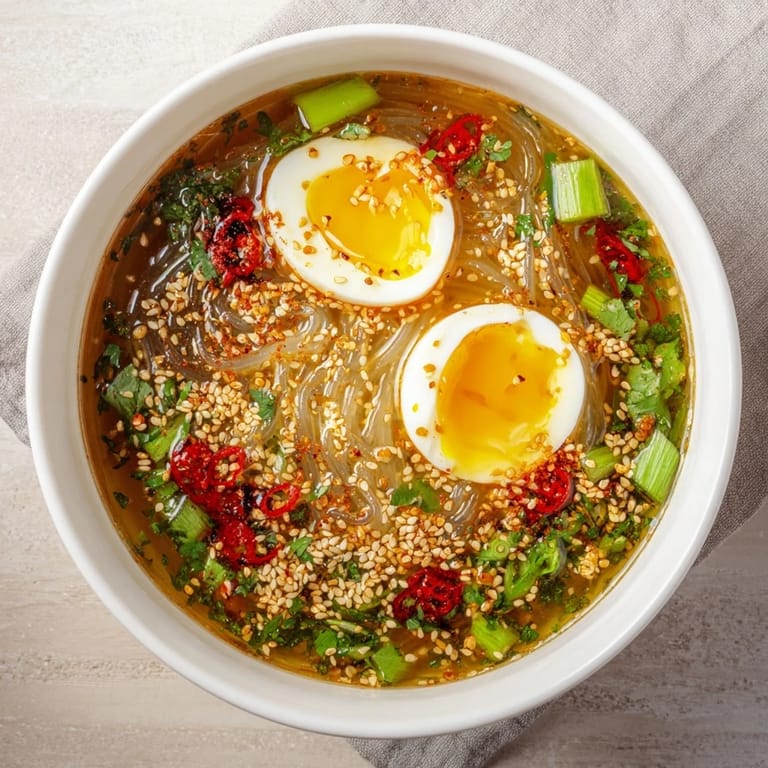
Save Sometimes the simplest bowls are the ones that stick with you longest. This one certainly has for me.
Recipe Guide
- → What do shirataki noodles taste like?
Shirataki noodles have a very mild, neutral flavor on their own. They absorb the taste of whatever broth or sauce they're cooked in, making them perfect for this aromatic bone broth preparation. Their texture is gelatinous and slightly chewy, similar to glass noodles.
- → Why do I need to rinse shirataki noodles?
Rinsing under cold water and pouring boiling water over shirataki removes any natural odor from the konjac yam flour they're made from. This quick preparation step ensures a clean taste that lets the broth flavors shine through.
- → Can I make this vegetarian?
Absolutely. Substitute the bone broth with a rich vegetable broth and add protein like tofu or tempeh instead of eggs. The seasoning remains the same for a equally flavorful plant-based version.
- → How long will leftover broth keep?
The broth can be stored separately in the refrigerator for up to 4 days. However, shirataki noodles are best enjoyed immediately as they can become mushy when reheated. For meal prep, store broth and noodles separately and combine when ready to eat.
- → What toppings work well with this bowl?
Soft-boiled eggs add creaminess, while fresh herbs like coriander, parsley, or sliced spring onion provide brightness and crunch. Thinly sliced chili brings heat, and toasted sesame seeds add nuttiness. For more protein, consider shredded chicken, crispy pork, or marinated tofu.
- → Is this suitable for keto diets?
Yes, this is an excellent keto option. Shirataki noodles contain virtually zero carbohydrates, and the bone broth-based preparation keeps carbs minimal. With just 3g of carbohydrates per serving and 12g of protein, it fits perfectly into a low-carb or ketogenic eating plan.