 Save
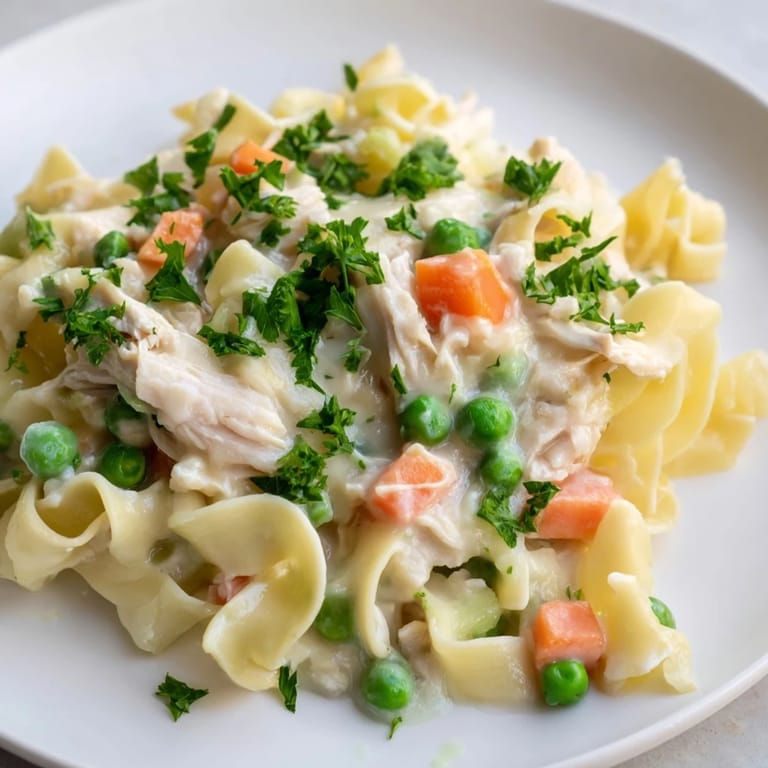
Save My neighbor knocked on the door one Wednesday evening with a bag of carrots from her garden and a question: what could she make that felt like spring but still stuck to your ribs? I handed her this recipe scribbled on the back of a grocery receipt. She called the next day to say her kids fought over seconds. Sometimes the best recipes are the ones you can explain in under a minute.
I started making this after my son got tired of the same rotation of casseroles. He wanted something warm but not heavy, and I wanted something fast. The first time I stirred the noodles into that pale, buttery sauce with bright green peas, he looked up from his homework and asked what smelled so good. That question alone made it a keeper.
Ingredients
- Cooked, shredded chicken: Rotisserie chicken is my secret weapon here, already seasoned and tender, saving you from poaching and shredding from scratch.
- Wide egg noodles: Their soft, pillowy texture soaks up the sauce beautifully and makes the dish feel nostalgic and homey.
- Frozen peas: They stay bright green and sweet, and you can toss them in straight from the freezer without any prep.
- Diced carrots: Fresh carrots add a little crunch and natural sweetness that balances the richness of the cream.
- Yellow onion: A small onion gives the base a subtle sweetness and depth without overpowering the lighter spring flavors.
- Garlic: Just two cloves are enough to make the kitchen smell like something good is happening.
- Unsalted butter: It creates the silky roux that holds the sauce together and adds a gentle richness.
- All-purpose flour: This thickens the sauce just enough so it clings to the noodles without feeling gloppy.
- Low-sodium chicken broth: It gives you control over the salt and keeps the sauce from tasting too intense.
- Whole milk or half-and-half: A little dairy makes the sauce creamy without turning it into something too heavy for a weeknight.
- Grated Parmesan cheese: It melts right in and adds a salty, nutty finish that ties everything together.
- Dried thyme: A hint of herbiness that whispers spring without shouting.
- Black pepper and salt: Simple seasonings that let the other ingredients shine.
- Fresh parsley: Optional, but a handful of chopped parsley at the end makes it look like you tried a little harder than you did.
Tired of Takeout? 🥡
Get 10 meals you can make faster than delivery arrives. Seriously.
One email. No spam. Unsubscribe anytime.
Instructions
- Cook the noodles:
- Boil the egg noodles until they are just tender, then drain them well. They will soften a bit more in the skillet, so keep them on the firmer side.
- Soften the vegetables:
- Melt the butter in a large skillet and add the onion and carrots, stirring occasionally until they start to lose their raw edge and smell sweet. This takes about four or five minutes.
- Add the garlic:
- Toss in the minced garlic and stir for just thirty seconds. You want it fragrant, not browned.
- Make the roux:
- Sprinkle the flour over the vegetables and stir it around for a full minute so it loses that raw taste. This step keeps your sauce from tasting floury later.
- Build the sauce:
- Slowly whisk in the chicken broth and milk, then add the thyme, salt, and pepper. Let it simmer gently for three or four minutes, stirring now and then, until it thickens enough to coat the back of a spoon.
- Stir in the chicken and peas:
- Add the peas, shredded chicken, and Parmesan, stirring until everything is heated through and the cheese has melted into the sauce. This takes about two minutes.
- Fold in the noodles:
- Gently mix in the cooked noodles until every strand is coated in that creamy sauce. If it looks a little thick, let it cook for another minute or two to loosen up.
- Finish and serve:
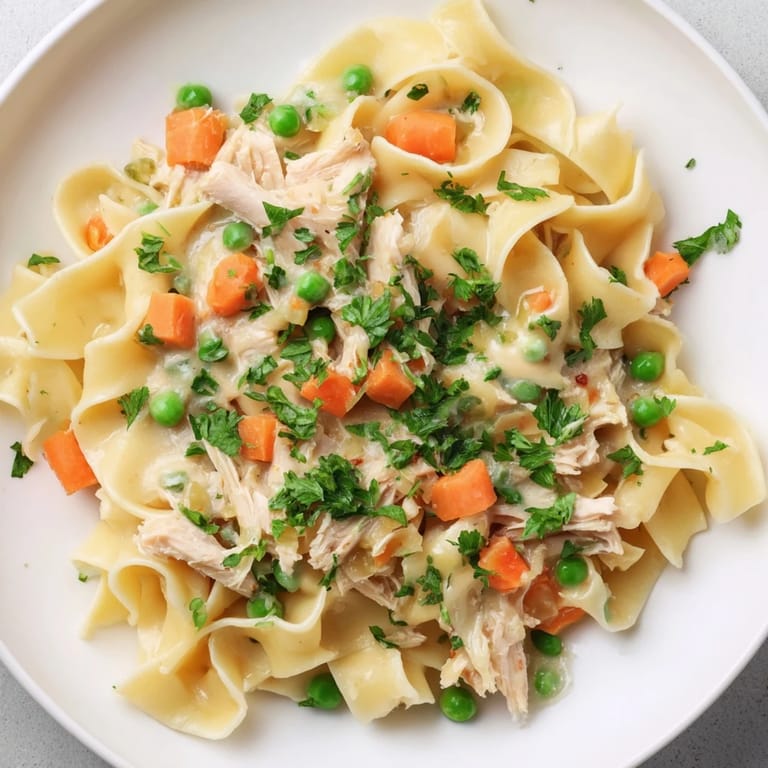
- Sprinkle with fresh parsley if you have it, then serve the skillet warm. Everyone can help themselves right from the pan.
 Save
Save One Sunday afternoon, I made this for a friend who had just moved into a new apartment with nothing but a skillet and a pot. She texted me later that night saying it felt like the first real meal in her new place. That is what I love about this dish: it does not need much, but it gives a lot back.
What to Serve with It
This skillet is filling on its own, but a simple green salad with lemon vinaigrette or a slice of crusty bread for soaking up the sauce makes it feel like a complete meal. I have also served it with roasted asparagus when I want to lean harder into the spring theme. Keep it light, since the noodles are already satisfying.
How to Store and Reheat
Leftovers keep well in an airtight container in the fridge for up to three days. The noodles will soak up some of the sauce as they sit, so when you reheat, add a splash of broth or milk to bring the creaminess back. I usually warm it in a skillet over low heat, stirring gently, though the microwave works in a pinch if you cover it with a damp paper towel.
Ways to Make It Your Own
You can swap the peas and carrots for whatever spring vegetables you have on hand. I have used chopped asparagus, baby spinach, and even thinly sliced zucchini with good results. A squeeze of lemon juice at the end brightens everything up, and a pinch of nutmeg in the sauce adds a subtle warmth that surprises people in the best way.
- Try swapping half the chicken broth for dry white wine for a little more depth.
- Use whole wheat or gluten-free noodles if you need to, just adjust the cooking time as the package directs.
- Stir in a handful of shredded mozzarella or Gruyere along with the Parmesan for extra richness.
 Save
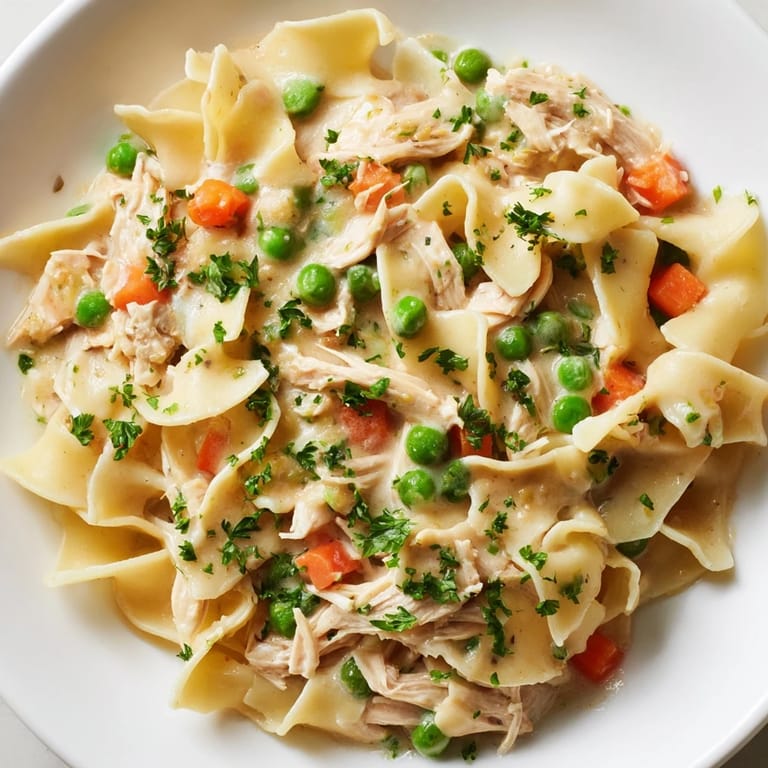
Save This is the kind of recipe that becomes muscle memory after a few tries. Once you have made it, you will find yourself reaching for it on those nights when you want comfort without the wait.
Recipe Guide
- → Can I use fresh vegetables instead of frozen peas?
Yes, fresh peas work beautifully. Add them during the last 2-3 minutes of cooking to maintain their tender texture and bright flavor. Fresh asparagus or baby spinach are also excellent spring vegetable alternatives.
- → What type of chicken works best for this dish?
Rotisserie chicken is the most convenient option and adds wonderful flavor. Alternatively, poach chicken breasts and shred them, or use leftover cooked chicken. The key is ensuring the chicken is already cooked before adding it to the skillet.
- → How can I make the sauce thicker or thinner?
For a thicker sauce, use a roux with equal parts butter and flour, or add a slurry of cornstarch and water. For a thinner sauce, add more chicken broth gradually. The sauce will continue to thicken slightly as it simmers.
- → Can I prepare this ahead of time?
Cook the noodles and vegetables separately in advance. Store the sauce in the refrigerator for up to 2 days. Combine everything in the skillet just before serving and heat gently to avoid overcooking the noodles.
- → What are some flavor variations I can try?
Add a squeeze of fresh lemon juice for brightness, a pinch of nutmeg for warmth, or fresh dill for herbaceous notes. A splash of white wine or a touch of Dijon mustard also complement the creamy sauce beautifully.
- → Is this dish suitable for meal prep?
Yes, this skillet dish stores well in the refrigerator for 3-4 days. Reheat gently on the stovetop with a splash of milk or broth to refresh the sauce. You can also freeze portions for up to 3 months, though the noodle texture may soften slightly.