 Save
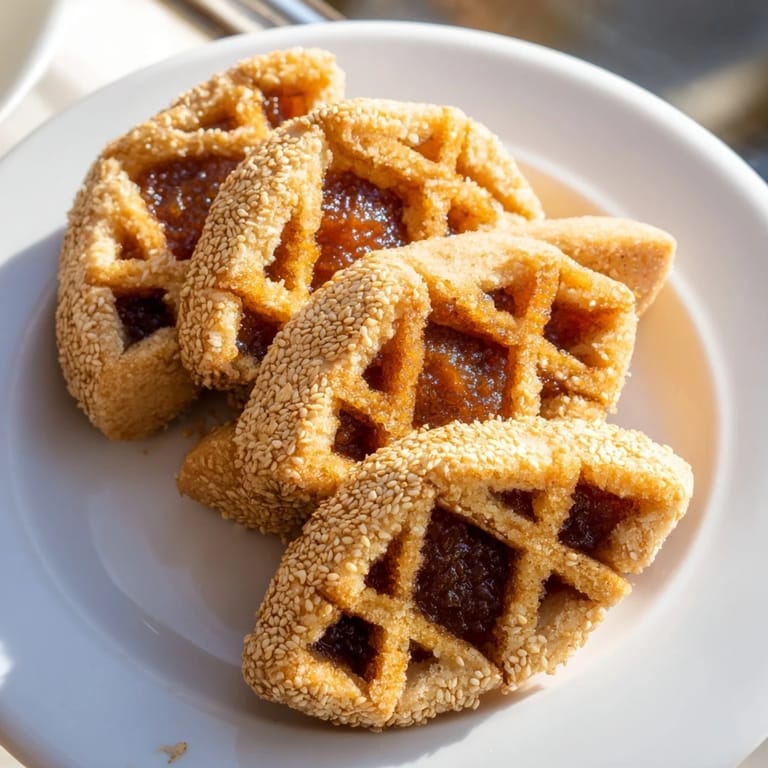
Save The first time I watched my neighbor make makroudh, I was struck by how she folded the dough with such practiced ease, as if her hands already knew what to do before her mind caught up. She worked quickly, almost meditative, the semolina dough catching the afternoon light as she sealed each diamond around its hidden treasure of dates. It wasn't until I tasted one—still warm, honey clinging to my fingers—that I understood why these cookies mattered so much to her, and why I had to learn to make them myself.
I brought a batch of these to a small gathering last spring, and they disappeared faster than anything else on the table. What surprised me most was watching people pause mid-conversation to really taste them, to notice the orange blossom in the honey, the way the sesame caught on their teeth. That's when I realized these aren't just desserts—they're moments of slowness in a rushed day.
Ingredients
- Fine semolina: This is your foundation, and using the fine kind—not polenta or coarse cornmeal—makes all the difference in texture. It should feel almost like flour between your fingers.
- Unsalted butter and olive oil: The combination creates a dough that's tender and a little resilient at the same time. Don't skip the olive oil; it's not a substitute, it's essential.
- Warm water: Add it slowly and feel the dough as you go; humidity in your kitchen matters more than exact measurements.
- Pitted dates: The best ones are soft and sticky, not hard and dried out. Chop them by hand rather than pulsing in a food processor so they keep some texture.
- Ground cinnamon and nutmeg: These warm the filling without overwhelming it. Toast your spices if you can; it wakes them up.
- Orange blossom water: Use it sparingly; a little goes far, and too much tastes perfumy rather than floral.
- Honey for the syrup: Raw honey works beautifully here, but any good honey will do. It seals the cookie and adds a subtle complexity.
- Vegetable oil for frying: Use something neutral and clean-tasting; you want the flavors of the makroudh to shine.
Tired of Takeout? 🥡
Get 10 meals you can make faster than delivery arrives. Seriously.
One email. No spam. Unsubscribe anytime.
Instructions
- Make the date filling first:
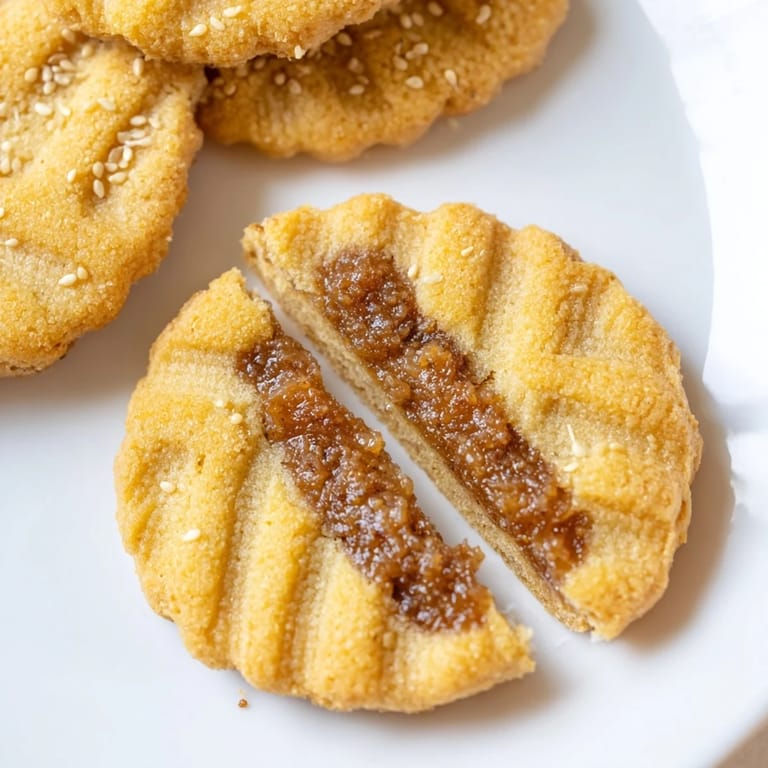
- Combine your chopped dates with butter, cinnamon, and nutmeg in a saucepan over low heat. Stir often as the dates soften and meld into a thick, jammy paste—about 5 minutes. It should feel almost like peanut butter, thick enough to hold a shape but still warm and fragrant. Stir in orange blossom water if you're using it, then spread it on a plate to cool so it's easier to handle.
- Build your dough:
- In a large bowl, mix your semolina with sugar, salt, and cinnamon. Pour in melted butter and olive oil, then use your fingertips to rub everything together until it looks like wet sand at the beach. Gradually add warm water, a little at a time, kneading gently until the dough comes together into something soft and slightly sticky but not wet. It should feel alive under your hands, not stiff. Cover it and let it rest for 20 minutes while you breathe.
- Shape the dough into logs:
- Divide your dough in half and roll each piece into a log about as thick as your wrist, maybe 5 centimeters. Using your finger, press a deep groove lengthwise down the center of each log, like you're creating a canal.
- Fill and seal:
- Lay your cooled date filling into the groove of each dough log, pressing it gently so it stays in place. Fold the dough over the filling and seal it closed by pinching the edges together, then roll it gently to smooth out the seams. You want the filling protected but not squeezed out.
- Cut into diamonds:
- Flatten the filled log slightly with your hands, then use a sharp knife to cut diagonally across, angling your cuts so you create diamond shapes about 4 to 5 centimeters wide. This is where patience matters; a clean cut means a neat cookie.
- Fry until golden:
- Heat your oil to 170°C (340°F)—use a thermometer if you have one, or test with a small piece of dough; it should sizzle immediately and turn golden in a minute. Working in batches so you don't crowd the pan, fry your makroudh until they're golden and crisp on all sides, about 5 to 7 minutes total. They'll continue to cook slightly after you remove them, so don't wait for them to be dark.
- Dip into honey syrup:
- While they're still warm, dip each fried cookie into honey that you've warmed gently with orange blossom water if you like. Let them drain on a wire rack so the excess syrup drips off but clings to the surface. If you want, sprinkle sesame seeds over them while they're still sticky.
 Save
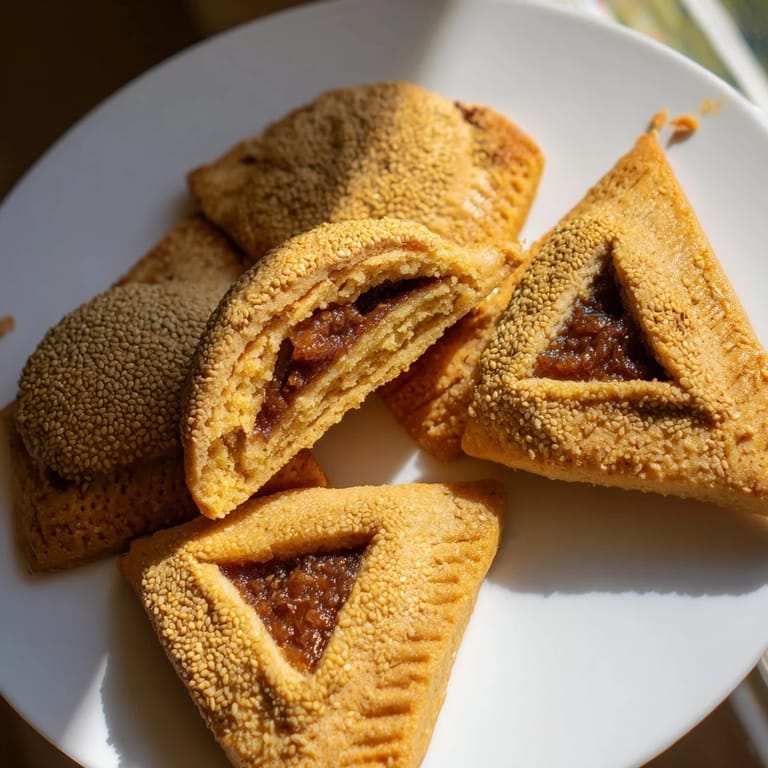
Save There's a moment, right after they cool on the wire rack, when the honey sets into a thin shell and the semolina crust crackles slightly under your teeth. That's when you know you've done it right, and that's when you remember why you love cooking—not for the praise, but for that moment of quiet satisfaction when something you made tastes exactly like it should.
Why These Cookies Matter
Makroudh isn't fancy or complicated, but it carries weight in Tunisian kitchens and at family tables. It's the kind of dessert that shows care without showing off, that tastes like someone took the time to think about texture and flavor and how to make something small feel important. Making them yourself, rather than buying them, changes how you taste them—you notice the warmth of the spices, the way the honey catches on the sesame, the exact point where crispy becomes crunchy.
Variations and Adaptations
Once you've made them the traditional way, you might find yourself experimenting. Some people add a pinch of ground clove to the filling, or swap orange blossom water for rose water if that's what they love. Others brush them with butter before baking instead of frying, which makes them lighter and less rich. You could even fill them with almond paste mixed with dates if you wanted something different. The structure stays the same, but the possibilities shift based on what's in your pantry and what you're craving that day.
Storing and Serving
These keep beautifully in an airtight container for up to a week, though they're best eaten within the first few days when the contrast between crispy exterior and soft interior is most pronounced. Serve them with mint tea or strong coffee, and watch how people slow down around them. They're also lovely at room temperature, which means you can make them in the morning and enjoy them all afternoon without reheating.
- If they soften over time, a few minutes in a 160°C oven will crisp them back up.
- You can freeze them unfired for up to a month; just thaw them slightly before frying so they cook evenly.
- Don't store them in the fridge—the cold makes the semolina crust lose its snap.
 Save
Save These cookies remind me that some of the best things in cooking aren't about technique or ingredients—they're about showing up, paying attention, and letting your hands learn what your mind doesn't quite know yet. Make them, share them, and let them become part of your kitchen story.
Recipe Guide
- → What type of flour is used in Makroudh?
Fine semolina is used to give the dough its characteristic sandy texture and crisp finish.
- → How is the date filling prepared?
Dates are cooked gently with butter, cinnamon, and nutmeg until softened and formed into a smooth paste, sometimes enhanced with orange blossom water.
- → Can Makroudh be baked instead of fried?
Yes, baking at 180°C for 25–30 minutes yields a lighter pastry that can still be glazed for sweetness.
- → What is the role of orange blossom water in this dish?
Orange blossom water adds a delicate floral aroma to the date filling and syrup, enriching the flavor profile.
- → How should cooked Makroudh be stored?
Store in an airtight container for up to one week to maintain freshness and crispness.