 Save
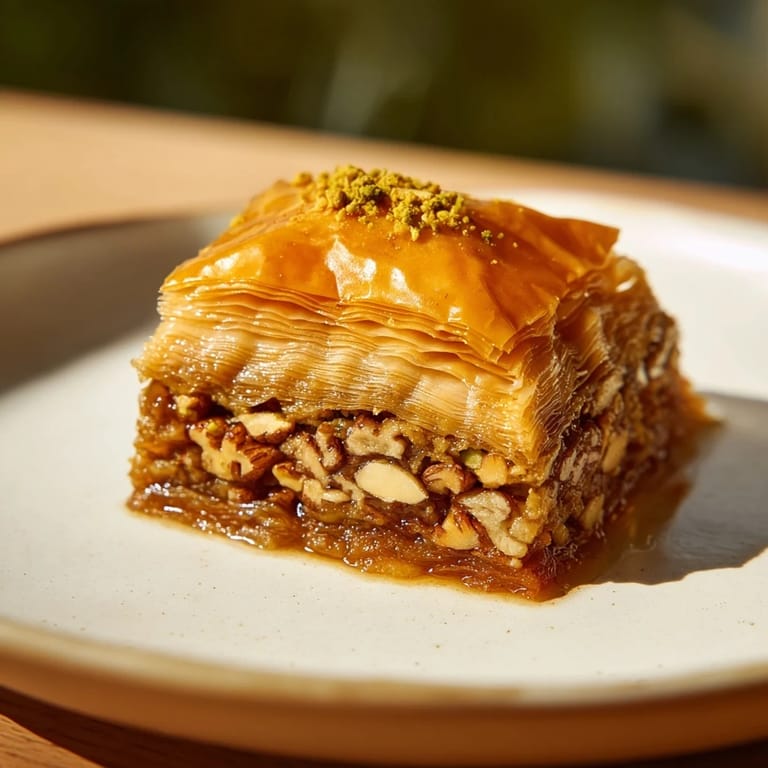
Save My first encounter with baklava happened in a cramped Istanbul kitchen during a summer visit, where my aunt pulled a golden tray from the oven and the entire apartment filled with the scent of toasted nuts and cinnamon. She poured warm honey syrup over the pastry so deliberately, almost ceremonially, and I watched it disappear into the crispy layers while she explained that baklava wasn't just dessert—it was patience made edible. Years later, I finally understood what she meant when my own layers shattered under a knife and syrup pooled everywhere; that mistake taught me more about respect for phyllo than any perfect batch could have. Now I make it for the moment when everyone goes quiet after the first bite, that little pause before they ask for another piece.
I made this for a potluck once and brought it nervously, unsure how it would travel, but someone brought it back as an empty pan with a note that just said 'more please' and a smiley face. That note stayed on my fridge for months.
Ingredients
- Walnuts, pistachios, and almonds: The trio matters more than you'd think—walnuts give earthiness, pistachios bring brightness, almonds add delicate sweetness that softens the edges.
- Phyllo dough: Buy it frozen and thaw it properly in the fridge overnight, never at room temperature where it sweats and tears.
- Unsalted butter: Salted butter will make the syrup taste confusing, and you need to taste every layer as you build.
- Honey: Use real honey, not the squeeze bottle; there's a difference in how it dissolves into the pastry.
- Cinnamon, lemon juice, and zest: These aren't decorative—they balance the sweetness and keep baklava from tasting one-dimensional.
Tired of Takeout? 🥡
Get 10 meals you can make faster than delivery arrives. Seriously.
One email. No spam. Unsubscribe anytime.
Instructions
- Prepare your stage:
- Preheat to 350°F and butter your baking dish generously; cold spots in that pan will leave you with pale corners that feel like a small failure.
- Mix the nut filling:
- Combine your chopped nuts with sugar and cinnamon, and taste it if you're unsure—the filling should taste sweet and aromatic, almost like you could eat it by the spoonful.
- Handle phyllo with intention:
- Unroll it gently and cover it immediately; phyllo dries out in minutes and torn sheets become frustrating very quickly.
- Layer and butter:
- Place one sheet in the dish, brush with melted butter using deliberate strokes, then repeat eight times—each sheet should glisten slightly, like you're building something precious.
- Add the first nut layer:
- Scatter one-third of your filling evenly, leaving a half-inch border; it will spread naturally as you continue layering.
- Build the middle:
- Butter five more sheets, add another third of nuts, then repeat the process one final time—you're creating a structure that will hold together and reward patience.
- Finish with crispy top:
- Layer your remaining phyllo sheets (eight to ten of them) and brush each one; this is the crown of your baklava, so don't rush it.
- Cut before baking:
- Use a sharp knife and cut diamonds or squares all the way through to the bottom; this allows heat and syrup to reach every piece and prevents awkward breaking later.
- Bake until golden:
- Watch at the 35-minute mark; you want deep golden edges and a shatter-crisp top, which usually takes the full 45 minutes.
- Make your syrup while it bakes:
- Combine honey, water, sugar, lemon juice, zest, and cinnamon stick; bring to a boil then simmer gently for ten minutes so the flavors deepen and the mixture cools enough not to deflate your pastry.
- The critical pour:
- Remove baklava from the oven and immediately pour warm syrup slowly and evenly over the hot pastry; this is when the magic happens, and the timing matters because the heat opens the layers to receive the sweetness.
- Let it rest:
- Cool completely, at least four hours, so every piece absorbs the syrup and the phyllo solidifies into something crispy yet yielding—impatience here is the difference between good and transcendent.
 Save
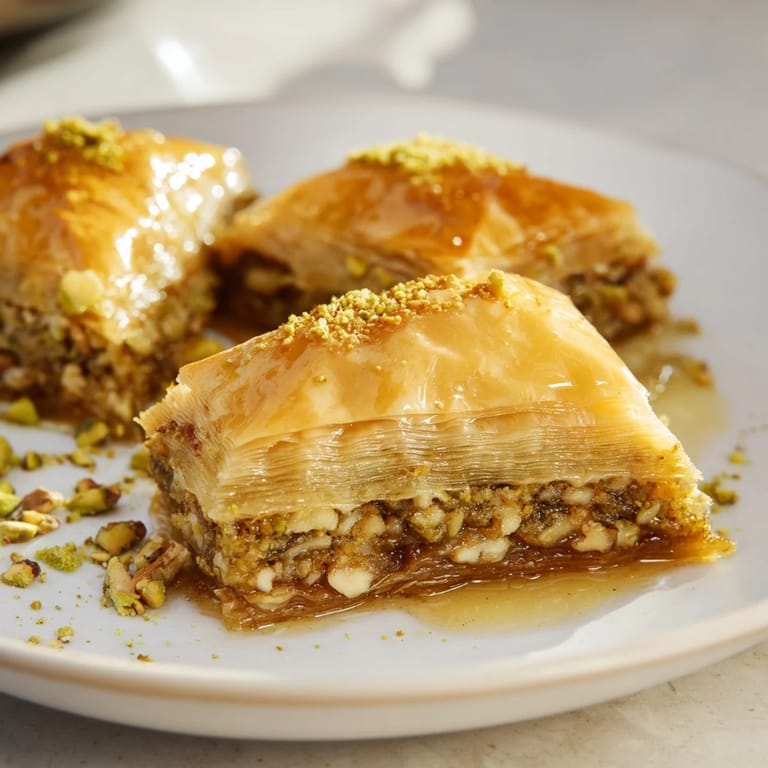
Save There's a moment when you pour that warm honey over hot pastry and watch it sink and settle, and something about that moment—the steam rising, the smell hitting you all at once—reminds you why people have been making this for centuries. It's not complicated, but it asks you to care about the small details, and that care is what turns it into something worth remembering.
The Syrup Strategy
The syrup is where most home bakers stumble, either by skipping it entirely or by making it too thick and sugary, which mutes the honey's actual flavor. Think of syrup as the medium through which all the spices travel—it's why you infuse it with cinnamon, lemon, and heat. Cold syrup poured over hot baklava creates a textural tragedy; warm syrup poured over hot pastry creates a marriage where each ingredient knows exactly where it's supposed to go. The lemon juice isn't there to make it sour; it's there to brighten the richness and keep the sweetness from becoming cloying after the third piece.
Storage and Keeping
Baklava actually improves over a few days as the flavors meld and the texture settles into a reliable crispness that won't surprise you mid-bite. Keep it covered at room temperature in an airtight container, and it will hold for up to a week—though it rarely lasts that long if anyone knows it exists. Humidity is baklava's enemy, so a dry kitchen corner works better than the refrigerator, which will soften it into something mushy and regrettable.
Variations Worth Trying
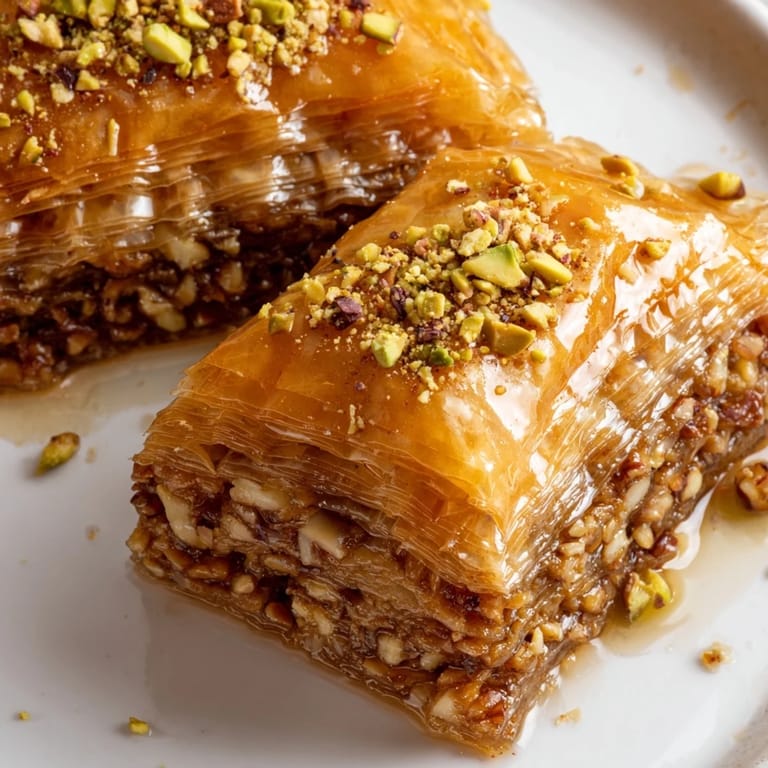
Once you've made this once and understood the structure, you can experiment without guilt; baklava is forgiving enough to handle creativity. Some bakers add a touch of orange blossom water to the syrup, which sounds fancy but actually feels natural alongside the honey and lemon. Others layer in less nut mixture and more phyllo, which shifts the experience toward crispness over density. You might substitute some almonds with hazelnuts, or add a tiny pinch of cardamom to the filling for a whisper of something exotic.
- Orange blossom water (a quarter teaspoon in the syrup) adds floral sophistication without overpowering the original flavors.
- A pinch of ground cardamom in the nut mixture creates a quieter, more complex sweetness that develops as you eat.
- Serving baklava with strong Turkish coffee or black tea isn't just tradition—it's the only way the dessert balances properly on your palate.
 Save
Save Making baklava teaches you something about patience that translates everywhere else in life, and eating it reminds you why that patience was worth it. After the first time you pull a golden tray from the oven and pour that warm syrup over the heat, you'll understand why people keep making this.
Recipe Guide
- → What nuts are used in this baklava?
A mixture of finely chopped walnuts, pistachios, and almonds forms the rich nut filling.
- → How is the honey syrup prepared?
The syrup combines honey, sugar, water, lemon juice, lemon zest, and a cinnamon stick, simmered and infused for deep flavor.
- → How should the phyllo dough be handled?
Keep phyllo sheets covered with a damp towel to prevent drying while layering with melted butter for crispness.
- → What is the best way to cut baklava before baking?
Use a sharp knife to cut the assembled layers into diamond or square shapes for even baking and serving.
- → How long should the syrup soak after baking?
Allow at least 4 hours for the syrup to fully absorb, ensuring moist, flavorful layers throughout.
- → Can baklava be stored after preparation?
Store covered at room temperature for up to one week to maintain freshness and texture.