 Save
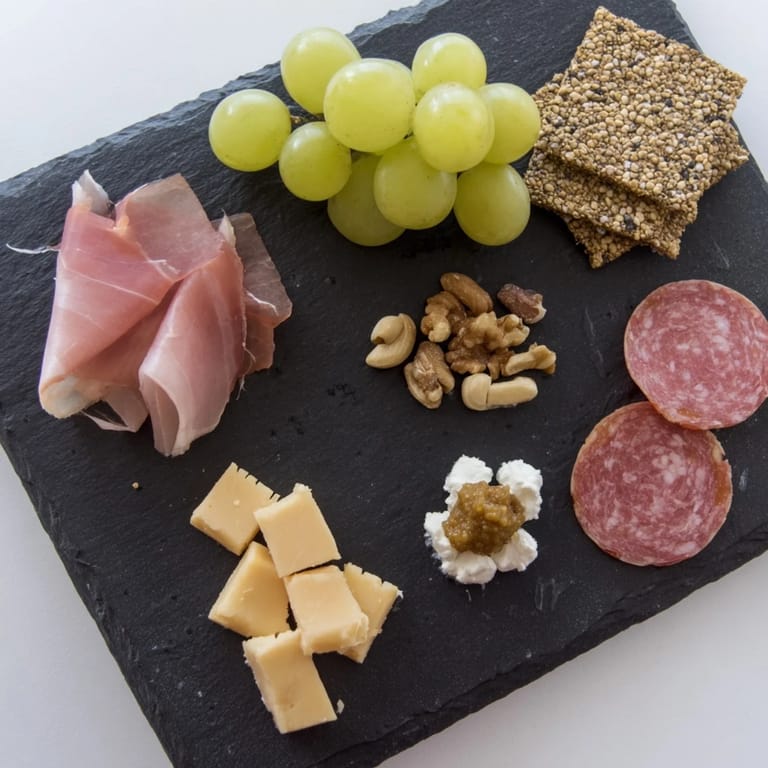
Save I discovered the magic of a charcuterie board for one on a quiet Tuesday evening, standing in my kitchen with the last rays of sunlight streaming through the window. Instead of ordering takeout or settling for a sad desk lunch, I decided to arrange what I had on hand—some beautiful prosciutto, a wedge of aged cheddar, a handful of grapes—on a small slate coaster. That simple act of arranging food with care transformed an ordinary moment into something intentional and luxurious. It felt like I was treating myself the way I would treat a beloved guest, and honestly, I've never looked back.
I'll never forget the first time I served this to my sister during an impromptu afternoon visit. She'd dropped by unannounced, and instead of apologizing for an empty fridge, I created this little board in under five minutes. Watching her face light up as she picked through the meats, tried the contrast of sharp cheddar with creamy goat cheese, and laughed at how satisfying something so simple could be—that's when I realized this wasn't just food. It was an invitation to slow down together.
Ingredients
- Prosciutto, 2 slices: The papery-thin slices melt on your tongue and add elegance instantly. Buy it sliced fresh at the deli counter if possible—it makes all the difference.
- Soppressata or salami, 2 slices: These cured meats bring a gentle spice and richness. Vary the type based on what speaks to you that day.
- Aged cheddar or brie, 30 g: Aged cheddar gives you that sharp, crystalline bite, while brie offers creamy indulgence. Choose based on your mood.
- Soft goat cheese or blue cheese, 30 g: This is where tanginess enters the picture. Goat cheese is delicate and bright; blue cheese is bold and unapologetic.
- Seedless grapes or fresh berries, 1 small handful: These provide sweetness and color balance, cutting through the richness of the meats and cheese beautifully.
- Mixed nuts, 1 tablespoon: Almonds and walnuts add texture and earthiness. Toast them lightly if you want to amplify their flavor.
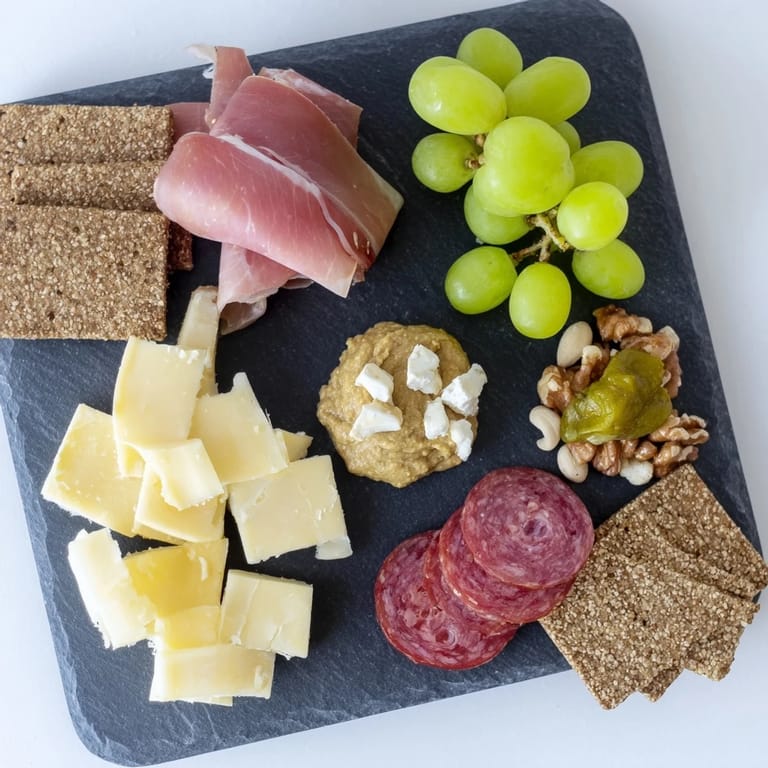
- Cornichons or baby gherkins, 2-3: These tiny pickled treasures bring acidity and crunch, awakening your palate between bites.
- Whole grain mustard, 1 teaspoon: A small dollop provides sharpness and complexity without overwhelming. This is your secret flavor boost.
- Crackers or sliced baguette, 3-4 pieces: These are your vessels for the meats and cheese. Use gluten-free crackers if needed, and choose ones sturdy enough to hold toppings.
Tired of Takeout? 🥡
Get 10 meals you can make faster than delivery arrives. Seriously.
One email. No spam. Unsubscribe anytime.
Instructions
- Choose your stage:
- Select a small slate coaster, wooden board, or even a beautiful appetizer plate. This becomes the canvas for your culinary moment. The color and texture of your base matter more than you'd think—they set the entire mood.
- Arrange the meats with intention:
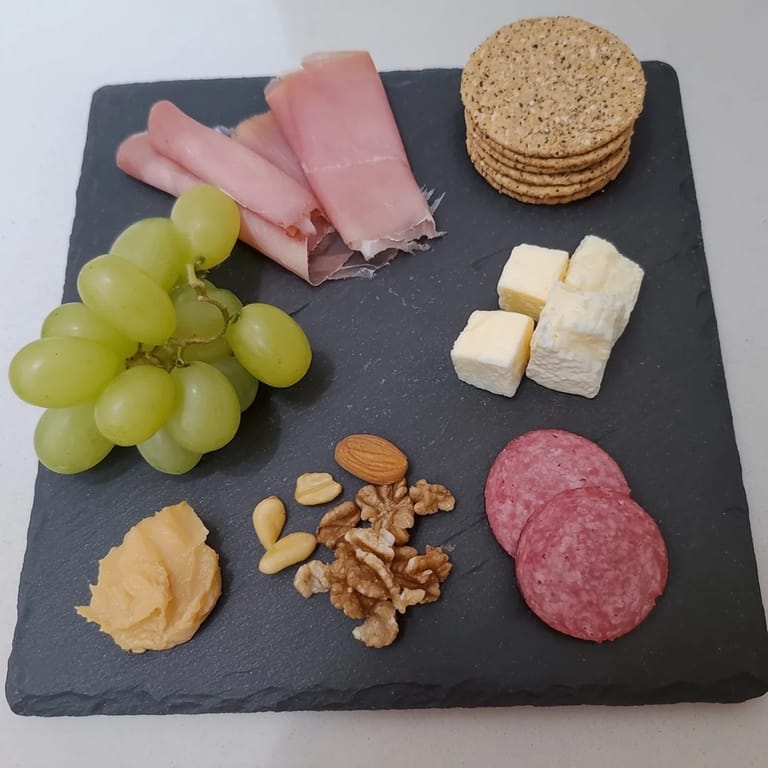
- Gently fold or loosely roll the prosciutto and soppressata, placing them on one side of your board. Don't flatten them; let them breathe and create dimension. This is your dramatic flourish.
- Position the cheeses thoughtfully:
- Place both cheeses next to the meats, keeping them visually separate. This invites the eye to travel and gives you the pleasure of tasting different combinations with each bite.
- Fill the gaps with color and contrast:
- Scatter grapes or berries, nuts, and cornichons around the board. These fill empty spaces while adding pops of color and flavor variety. Think of it as painting—you're balancing light and dark, smooth and textured.
- Add your mustard accent:
- Place a small dollop of whole grain mustard somewhere visible on the board. It's functional but also decorative, and it's there when you need that burst of sharpness.
- Stack the crackers with care:
- Arrange your crackers or baguette slices neatly in any remaining space. Slight angles work better than perfect stacking—it looks more inviting and less fussy.
- Step back and admire:
- Before serving, take a moment to look at your creation. Does the board feel balanced? Do colors and shapes create visual harmony? Adjust as needed, then serve immediately and enjoy every single bite slowly.
 Save
Save There's something almost meditative about the process of creating something small and beautiful just for yourself. You're not feeding a crowd or meeting expectations—you're simply deciding that your time and your palate deserve attention. That realization alone makes this board feel like so much more than a snack.
The Art of Balance
When you arrange a charcuterie board, you're learning the ancient principle of balance without thinking about it. Rich meats next to tangy cheese. Salty nuts beside sweet grapes. Smooth spreads against crunchy crackers. Every bite teaches you something about flavor contrast, and every arrangement reveals your own preferences. Some people naturally create visual symmetry; others embrace beautiful chaos. There's no wrong way—only your way. Pay attention to what you're drawn to, because those instincts will guide you in the kitchen for years to come.
Pairing and Serving Suggestions
While this board stands beautifully on its own, it becomes something transcendent when paired with the right beverage. A crisp white wine like Sauvignon Blanc echoes the acidity of the cornichons. A light red such as Pinot Noir complements the earthiness of the nuts and aged cheese. Even a dry sparkling wine feels celebratory. The beauty is that you don't need to overthink this—whatever makes you happy in that moment is the perfect pairing. Serve this board when you want to feel nourished without effort, when guests arrive unexpectedly, or simply because you deserve a moment of beauty and intention in your day.
Variations and Swaps
This board is endlessly adaptable, which is part of its charm. You might add a small square of dark chocolate for a sweet finish, introducing complexity and surprise. Swap the meats based on what's available—pancetta, speck, or thinly sliced duck breast all shine. Replace the cheeses with something bolder like manchego or softer like burrata. In summer, swap grapes for fresh figs or apricots. In colder months, add roasted chickpeas or dried apricots. The skeleton of the board remains the same, but your choices make it uniquely yours each time you create it.
- Substitute any ingredient based on dietary needs or what you have on hand.
- Add a small dollop of fig jam or honey for unexpected sweetness.
- Include a tiny dish of olives or a sprinkle of edible flowers for extra sophistication.
 Save
Save This simple board taught me that food doesn't need to be complicated to be meaningful. Sometimes the most nourishing moments happen when we slow down enough to truly taste and appreciate what's in front of us.
Recipe Guide
- → What meats are ideal for this board?
Thin slices of prosciutto and salami or soppressata create tender, flavorful layers that complement the cheeses.
- → Which cheeses work best here?
Aged cheddar, brie, soft goat cheese, or blue cheese offer diverse textures and rich flavors that harmonize with the meats.
- → How can I balance flavors on the board?
Including fresh fruit like grapes or berries and crunchy nuts adds sweetness and texture contrasts to the savory items.
- → What are good accompaniments to add?
Cornichons or baby gherkins and a dollop of whole grain mustard introduce tangy and sharp notes enhancing the overall taste.
- → Can I adjust for dietary preferences?
Using gluten-free crackers ensures suitability for gluten-sensitive diets, and swapping cheeses or meats allows personal customization.