 Save
Save There's something about the sound of a chicken breast hitting hot oil that signals dinner is really happening. My mom used to make this dish on nights when we needed something elegant but didn't have fancy plans, and I'd stand by the stove watching the breading turn golden while she stirred together a cream sauce that smelled like butter and garlic had decided to become best friends. Years later, I realized she'd been teaching me that restaurant-quality meals don't require restaurant hours—just good technique and a willingness to let the pan do most of the work.
I made this for a friend who'd just moved into her first apartment, and watching her face when she took the first bite—that moment when she realized she could make something this good at home—made me understand why people become so passionate about cooking. We ate it standing in her kitchen because she didn't have a proper table yet, and somehow that made it taste even better.
Ingredients
- Boneless, skinless chicken breasts: Pound them to even thickness so they cook at the same rate—I learned this the hard way after serving one side dry and the other barely done.
- All-purpose flour: The first layer in your breading station, keeping everything organized and your hands only somewhat messy.
- Eggs: Your binding agent that makes the breadcrumbs actually stick instead of falling off in the pan.
- Panko breadcrumbs and Parmesan: This combination is non-negotiable for that restaurant-style crunch and umami depth.
- Olive oil: Use enough that it shimmers visibly—this isn't the time to be timid about oil.
- Unsalted butter: For the sauce, because you'll be adding Parmesan which brings its own salt.
- Garlic: Six cloves feels like a lot until you taste how they mellow into the cream, becoming sweet and almost nutty.
- Heavy cream and chicken broth: The broth keeps things from being one-note while the cream makes it luxurious.
- Fresh parsley: Don't skip this—it's the final note that makes people wonder what your secret is.
Tired of Takeout? 🥡
Get 10 meals you can make faster than delivery arrives. Seriously.
One email. No spam. Unsubscribe anytime.
Instructions
- Pound and season your chicken:
- Place breasts between plastic wrap and pound to an even half-inch thickness, then season both sides generously with salt and pepper. Even thickness means every bite cooks the same way.
- Set up your breading station:
- Arrange three shallow bowls in a line with flour in the first, beaten eggs in the second, and panko mixed with Parmesan in the third. This assembly line approach keeps breading in your food instead of all over your hands.
- Bread the chicken:
- Dredge each breast in flour, shaking off excess, then dip in egg, then press gently into the panko mixture, really making sure it adheres. The gentle pressing is key—you're building a crust, not forming a brick.
- Fry until golden:
- Heat olive oil in a large skillet over medium-high heat until it shimmers, then add chicken and cook four to five minutes per side until deep golden and cooked through. You'll know it's ready when it sounds crispy when you move it with tongs.
- Make the sauce base:
- In the same skillet, lower heat to medium and melt butter, then add minced garlic and sauté for just one minute until it becomes fragrant. Don't let it brown—you want sweet garlic, not bitter.
- Build the cream sauce:
- Pour in heavy cream and chicken broth, scraping the pan bottom to release all those golden bits, then simmer for three to four minutes until it coats the back of a spoon. That scraping step is where restaurant flavor comes from.
- Season and finish:
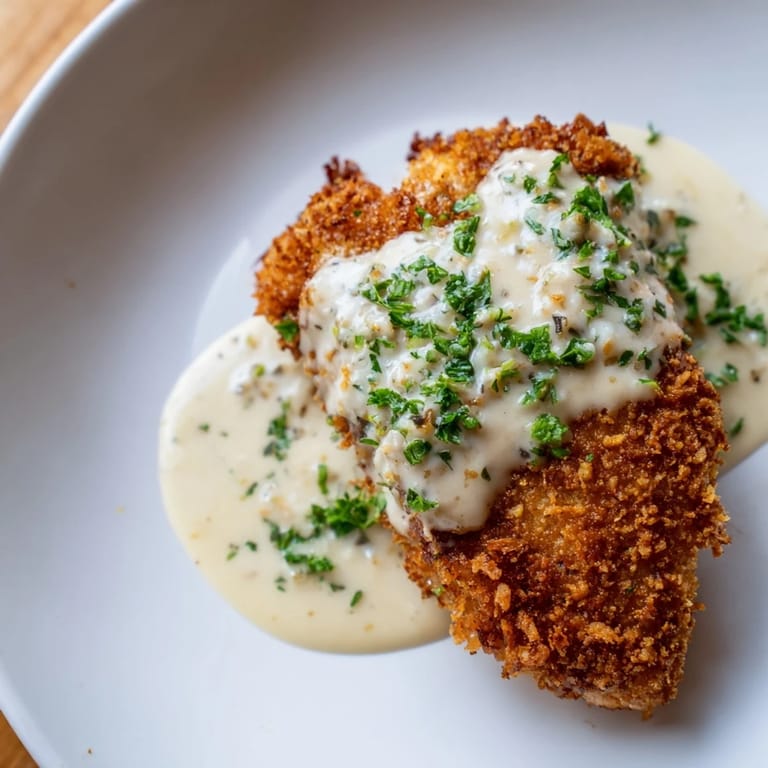
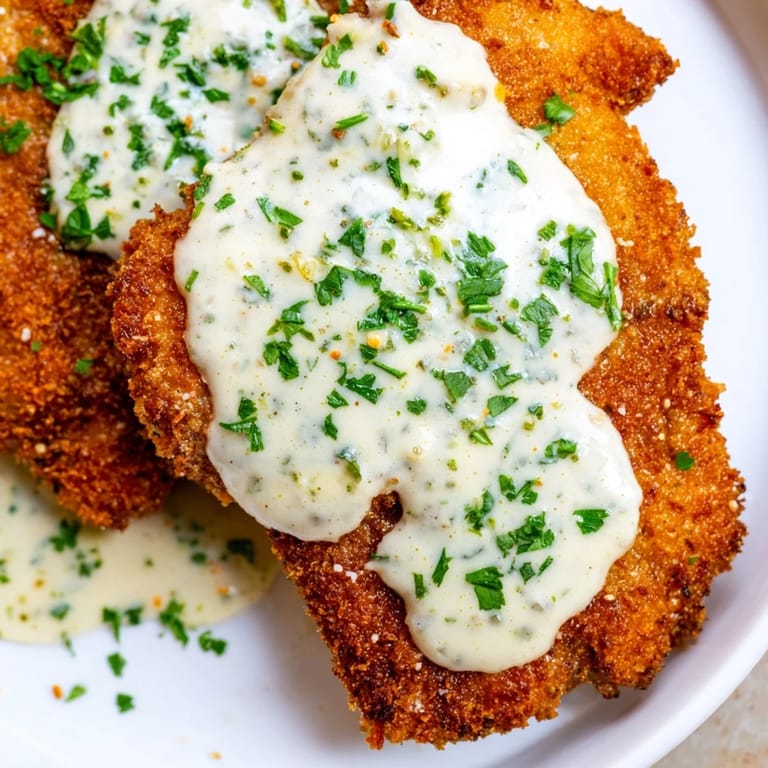
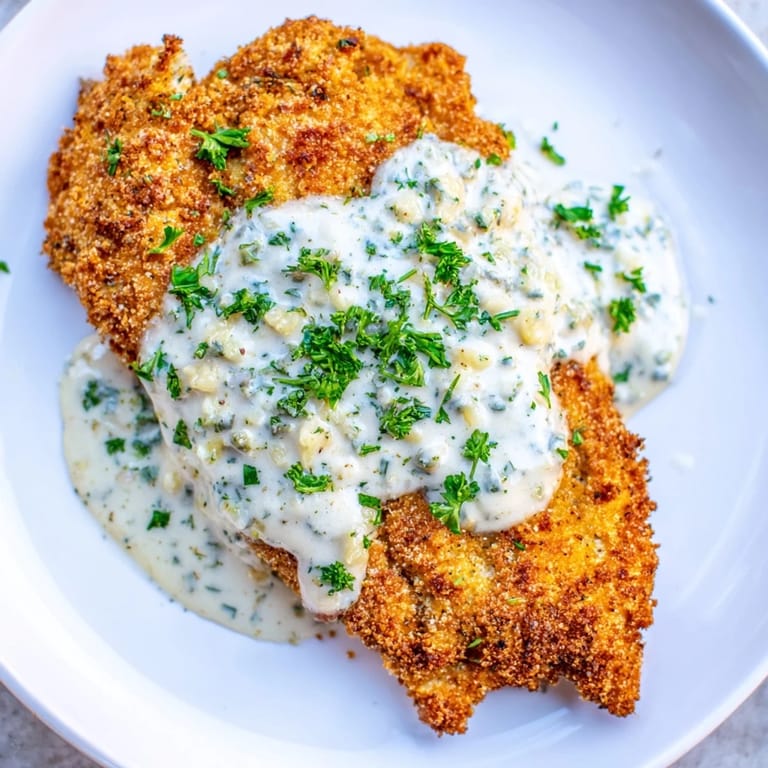
- Stir in salt, pepper, Parmesan, and chopped parsley, then simmer another one to two minutes until everything is incorporated and silky. Return the chicken to the pan, spoon sauce over top, and warm through for a minute before serving.
 Save
Save There's a particular moment when you return the chicken to the pan and watch the sauce cling to those crispy edges that you realize this is why people cook—not out of necessity, but for these small moments of knowing you've made something genuinely good. It's humble food elevated by attention and care.
Serving Suggestions That Actually Work
Mashed potatoes are the obvious choice, and for good reason—that creamy sauce basically demands something to soak it up. But pasta works beautifully too if you're in a different mood, catching the sauce in all its ridges. I've also served this alongside roasted green beans for nights when I want something lighter, and the sauce somehow makes even vegetables taste indulgent.
How to Get Extra Crunch
If you're the type who wants maximum texture, the double-breading method is your friend. After your first bread coating is on and the egg has mostly set, you can dip that chicken back in egg and then panko one more time, creating layers that stay crispy even under the sauce. It takes an extra five minutes but changes the whole experience of eating.
Adaptations for Different Nights
This recipe thrives on small changes that shift the mood entirely. A squeeze of fresh lemon stirred in at the very end brightens everything, perfect for when spring arrives and you're tired of heavy food. Substitute half-and-half if you want something lighter, or add a pinch of red pepper flakes if you're craving heat. The beauty of building your own sauce is that it bends to whatever you need it to be.
- Fresh lemon juice added at the end brings unexpected brightness without needing to change anything else.
- A splash of white wine mixed into the broth creates complexity and sophistication that tastes accidental.
- Thyme or sage stirred in with the parsley gives it an earthy depth that changes the entire character of the dish.
 Save
Save This is the kind of meal that reminds you why home cooking matters—it's faster than takeout, tastes better than restaurants, and costs a fraction of the price. Once you make it, you'll understand why it keeps making its way back to the table.
Recipe Guide
- → How do I get the chicken extra crispy?
Double-coating the chicken by repeating the egg and panko-Parmesan steps ensures an extra crunchy crust when fried.
- → Can I use a different cheese in the coating?
Parmesan adds a sharp, nutty flavor, but Pecorino Romano or Asiago also work well for a similar taste and texture.
- → What is the best way to prevent the sauce from separating?
Simmer the cream sauce gently and avoid boiling to maintain its smooth, creamy texture without curdling.
- → Can I substitute the chicken broth?
Yes, vegetable broth or water with a pinch of salt can be used, but chicken broth adds depth and richness.
- → How should leftovers be stored?
Store leftovers in an airtight container in the refrigerator and reheat gently in a skillet to preserve crispness and sauce flavor.