 Save
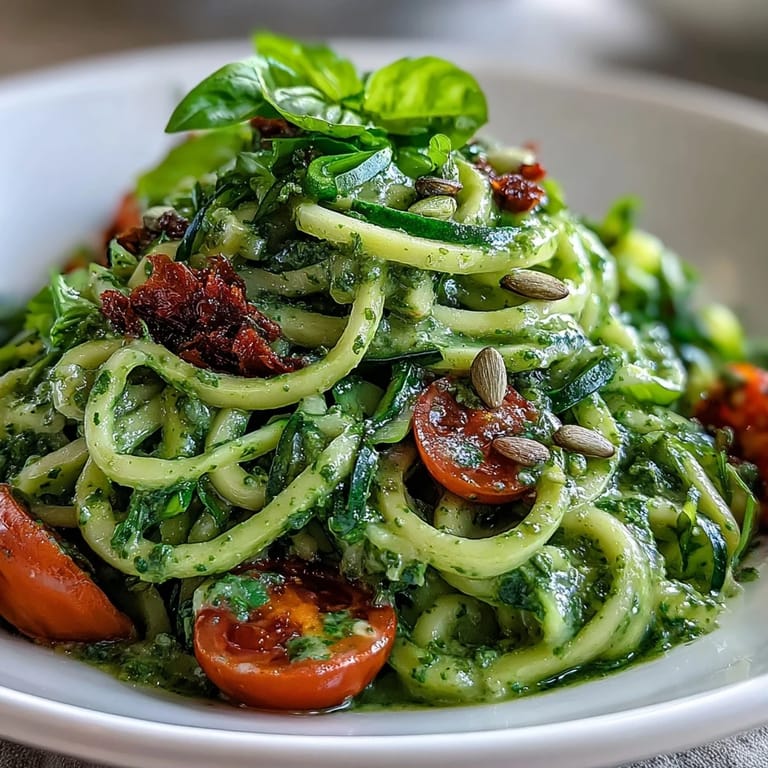
Save There's something magical about the moment a spiralizer transforms a humble zucchini into delicate ribbons, and it happened on a lazy summer afternoon when I was determined to use up garden vegetables without heating the kitchen. A friend mentioned pumpkin seeds in pesto, which sounded peculiar until I realized how their subtle earthiness could replace pine nuts beautifully. That first taste was revelatory, bright and nutty at once, and suddenly I understood why this combination felt so right.
I made this for my sister during a visit when she'd just gone vegan, and I watched her face light up as she twirled those green noodles on her fork. She kept saying it tasted like summer, and honestly, that's exactly what happened in my kitchen that day.
Ingredients
- Raw pumpkin seeds (1 cup): These are your star player, delivering richness and a gentle crunch that makes the pesto feel substantial without any dairy needed.
- Fresh basil leaves (2 cups, packed): Grab the youngest, most fragrant leaves you can find because they'll brighten everything else in the bowl.
- Garlic (2 cloves): Raw garlic can bite if you're heavy-handed, so taste as you go and remember you can always add more but not less.
- Extra-virgin olive oil (1/3 cup): This is where flavor hides, so don't skimp or substitute with something neutral.
- Lemon juice (2 tbsp): Fresh squeezed makes all the difference, cutting through the richness with brightness that bottled juice can't quite match.
- Nutritional yeast (2 tbsp): This brings a subtle savory depth that mimics the umami you'd expect from cheese.
- Sea salt and black pepper: Taste frequently and season boldly because zucchini noodles need support to shine.
- Water (2-4 tbsp): Keep it nearby because the pesto's thickness depends on your food processor and how finely you want it.
- Zucchini (4 medium): Choose firm ones without soft spots, and spiralize them right before serving so they stay fresh and crisp.
- Cherry tomatoes (1/2 cup, halved): Optional, but they add pops of acidity and sweetness that play beautifully against the herbaceous pesto.
Tired of Takeout? 🥡
Get 10 meals you can make faster than delivery arrives. Seriously.
One email. No spam. Unsubscribe anytime.
Instructions
- Build your pesto base:
- Combine pumpkin seeds, basil, garlic, olive oil, lemon juice, nutritional yeast, salt, and pepper in your food processor. Pulse—don't blend—until the mixture looks like wet sand with visible seeds still whole, because you want texture and character here, not baby food.
- Adjust the consistency:
- Add water one tablespoon at a time, pulsing between additions, until the pesto flows like thick frosting. You're aiming for something that clings to the noodles rather than drowns them.
- Spiralize your zucchini:
- Run each zucchini through your spiralizer or use a julienne peeler for thinner strands. Work over a cutting board because zucchini releases water and you'll want to catch it.
- Decide on your temperature:
- For raw noodles, pat them very dry with paper towels to remove excess moisture that would dilute the pesto. If you prefer warm noodles, heat olive oil in a large skillet over medium heat and sauté for just 2 to 3 minutes, stirring gently, until they soften slightly but still hold their shape.
- Bring it together:
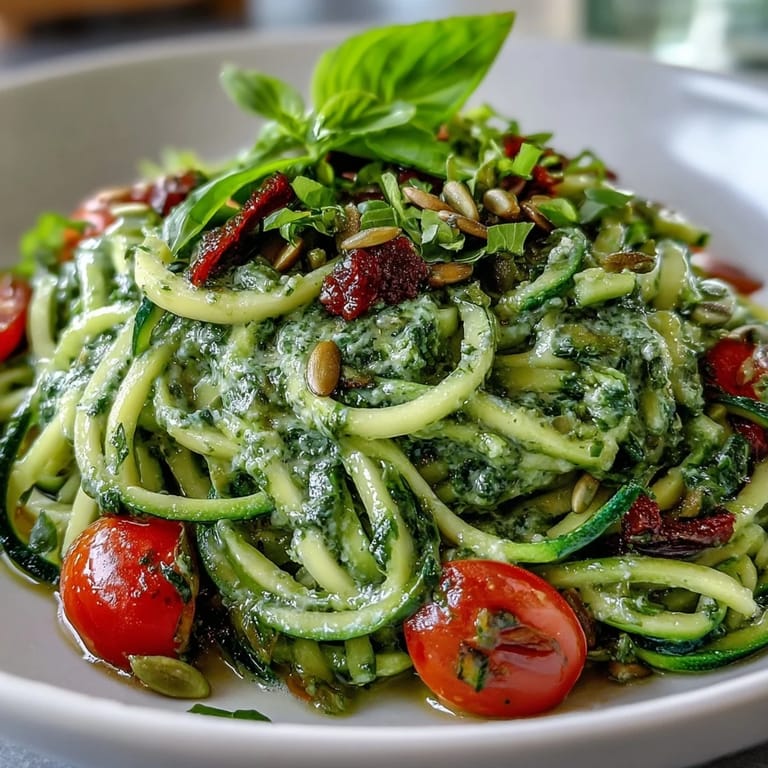
- Transfer your zucchini noodles to a large bowl and pour the pesto over top, tossing gently but thoroughly until every strand is coated with that gorgeous green goodness. Serve immediately while everything is at its peak, garnished with halved cherry tomatoes and torn basil if you like.
 Save
Save There was a moment when my partner took a bite and paused, then asked if this was the kind of thing I'd learn to make if I went vegan, and I realized this wasn't a sacrifice dish at all. It was something I wanted to eat again and again, not because it was healthy, but because it genuinely tasted wonderful.
Raw Versus Warm
The beauty of zucchini noodles is their flexibility, but each path changes the experience slightly. Raw noodles stay crisp and fresh, almost salad-like, with the pesto as their dressing, while warm noodles become softer and almost pasta-like, letting the pesto cling differently. I find myself choosing raw on hot days when I want something bright and energizing, and warm on cooler evenings when my body craves something more comforting. Try both versions and see which one calls to you depending on your mood and the season.
When Pesto Needs Help
Sometimes pumpkin seed pesto tastes a bit flat on its own, and that's not a failure, it's an invitation to balance the flavors. A squeeze more lemon brings everything into focus, while a pinch more salt amplifies the savory depth. Nutritional yeast can overwhelm if you're not careful, so add it gradually and taste as you go, remembering that it's meant to enhance, not announce itself.
Ways to Build on This
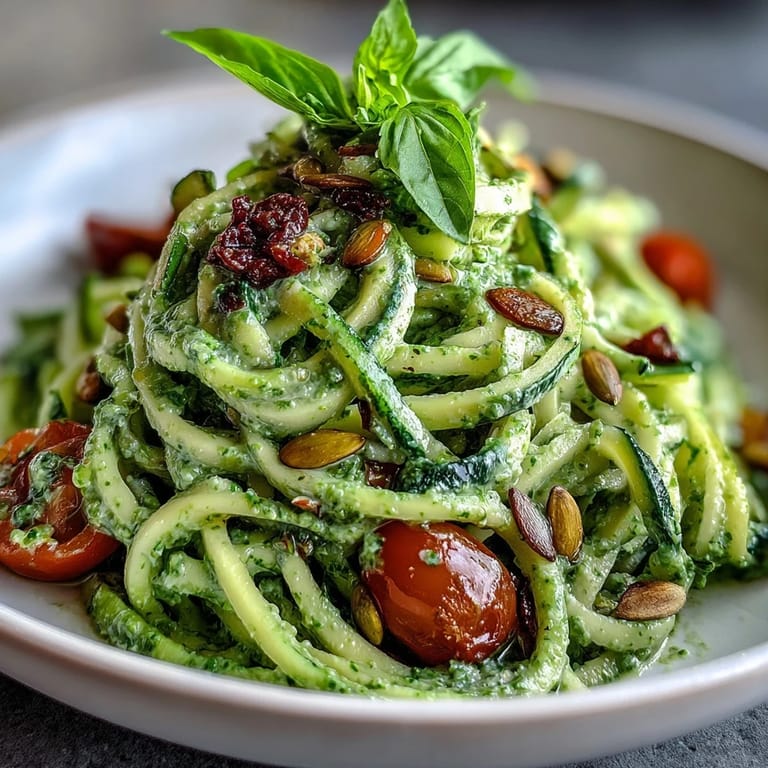
This recipe is wonderfully simple, but it also loves company and can absorb additions without losing its identity. Sliced avocado stirred into the pesto adds a creamy richness that feels almost luxurious, while cooked chickpeas or white beans transform it into something heartier without weighing it down. I've also tossed in roasted red peppers, toasted pine nuts for extra crunch, and even fresh corn in summer when it's at its sweetest.
- Stir avocado into the pesto itself for extra creaminess and richness.
- Add cooked chickpeas or white beans to boost protein and make it more filling.
- Top with fresh microgreens or sunflower sprouts for a peppery finishing touch.
 Save
Save This meal reminds me that plant-based cooking isn't about restriction, it's about discovery, and every time I make it, I fall a little more in love with how simple ingredients can taste like celebration. It's become my go-to when I want something that nourishes both body and spirit.
Recipe Guide
- → Can I use other nuts or seeds instead of pumpkin seeds?
Yes, sunflower seeds or walnuts make great alternatives that maintain a similar texture and flavor profile.
- → Is it better to serve the zucchini noodles raw or cooked?
Both ways work well; raw noodles offer a crisp texture while lightly sautéed noodles are softer and warmer.
- → How can I make the pesto creamier?
Adding mashed avocado to the pesto will enrich its creaminess without altering the fresh flavor.
- → Can I store leftovers and how?
Store leftover noodles and pesto separately in airtight containers refrigerated up to 2 days to preserve freshness.
- → What beverages pair well with this dish?
Crisp Sauvignon Blanc or sparkling water with lemon complement the bright flavors nicely.