 Save
Save Last spring, I was standing in my kitchen on a Tuesday afternoon feeling stuck between wanting something substantial and something that wouldn't weigh me down. I'd just bought a bunch of broccoli on impulse, and there were peas lingering in the freezer. That's when I remembered quinoa—that nutty grain I'd been meaning to cook more of—and suddenly this bowl came together like a conversation between ingredients who'd been waiting to meet. The first bite tasted like discovery: fresh, bright, and somehow both filling and light. That bowl became my answer to lunch for the next week.
I made this for a friend who'd just moved into a tiny apartment with barely any kitchen gear. She sat at her small table balancing the bowl in her lap, and when she got to the feta, she closed her eyes and said something like this tastes alive. That moment stuck with me because it wasn't fancy or complicated, but it felt generous. Now whenever I make this, I think about how good simple food can be when each ingredient is actually treated with respect.
Ingredients
- Quinoa: Always rinse it first under cold water—this sounds like extra work but it removes that bitter coating and makes the grain taste brighter and fluffier, not gluey.
- Broccoli florets: Bite-sized pieces cook evenly and feel better in a bowl than big crowns; steam them just until you can pierce them easily, then shock in cold water to lock in that green color.
- Green peas: Frozen or fresh both work beautifully—frozen are actually picked at peak ripeness, and peas have this natural sweetness that balances the earthiness of everything else.
- Cherry tomatoes: Halving them instead of leaving them whole lets them nestle into the bowl and means you taste them in every bite rather than having to hunt for flavor.
- Red onion: Slice it thin and it becomes almost silky; it adds sharpness without overwhelming, and the color is gorgeous against the greens and gold of the other vegetables.
- Feta cheese: The tang here is non-negotiable—it's what wakes everything up; crumble it by hand rather than chopping so the pieces stay irregular and interesting.
- Fresh parsley: This isn't just garnish—it's freshness in a handful, and if you chop it just before serving, the flavor stays bright.
- Olive oil, lemon juice, and Dijon mustard: This dressing relies on balance; the mustard acts like a quiet handshake between the oil and acid, emulsifying everything so it clings to the grains.
Tired of Takeout? 🥡
Get 10 meals you can make faster than delivery arrives. Seriously.
One email. No spam. Unsubscribe anytime.
Instructions
- Toast and rinse the quinoa:
- Run it under cool water in a fine-mesh strainer while rubbing it gently between your fingers—you'll notice a slight sweetness on your fingertips when it's ready. This step takes a minute and changes everything.
- Bring liquid to a rolling boil:
- Use vegetable broth if you have it for deeper flavor, but water works fine. The sound of the first boil tells you it's ready to drop to a simmer.
- Cover and let the grain cook undisturbed:
- Resist the urge to peek—those 15 minutes are when the quinoa absorbs everything. When you fluff it with a fork, each grain should be separate and tender.
- Steam the broccoli until crisp-tender:
- You want it to bend slightly when you poke it but still feel alive, not soft. Dunk it immediately in cold water or run it under ice-cold water to stop the cooking.
- Wake up the peas:
- If frozen, pour boiling water over them and let them sit—they'll thaw and warm through without becoming mushy. If fresh, a quick one-minute blanch is enough.
- Whisk the dressing with intention:
- Combine the oil, lemon, mustard, and garlic in a small bowl and whisk until it becomes slightly creamy and emulsified. Taste it before you commit—this is where salt and pepper become your best friends.
- Combine everything in a large bowl:
- Add the cooled quinoa, broccoli, peas, tomatoes, and onion. Pour the dressing over and toss gently but thoroughly so everything gets coated without bruising the vegetables.
- Build your bowls:
- Divide among four bowls, then top each one with a generous handful of crumbled feta and a pinch of fresh parsley. The presentation matters because you eat with your eyes first.
 Save
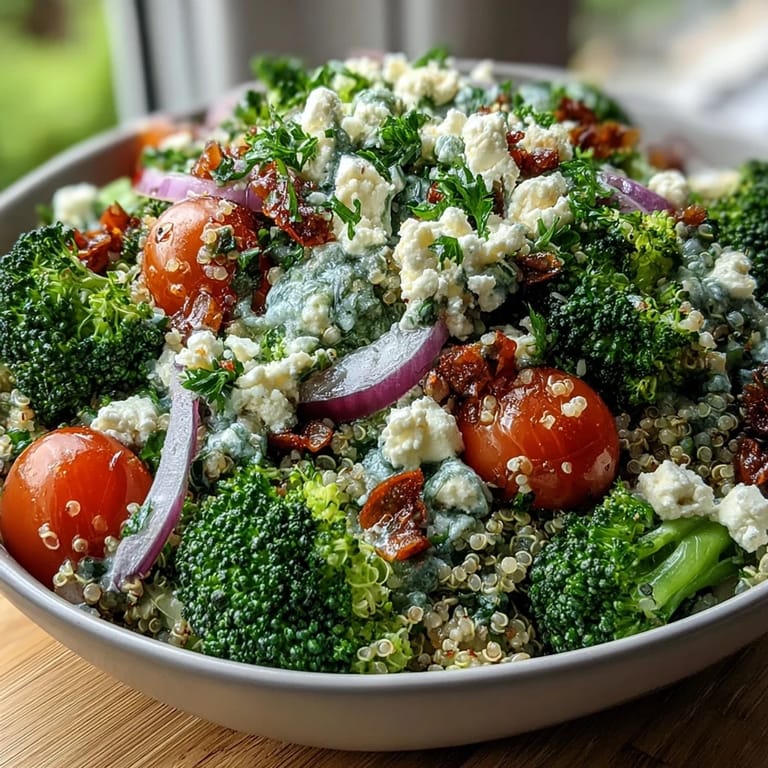
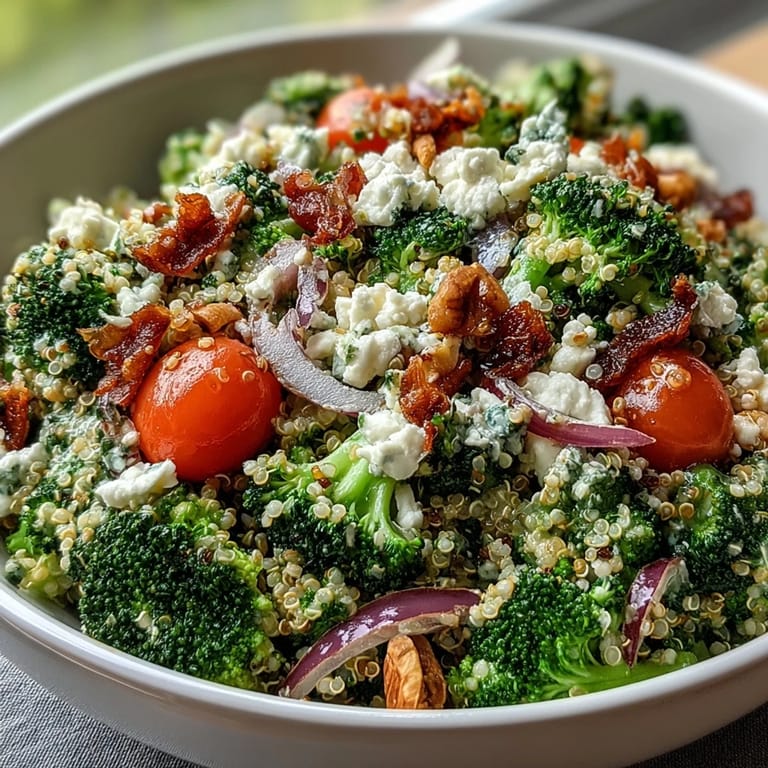
Save There's a moment when you mix everything together and the colors suddenly pop—the deep green broccoli against the pale green peas against the gold quinoa against the white crumbles of feta. That moment is when you realize you've made something that's not just good to eat, but good to look at. It's a small thing, but it matters.
Why This Bowl Works as a Meal
Quinoa is a complete protein, meaning it has all nine amino acids your body needs—so you're not eating just a salad, you're eating actual substance. Add the feta and peas, and this becomes genuinely nourishing without feeling heavy. The vegetables contribute fiber and brightness, and the olive oil makes sure your body can absorb the fat-soluble vitamins from everything else. This isn't food that fills you and then leaves you hungry an hour later; it's food that sits with you and sustains you.
Making It Your Own
The skeleton of this bowl is solid, but it loves improvisation. I've made it with roasted chickpeas instead of feta on nights when I wanted more protein and less dairy, and I've added a handful of arugula at the last second for peppery bite. You could roast the broccoli instead of steaming it for a caramelized edge, or use white quinoa if that's what you have on hand—red quinoa works too and looks even more striking. The dressing is where your personality really shows: someone I know adds a spoonful of tahini to make it creamier, and I knew someone else who would stir in a tiny bit of honey to balance the lemon.
Storage and Make-Ahead Tips
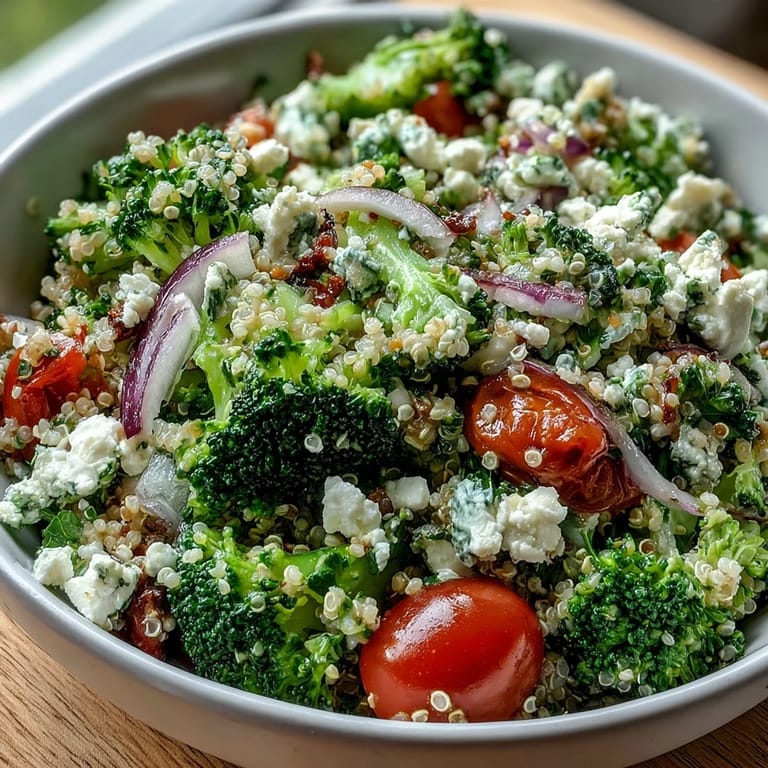
If you're thinking about meal prep, this bowl holds up surprisingly well in the refrigerator. Store the dressing in a separate container and add it only when you're ready to eat, so the grains don't become soggy. The feta and parsley are best added fresh just before serving—they lose some magic if they've been sitting for days. Everything else tastes better cold or at room temperature anyway, so you can assemble this in the morning and eat it for lunch without heating anything.
- Invest in small glass containers if you make this regularly—they make grabbing lunch feel intentional rather than like you're just opening the fridge.
- A squeeze bottle of lemon juice and a small jar of minced garlic in your fridge means you can throw this together in minutes even on nights when you haven't planned ahead.
- Toast some pumpkin seeds or walnuts on Sunday if you want texture—store them separately and sprinkle them on just before eating.
 Save
Save This bowl became part of my regular rotation because it asks almost nothing of you but delivers something that feels special. Every time I make it, it tastes like an investment in myself.
Recipe Guide
- → How do I cook quinoa perfectly for this bowl?
Rinse quinoa under cold water, then simmer in water or vegetable broth for about 15 minutes until liquid is absorbed. Fluff with a fork and let cool slightly before mixing.
- → Can I use frozen vegetables in this dish?
Yes, frozen peas can be quickly blanched in boiling water for 2 minutes. Broccoli florets are best steamed fresh to keep a crisp texture.
- → What are good alternatives to feta cheese here?
Goat cheese works well as a substitute for a similar tangy flavor, or omit cheese entirely for a dairy-free option.
- → How should the dressing be prepared?
Whisk together extra-virgin olive oil, lemon juice, Dijon mustard, minced garlic, salt, and pepper until emulsified for a bright, flavorful dressing.
- → Can I store leftovers and how long will they keep?
Leftovers can be refrigerated in an airtight container for up to 2 days. For best taste, add feta and parsley fresh before serving.
- → What additions enhance the crunch in this bowl?
Sprinkling toasted pumpkin seeds or walnuts adds pleasant crunch and extra texture to the grain bowl.