 Save
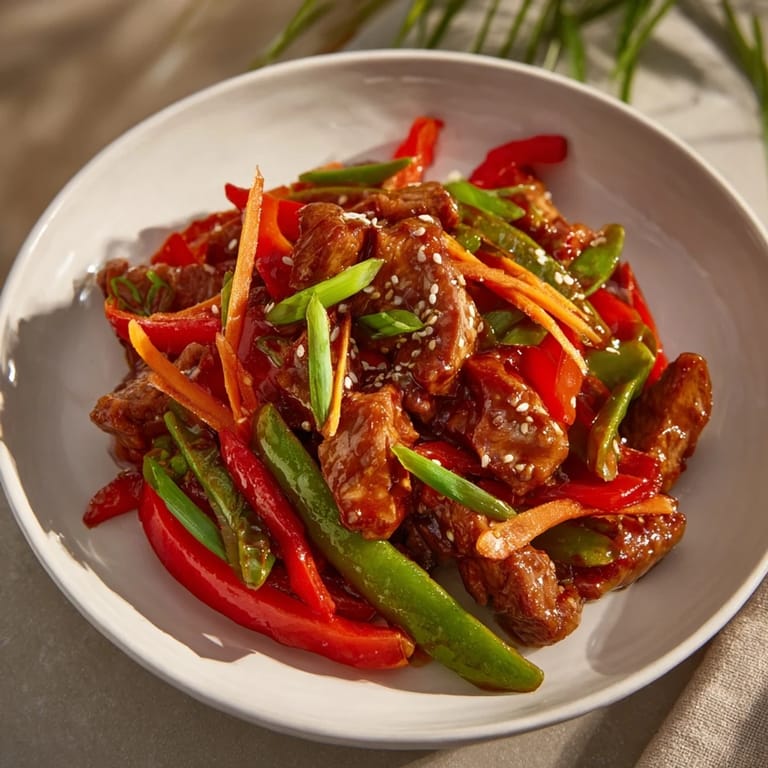
Save My neighbor knocked on my door one Tuesday evening holding a bottle of mirin and asking if I had a quick dinner idea. I pulled out some pork tenderloin, raided my crisper drawer, and improvised this stir-fry while we talked about her new job. The sauce came together so fast and glossy that we both stood there watching it coat the vegetables like magic. She went home with the recipe scribbled on a grocery receipt, and now she makes it every week. Sometimes the best recipes happen when you're not even trying.
I started making this on nights when my kids had late soccer practice and we needed something filling but not complicated. The smell of ginger and garlic hitting the hot pan became their signal that dinner was close, and they'd wander into the kitchen asking if they could taste-test the snap peas. One night my youngest said it tasted better than the restaurant version, and I saved that compliment like a trophy. Now it's our weeknight reset meal, the one that makes everything feel manageable again.
Ingredients
- Pork tenderloin: Slice it thin against the grain so it stays tender and cooks quickly without drying out.
- Red bell pepper: Adds sweetness and a pop of color that makes the whole dish look vibrant and alive.
- Snap peas: They keep their crunch even after stir-frying, giving you that satisfying texture contrast.
- Carrot: Julienne it thin so it cooks at the same rate as the other vegetables and doesn't stay hard.
- Green onions: Use half during cooking for flavor and save the rest for garnish to keep them bright and sharp.
- Garlic and ginger: Fresh is non-negotiable here, the jarred stuff just doesn't give you that same fragrant punch.
- Low-sodium soy sauce: You control the salt level better, and it won't overpower the sweetness of the mirin.
- Mirin: This sweet rice wine is what gives the sauce its signature glossy finish and subtle depth.
- Brown sugar or honey: Either one works, but honey makes the sauce cling a little tighter to the meat.
- Rice vinegar: A small splash balances the sweetness and keeps the sauce from tasting flat.
- Cornstarch: Mix it with cold water first to avoid lumps, and it will thicken the sauce beautifully in seconds.
- Sesame oil: Just a teaspoon adds that nutty, toasted flavor that ties everything together.
- Vegetable oil: Use something with a high smoke point so you can get a good sear without burning.
- Sesame seeds: Toast them lightly in a dry pan before sprinkling, and they'll taste twice as good.
Tired of Takeout? 🥡
Get 10 meals you can make faster than delivery arrives. Seriously.
One email. No spam. Unsubscribe anytime.
Instructions
- Make the sauce:
- Whisk together soy sauce, mirin, brown sugar, rice vinegar, cornstarch, water, and sesame oil in a small bowl until smooth. Set it near the stove so you can grab it quickly when the pan is hot.
- Sear the pork:
- Heat one tablespoon of oil in a wok over medium-high heat until it shimmers, then add the pork in a single layer. Let it sear without stirring for a minute so it gets golden, then stir-fry for another 2 to 3 minutes until just cooked through and transfer to a plate.
- Stir-fry the vegetables:
- Add the remaining oil, then toss in bell pepper, snap peas, and carrot. Keep everything moving in the pan for 2 to 3 minutes until the vegetables are crisp-tender and bright.
- Add aromatics:
- Toss in garlic, ginger, and half the green onions, stirring constantly for about 30 seconds. You'll know it's ready when the smell fills your kitchen and makes you hungry.
- Glaze everything:
- Return the pork to the pan, give the sauce a quick stir, then pour it over everything. Toss constantly for 1 to 2 minutes as the sauce thickens and coats every piece with a glossy sheen.
- Serve immediately:
- Pull the pan off the heat, sprinkle with sesame seeds and the remaining green onions, and serve over steamed rice or noodles while it's still steaming.
 Save
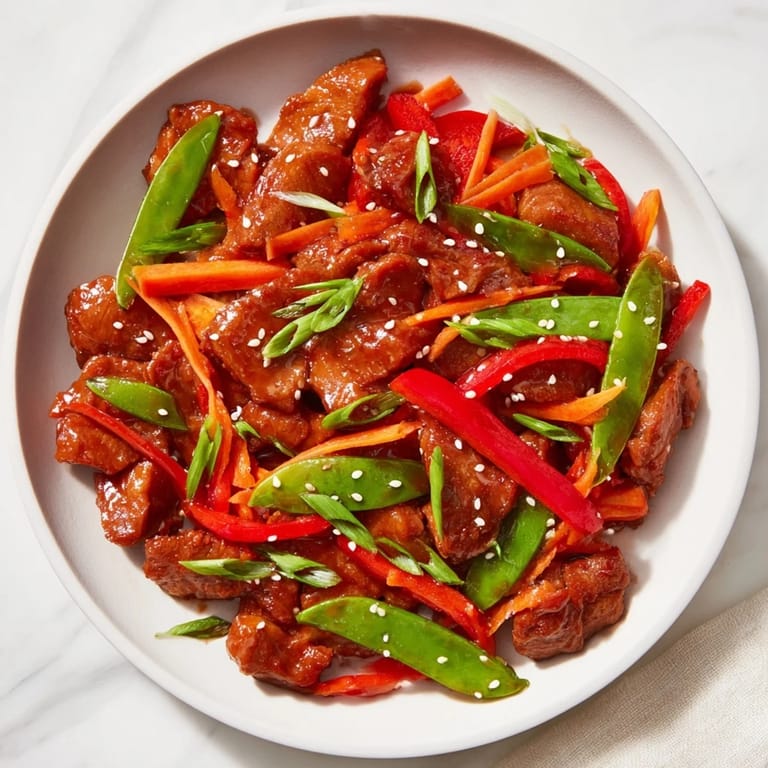
Save I made this for a potluck once and brought it in a big insulated container, still warm. People kept asking what restaurant I ordered from, and when I said I made it in less than half an hour, someone literally wrote down my phone number to get the recipe later. That night I realized this dish doesn't just feed people, it makes them feel cared for without you having to spend hours in the kitchen.
How to Get the Best Sear on Your Pork
The secret is making sure your pan is screaming hot before the pork touches it, and resisting the urge to move it around too soon. I used to stir everything constantly and wonder why my meat looked gray instead of golden. Now I let it sit undisturbed for a full minute, and the caramelization happens on its own. Pat the pork dry with a paper towel before cooking, because any moisture will cause it to steam instead of sear.
Customizing the Vegetables
I've thrown in whatever was languishing in my fridge, broccoli florets, sliced mushrooms, baby bok choy, even thinly sliced zucchini, and it always works. The key is cutting everything to similar sizes so it cooks evenly and adding denser vegetables first. Once I added frozen edamame straight from the freezer, and they worked perfectly because they thawed and heated through in the same time as the snap peas. Don't overthink it, just use what you have and keep the pan moving.
Serving Suggestions and Pairings
This stir-fry is incredible over jasmine rice, but I've also served it with rice noodles, soba, and even cauliflower rice when I wanted something lighter. My favorite move is to make extra sauce and drizzle it over the rice so every bite is glossy and flavorful. If you want to stretch it further, add a fried egg on top or serve it with a simple cucumber salad on the side.
- Steamed jasmine or brown rice soaks up the sauce perfectly and makes it a complete meal.
- Rice noodles or soba noodles turn it into a noodle bowl that feels a little more special.
- A quick pickled cucumber salad with rice vinegar adds crunch and cuts through the sweetness.
 Save
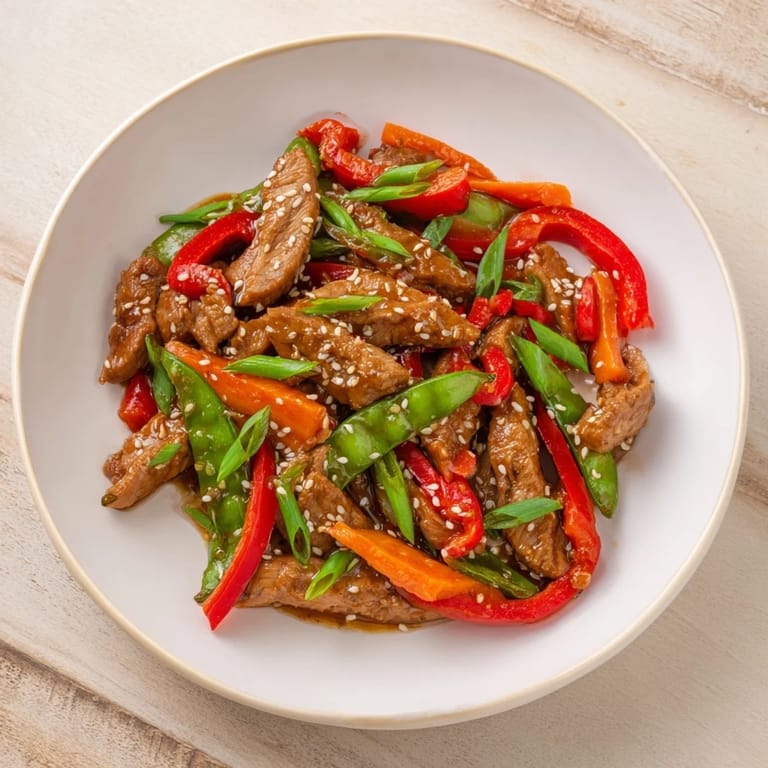
Save This recipe taught me that weeknight cooking doesn't have to be boring or stressful, it can be fast, colorful, and something everyone actually wants to eat. Keep it in your rotation, and you'll always have a reliable answer to the question of what's for dinner.
Recipe Guide
- → What cuts of pork work best for this dish?
Thinly sliced pork tenderloin is ideal for quick cooking and tender texture, but thin pork shoulder slices can also be used.
- → Can I substitute any vegetables?
Yes, broccoli, mushrooms, or bok choy are great alternatives that complement the stir-fry well.
- → How do I make the sauce thicker?
Combine cornstarch with cold water before adding to the sauce and cook until it thickens during the stir-fry.
- → Is it possible to make this dish gluten-free?
Use tamari instead of soy sauce to ensure a gluten-free version without altering the flavor significantly.
- → What oil is recommended for stir-frying?
Vegetable oil is preferred for its high smoke point, ensuring quick, even cooking without burning.